

In CNC machining,Drilling, boring, and reaming are three common methods of hole processing. While seemingly similar, they vary in objective, application, and process requirements. These distinguishing factors can help us determine the best-suited machining process that gives us optimum hole dimensions, surface quality, and machining efficiency.
Do you struggle with creating the perfect hole in CNC machining? Drilling, boring, and reaming — these three techniques may seem similar, but each has its own strengths. Choosing the wrong one can lead to reduced accuracy or skyrocketing costs! Whether you’re a beginner or a seasoned engineer, understanding the differences can take your project to the next level.
Let’s dive in and unlock the secrets of hole machining.
What Is Drilling?
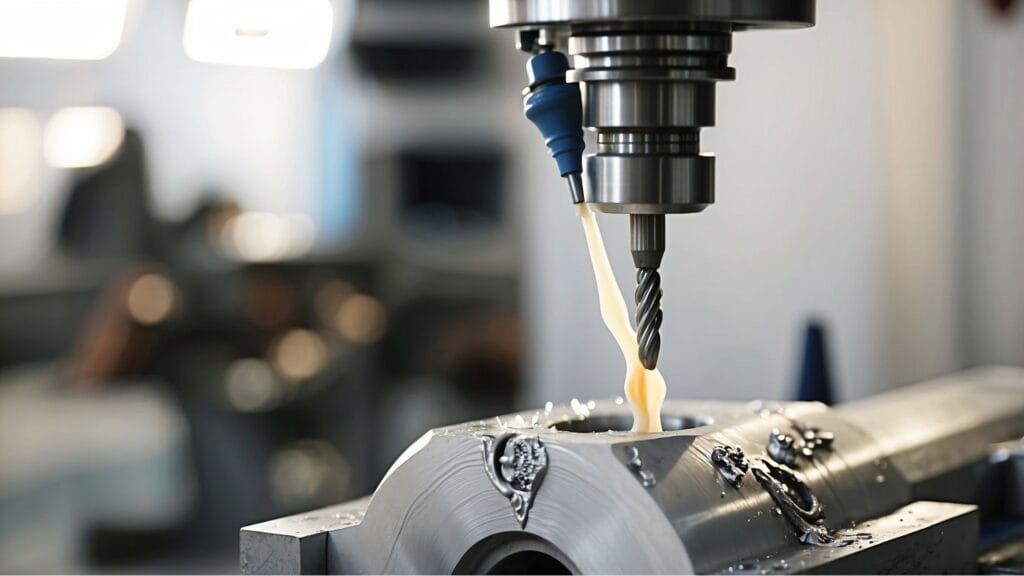
Drilling is a very common machining process whereby holes are produced in any workpiece by rotating a drill bit with very high speeds and forcing it downward. Material from the workpiece is removed by the cutting edges of the drill bit to eventually form a cylindrical hole. It is suitable for different diameters and to varied depths; hence, it is very essential in the creation of the first hole. But whereas drilling is effective for basic hole formation, it does not provide the high degree of precision needed for final finishing. For better dimensional accuracy with superior surface quality, other additional processes may be required, such as boring or reaming.
What Is Boring?
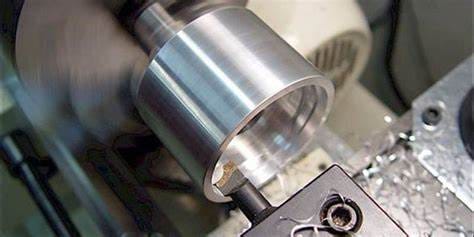
Boring is a machining process that enlarges or finishes an already drilled hole to a more accurate diameter and surface finish. Other than the fact that drilling makes the hole in the first place, boring involves taking a small amount of material from the inside of an already existing hole with the use of a cutting tool, generally a boring bar. This will enhance dimensional and positional accuracy of the hole. Generally, boring is done on milling machines or lathes. It is used when the dimensions of a hole must be very accurate. It can correct slight misalignments or even errors in drilled holes for perfect centering and alignment of the holes.
What Is Reaming?
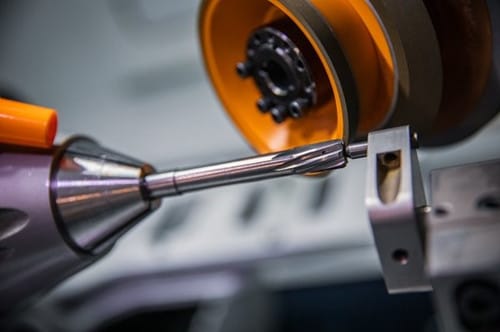
Reaming is one kind of finishing operation that refines the surface of the hole because it allows a higher level of precision and surface quality. Therefore, after drilling or boring, reaming is performed to improve the tolerance of the diameter of the hole and its surface finish. It uses a reaming tool with several cutting edges for the purpose of smoothening out the interior of the hole and slightly enlarging it. Reaming has a particular application in cases where the dimensional tolerances are close, and a great surface finish is desired. It is performed under conditions where very fine smooth finishes are required, giving the best quality possible in the final part with respect to accuracy and reliability.
Drilling Vs Boring Vs Reaming: Difference
By now, a good question might be: when to actually drill, bore, or ream a hole? Each serves a different purpose for hole machining, and knowing the differences between them will help you decide which will work best for you. Let’s break down the key differences between drilling, boring, and reaming-including the tools used and types of results you can expect from each process.
| Process | Purpose | Tool Used | Key Characteristics | Application |
| Drilling | Create initial holes | Drill bit | Larger cutting edges, high material removal | Rough hole creation |
| Boring | Enlarge and refine drilled holes | Boring tool | Small material removal, precise diameter control | Enlarging or aligning holes |
| Reaming | Achieve high precision and smooth finish | Reamer | Fine cutting edges, minimal material removal | Final hole sizing and finish |
Key Differences:
- Drilling simply makes a hole, while boring is a refining process that gives more diameter and accuracy to the hole.
- Reaming gives the surface finish. Boring and reaming are usually done after drilling in order to have better precision of the hole.
- Drilling is relatively faster and more ‘rough’, while the process of boring and reaming is much more accurate, though slower, for tighter tolerances.
What Are The Similarities Between Drilling, Boring, And Reaming?
Whether it is a hole that is being drilled, enlarged, or smoothed out, all three rely on specialized cutting tools that remove material to achieve the required level of precision. What do they have in common, and how do their similarities contribute to overall machining success? Let’s explore what these processes have in common as applied to creating high-quality machining holes.
There are a few key similarities between drilling, boring, and reaming in CNC machining. All three processes make use of special cutting tool drill bits, boring bars, and reamers designed to take away material from a workpiece. Each of these processes has the goal of creating or refining holes through initially cutting them, enlarging, or smoothening out the already existing hole. The three operations have their essence in accuracy and precision, but reaming and boring are most used to enhance dimensional accuracy and surface finish. Together, these processes act to ensure the made hole meets the specifications and quality requirements of the piece.
Different Types Of Holes
Each process can be used to create different types of holes, depending on the required diameter, depth, and surface finish:
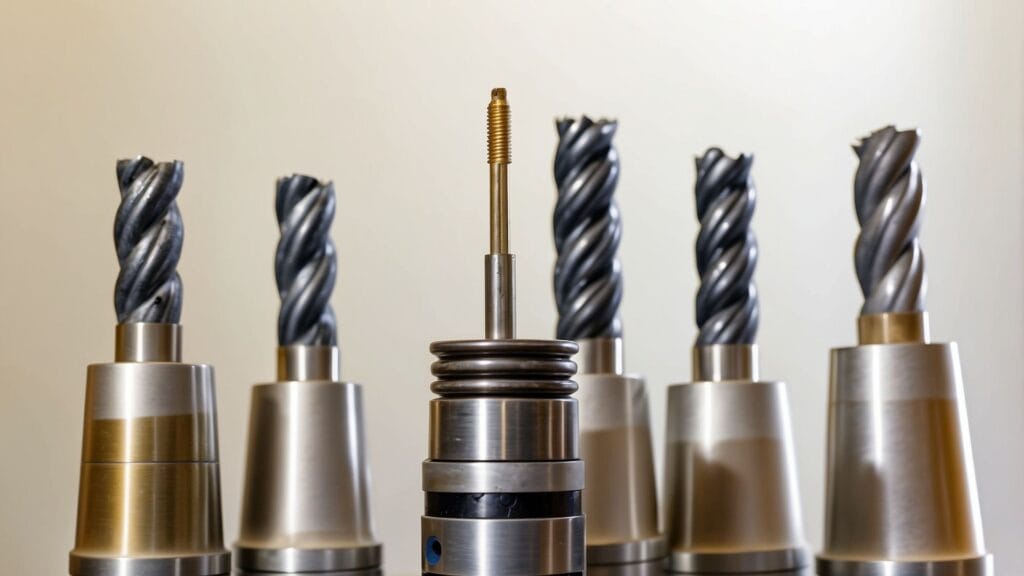
Blind Holes
Blind holes are drilled to a certain depth but do not puncture completely through the material. Such holes are resorted to where a partial hole is needed but without going through the workpiece.
Through Holes
Through holes extend completely through the material and allow fasteners to pass through. They find common applications in mechanical and structural applications, where connecting multiple parts is necessary.
Threaded Holes
Threaded holes internally have threads, and bolts or screws can be screwed inside them. They are important in mechanical assemblies since they provide strong and dependable fastening.
Tapping Holes
Tapping holes first drill the material out, then tapping is performed to create internal threads. It will enable the fasteners to screw perfectly inside the hole; hence, it gives a very accurate method of making threaded connections.
Tapered Holes
The diameter of a tapered hole decreases or increases along the length. Normally, these are used to give a tight, snug fit to tapered components in several applications.
How To Improve The Dimensional Accuracy And Surface Quality Of The Hole.
Any hole machining is coupled with high precision and an excellent surface finish. But the question is how you will be able to make sure your hole dimensional accuracy and surface quality are the best. Well, from tool selection to machine setting adjustments, here are different techniques and best practices that you can apply to further improve your machining processes. A closer look at how to improve the accuracy and finish of your holes to meet demanding tolerances.

The right selection of the cutting tool improves the quality of the hole. The boring tools usually tend to be used in a case that requires more precision in enlarging the hole, while reamers usually find their place in surface finish. Machine calibration is also done to avoid alignment errors through improving positional accuracy to avoid variable dimensions on the holes. The adjustment of tool-life-optimizing parameters related to cutting speed, feed rate, and coolant flow rate avoids the detrimental heat buildup that can affect hole quality.
The use of high-pressure coolant makes proper chip removal possible without overheating, thus boosting accuracy with a better surface finish. Tool maintenance is very crucial since dull tools yield inaccurate holes with poor finishes; thus, periodic inspection and replacement of the tools are necessary to sustain high-quality results.
Conclusion
In other words, drilling, boring, and reaming are all indispensable in the processes of precision machining because their uses are different from each of their intended purposes when these tools need to be applied; they will carry out different dimensional accuracies, hole sizes, and surface quality. Drilling is a method used to make an initial hole, while boring makes this hole to size and aligns it precisely. Reaming provides a better surface finish, high in tolerance. Such knowledge of differences and similarities will help the manufacturers in the selection of the right process that will meet the requirements of their application, ensuring precision and correct holes.
Final Thoughts
As a professional with 15 years of CNC machining service experience, I’ve seen firsthand the importance of understanding the distinctions between drilling, boring, and reaming processes. Drilling is the initial step, used to create a hole quickly and efficiently, typically with lower precision. Boring is used for enlarging and refining the drilled hole, achieving higher accuracy and tighter tolerances. It’s crucial when you need to adjust hole dimensions or improve surface finishes. Reaming, on the other hand, is the final step to achieve superior surface quality and exact dimensional control, perfect for applications requiring fine finishes, like aerospace and medical components.
At Ultirapid, we have extensive experience in each of these processes, with a focus on achieving both precision and efficiency. For example, in a recent aerospace project, we combined drilling, boring, and reaming to meet stringent quality standards and minimize cycle time, ensuring the parts met both dimensional and surface finish requirements. We can apply these practices to any custom CNC machining project.


