
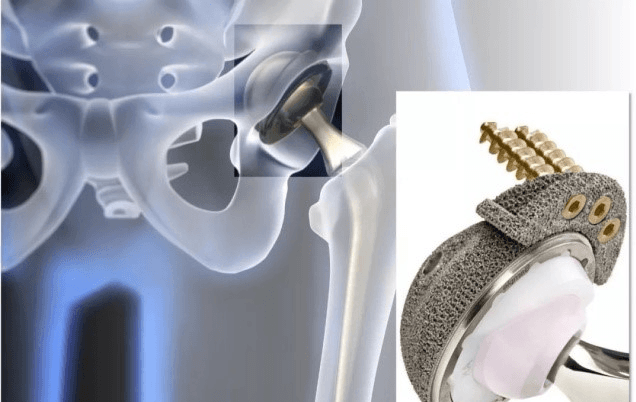
Among the many success stories in the manufacture of medical implants, precision CNC machining has its place. For instance, Mindray Medical faced a challenge in customizing orthopedic implants for patients with extremely high dimensional accuracy and surface finish. By infusing precision CNC machining technology, the production team achieved big strides forward in efficiency while guaranteeing the reliability and safety of each and every implant. The application of this technology has turned into one of the main innovations within the medical field, which definitely assures that implants fit for a particular case or patient and do the job much more professionally.
In this paper, some more similar cases will be shared, showing how the use of CNC machining plays an important role in making medical implants.
What Materials Can Be Used To Make Medical Implants?
In developing medical implants, a proper selection of the materials is fundamental. The materials used should not only be biocompatible but also durable to withstand the activities going on in the body for a long period.
Titanium And Titanium Alloys
Properties such as outstanding strength-to-weight ratio, combined with excellent biocompatibility, make titanium and its alloys very popular for orthopedic and dental implant applications. Their high resistance to corrosion means long-lasting durability, hence promoting effective integration with bone tissue.
Stainless Steel
It has high strength and is resistant to corrosion, thus finding widespread application in temporary implants and surgical tools. Common applications include bone screws, plates, and pins. It is an economical material with good durability for a number of applications in medicine.
Cobalt-Chromium Alloys
The addition of strength and outstanding wear resistance makes the cobalt-chromium alloys suitable for applications in load-bearing orthopaedic implants. These materials are normally utilized in hip and knee implants, where extremely long-term durability is paramount.
Polymers
Biocompatible polymers such as PEEK and UHMWPE are in wide usage in spinal implants and joint replacement. Materials of this group have appropriate flexibility and wear resistance, which creates minimal friction, improving longevity and device performance.
Ceramics
Ceramics such as zirconia and alumina are renowned for their hardness and wear resistance. Such materials are used in dental crowns and hip replacements for durability and smooth surface performance, reducing friction.
Processing Operations For Medical Implants
The precision required for medical implants goes beyond just material choice; it also depends on the kind of processes applied to manufacture these implants.
CNC Milling
CNC milling is crucial for the creation of complex geometries and high precision in medical implants. The technology also provides versatility in that it can be used on metals and plastics, thereby making it applicable in various types of implants. This allows for the reproduction of very intricate designs, thus enabling implants to conform to very particular individual patient needs.
CNC Turning
CNC turning is well-suited for cylindrical parts that are commonly found in orthopedic implants, such as screws, rods, and pins. It allows for great precision and uniformity in the dimensions of these parts, which is very important regarding their functionality and stability inside the body.
EDM (Electrical Discharge Machining)
EDM is preferred for intricate details in parts or those made from hard materials. It can make very precise cuts and complex shapes, so it is used to manufacture parts such as joint replacements. Due to the accuracy of EDM, critical components meet very strict design and performance requirements.
Grinding
The use of grinding operations provides a high surface finish and tight tolerances, both very important for implants that will contact bone or tissue directly. Such precision in grinding provides smooth surfaces with accurate dimensions, highly critical for the implant’s comfort and functionality.
Additive Manufacturing
Additive manufacture in the context of making custom implants, especially dental and cranial implants, has been the use of 3D printing. This process enables the fabrication of implants with geometries specific to each patient, thus offering a personal solution with an improved fit and better results.
What Are The Cutting Tools For Medial Implants?
In medical implant manufacturing, the correct cutting tools can make all the difference. Choosing the right tool for the job not only increases the efficiency of the machining process but also ensures a perfect final product, with no defects that could compromise its performance and safety.
End Mills
End mills are general-purpose cutting tools used in CNC milling operations for making precision cuts and shapes in medical implant material. Their multi-flute design enables effective material removal while producing accurate features and smooth surfaces essential to the functionality of the implant.
Drill Bits
The drill bits make the holes for screws, pins, and all the other components that go into medical implants. For each material-titanium, ceramics, and stainless steel-special drill bits are designed to ensure accurate sizing and cleanliness of the holes for subsequent assembly.
Taps
Tapping tools are designed to cut threaded holes in metal implants, such as in screws or surgical pins. They can be applied for blind and through-hole applications, making precise threads to securely fasten components. This is very important to the stability of the implant.
Ball Nose Cutters
The ball nose cutters are designed for smooth, curved surface and intricate contour often needed in the course of producing medical implants. These tools ensure that the implants indeed possess the aesthetic qualities and functional surfaces necessary for their precise fitting within the body.
Wire EDM Electrodes
Wire electrodes of brass or copper are generally used in EDM processes to cut intricate details in hard-to-machine material. This tool is very helpful in the case of medical implants, as complex shapes and small features that cannot be achieved by traditional means of cutting are made possible through EDM processes.
What Are The Applications Of CNC Machining In Medical Implants?
CNC machining is fast breaking into medical implant production and finding applications across a wide array of devices. Be it manufacturing orthopedic implants, like screws and joint replacements, or making special dental implants to meet the exact requirements of a patient, it is the excellence in quality and dependability brought in by CNC machining.
Orthopedic Implants
Bone screws, plates, and joint replacements are manufactured mainly through CNC machining. This technology ensures each implant accurately meets the size and shape specification so that proper fitting and optimum performance are ensured upon implantation into the body.
Dental Implants
Application of CNC technology is highly important in manufacturing such dental implants as crowns, bridges, and dentures with extremely high precision. That ensures implants will be tailored to the specific needs of a patient by fit and natural look, contributing to oral health and functionality.
Spinal Implants
For spinal implants, such as rods and screws, the process of CNC machining is critical in ensuring that mechanical properties required are achieved; for example, strength and flexibility. This will make the spinal area stable and allow the mobility of a patient post-surgery.
Cardiovascular Implants
CNC machining also produces other cardiovascular device parts, such as stents and implants replacing heart valves. Such implants need great accuracy to make them work, be durable, and biocompatible, especially in life-supporting implants.
Conclusion
Precision CNC machining has indeed changed the face of medical implant manufacturing-from the materials used to the process and tooling that go into the making. It’s all part of the rigorous work necessary to ensure these life-sustaining devices meet the required boundaries of accuracy, performance, and safety. With constant demands for increasingly customized and efficient implants, CNC machining will continue to be at the forefront and provide novel solutions to help improve patient lives across the globe.
Final Thoughts
As a professional with 15 years of CNC machining service experience, I understand the critical role precision CNC machining plays in the production of medical implants. For example, our company recently custom-manufactured titanium spinal implants for a medical device company, ensuring exceptional accuracy and surface quality. These implants met strict dimensional tolerances and provided a perfect fit with human bone. Using advanced CNC technology, we can achieve fine machining details while maintaining the strength required for these implants. With our extensive experience and state-of-the-art equipment, Ultirapid is dedicated to delivering high-quality, customized solutions to the medical industry, enhancing treatment outcomes for patients.


