

Precision custom gear manufacturing is about precision and performance across diverse industries, from complex machinery to high-efficiency systems. Custom gears form the very foundation for smooth operation and reliability.
These are the manufacturing processes, materials, and main methods of custom gears that are explained within the article to help readers understand how tailored solutions can take projects to the next level.
What Is Gear Manufacture?
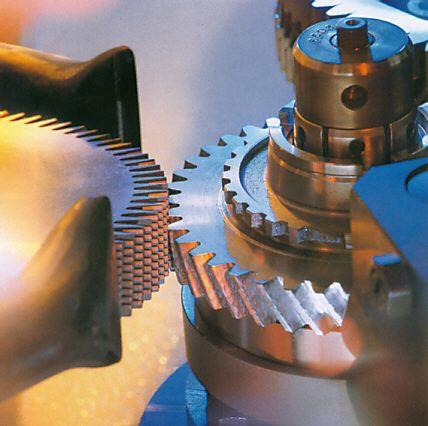
Gear manufacturing mainly deals with the designing and making of gears based on specific application requirements. Among the techniques of gear customization, designing is specifically done for a particular requirement of performance. There are three main types, which include: spur gears, helical gears, and worm gears. All these have specific applications and perform special purposes. This gear manufacturer applies advanced machine tools, coupled with precision engineering in producing top-quality gearing products that are highly imperative in several industries for best fit in performance and durability at maximum efficiency.
How Are Precision Gears Made?
Precision gear production is a meticulous journey requiring advanced techniques and tools.The process involves a combination of design expertise, CNC machining, and finishing methods like gear grind, ensuring products meet the highest standards for complex applications.
Design Phase
Advanced CAD software is used by engineers to prepare detailed models of the gears, including customer-specific requirements for gear customization. The final product then will be ready for performance criteria.
Material Selection
Steel, brass, and other alloy metals are chosen based on the applications for which the gears will be used. These materials are chosen for strength, durability, and resistance against mechanical stresses.
Machining
The geared is formed by modern machine tools by using techniques such as hobbing, shaping, or milling, which provide accurate tooth profiles and dimensions.
Heat Treatment
To make the gears as strong as possible, they face carburizing or induction hardening. These processes enhance the gear’s wear resistance and hence its lifetime.
Finishing
Final operations, such as gear grinding, involve surface smoothing to ensure that the gears attain high precision for smooth operation.
What Are The Raw Materials For Gear Manufacturing?
Raw material selection has a direct impact on gear strength, lifetime, and performance. For instance, steel and brass are used because of their reliability, while plastics are ideal for noise dampening. Maybe you knew that the selection often is based on whether the gear is for speed, for the load, or resistance to environmental conditions.
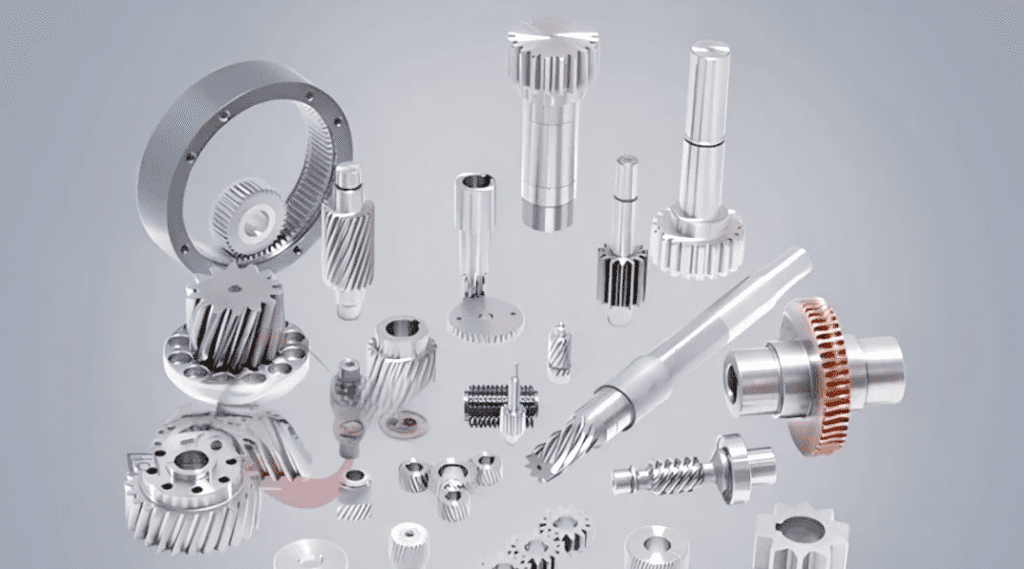
Steel: It has been one of the most used materials in gear fabrication due to its toughness and outstanding wear resistance. It finds widespread usage in heavy-duty applications, especially in cars and machinery, since durability remains the utmost priority.
Aluminum: Lightweight and fairly good corrosion resistance, it finds applications where demands are less and good strength is not required. It always finds applications related to weight reduction in specific industries, like aerospace.
Brass And Bronze: In worm gears, these materials are especially useful because their low friction properties minimize wear and increase efficiency. These materials are ideal for motion requirements that demand smooth action and enduring performance.
Plastics: Plastics find their applications in gear manufacturing where the requirement is for lightweight material or noise reduction. They are great for consumer products, light machinery, and applications where weight and sound dampening are important factors.
What Is The Main Methods Used To Produce High-Precision Gears?
Gear grinding is the most critical process in the manufacture of high-precision gears. The finishing method employs extremely specialized equipment to attain an exceptionally tight tolerance and smooth surface. CNC technology, when applied to it, helps ensure gears of the highest standards concerning precision and quality.
Hobbing: Hobbing is the most common method of producing spur and helical gears. It is ideal for mass manufacturing since it is fast and can maintain high accuracy.
Shaping: Shaping is commonly used in complicated profiles, such as internal and external gears. The method will ascertain that the tooth geometries are accurate, thus suitable for complicated profiles.
Grinding: Grinding is used to attain tight tolerances and smooth surfaces, especially for precision gears. It refines tooth profiles so that the gears turn out to perform per very stringent performance and quality standards.
Casting Or Forging: Casting and forging are employed in the manufacture of gears of strength with complicated shapes. These methods provide high-strength gears capable of handling heavy loads and extreme operating conditions.
3D Printing :3D printing now emerges as a prototyping and low-volume production for customized gears. Fast and cost-effective solutions are provided for the testing and development of new gear designs.
Applications Of Gear Manufacture
Applications of gear manufacturing are vast and diverse, as gears are integral components in many mechanical systems.

Gear manufacturing finds a very broad span of applications in many industries, playing an essential role in numerous mechanical systems. Automotive transmission systems greatly employ gears in facilitating power transmission between the engine and the wheels for smooth accelerations that improve fuel economy. In aerospace, gears play critical roles in several components of the engines, landing gear systems, and other systems that ensure reliability and safety in flight systems. Power transmission by gears in the industrial machinery sector is also used in conveyors, pumps, and compressors to raise efficiency in manufacturing processes.
Gears have already found their applications in renewable energy, where gears in wind turbines and solar equipment convert mechanical energy into electrical power, easing energy consumption. In robotics, gears are applied to control robotic arms and joints, enabling precision tasks. These are just examples of the importance of gears in modern technologies; their uses span a number of diversified fields.
Conclusion
From engineering to material science, custom gear manufacturing is a complex mix of art and state-of-the-art technology. Whether it’s a helical gear, worm gear, or any other precision gear, the best results will come from finding the right manufacturing partner. Searching for quality custom gear manufacturers that can deliver gearing products with superior quality to your needs? Contact trusted experts such as Ultirapid for the best solutions.
Final Thoughts
As a professional with 15 years of CNC machining service experience, I understand the critical importance of precision in custom gear manufacturing. Custom gears are designed to meet specific application requirements, ensuring optimal performance in various industries, from automotive to aerospace. Through advanced machining techniques like hobbing, shaping, and grinding, we can achieve high precision, tight tolerances, and smooth surfaces, essential for gears used in demanding environments.
At Ultirapid, we specialize in producing high-quality custom gears tailored to the unique needs of our clients. For example, in a recent aerospace project, we worked with a client to create custom helical gears that required both high strength and exceptional accuracy. Our expertise in material selection, machining, and heat treatment ensured the gears met strict specifications while maintaining long-term durability under extreme conditions.If you’re looking for reliable, precision-driven gear solutions, Ultirapid’s advanced CNC machining capabilities and commitment to quality make us the ideal partner for your custom gear needs.
Faqs
How Are Micro Gears Made?
Micro gears are made using precise techniques to create small, high-precision components. The process begins with material selection, followed by CAD modeling to design the gear. Machining methods like EDM, milling, or laser cutting are used to form intricate tooth profiles. After machining, surface finishing ensures smoothness and durability. These gears are commonly used in watches, cameras, and medical devices.
What Is The Strongest Material From Which Gears Are Made?
The strongest material used for gears is typically alloy steel, such as nickel-chromium steel or carburizing steel, known for its exceptional strength, toughness, and wear resistance. Tool steel and titanium alloys are also used in specialized applications, offering high performance and lightweight properties. In some cases, ceramic materials are utilized for their extreme strength and wear resistance, though they are brittle.
Which Process Is Best Suited For Mass Production Of Gears?
The best process for mass production of gears is hobbing. This method is fast, efficient, and cost-effective, making it ideal for producing large quantities of gears with consistent precision. Hobbing is versatile, suitable for various gear types such as spur, helical, and worm gears, and minimizes material waste, ensuring high-quality results at a competitive price.


