
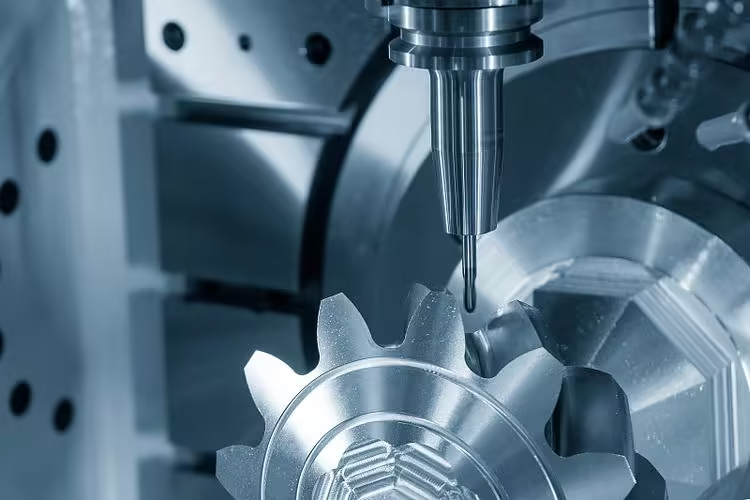
In the big picture of industrial development, gears are definitely the “heart” of mechanical transmission systems. Gears silently carry out the very important missions of power transmission, speed changing, and direction conversion in applications from automotive transmissions and wind turbine rotors to micro-components in precision equipment. However, the performance of a gear is greatly dependent on its manufacturing quality—even a very small deviation will result in inefficiency, noise, or even equipment failure.
Along with the rapid growth of global manufacturing, gear processing technology is undergoing a fundamental transformation. The traditional methods of casting and milling are being replaced or complemented by new methods such as five-axis CNC machining, laser sintering, and 3D printing. These emerging technologies are redefining the limits and possibilities for gear manufacturing. Improvement of gear quality is not only required for operational efficiency alone but also crucial for energy saving, stability enhancement, and extended service life. Therefore, the industry is shifting towards the production of more intelligent, precise, and energy-conserving gears.
This article will enter the world of gears—defining and categorizing them, and explaining their fundamental machining processes—while providing insight into new technology trends and real-world industrial uses that show their indispensable role in modern manufacturing.
What is a Gear?
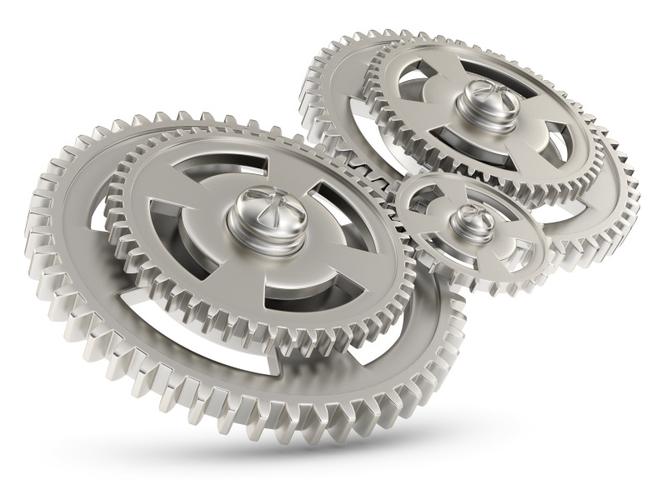
Mechanically, a gear is a toothed ring element employed primarily to transmit power and motion through meshing. Although it appears to be structurally simple, it is really a highly accurate engineering element. Not only does it play a critical role in power transmission, but it also offers the correct conversion of speed, torque, and direction of motion.
The gearing technology of today involves different fields such as material science, mechanical analysis, and mathematical modeling, which turn gears into real “works of art” in industrial engineering. The basic construction includes teeth, tooth slots, a hub, and a rim. The tooth profile is usually involute, which guarantees efficient and smooth power transmission. Key design parameters—such as module, tooth count, and pressure angle—directly influence the gear’s load-bearing capability and overall performance.
What are the types of gears?
The range of gears is really staggering—each model works as a highly trained expert, specifically built to meet a specific mechanical need. Based on differences in tooth shape and shaft alignment, gears can be grouped into the following main categories:
Spur Gears: Most common type, with parallel shafts. They are appropriate for high-load and high-speed transmission, widely applied in car gearboxes.
Bevel Gears: Designed for crossing shafts, typically found in differentials. They are effective in reversing the direction of power transmission.
Worm Gears: Featuring high reduction ratios and self-locking, they are extensively used in elevators, conveyors, and other systems requiring smooth and safe transmission.
Rack and Pinion: Convert rotary motion to linear motion. Typical applications include CNC machine tools and railway track switch systems.
Planetary Gears: Compact core construction but robust to handle high torque, they enjoy extensive use in automatic transmission as well as in robot joints.
Each core is specifically developed to serve the purpose it needs to fulfill with consideration of maximizing efficiency, reducing noise, as well as serving the longest lifespan—bolstering the intellect.
What are gear materials and their characteristics?
The choice of raw material defines a gear’s “character”—whether it’s tough and wear-resistant, or light and agile.
Steel
Steel is the most widespread gear material. After carburizing and quenching heat treatments, steel gears have good strength, hardness, and wear resistance and can withstand high loads and be employed at high speeds.
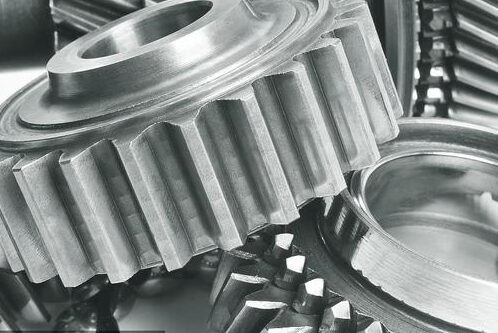
- Properties: High strength, wear resistance good, life long, heat-treatable.
- Applications: Heavy-duty equipment, aerospace machinery, automotive transmissions, and other high-strength applications.
Cast Iron
Cast iron gears have good damping properties and are cheaper and therefore more suitable for applications where high strength is not required but vibration absorption and sound dampening are paramount. Cast iron is slightly more brittle than steel, and is also less wear-resistant.
- Properties: Low cost, excellent damping of vibrations, easy to machine, but compromised toughness and strength.
- Applications: Farm equipment, medium- and low-speed industrial machinery.
Bronze & Brass
These non-ferrous metal materials have excellent friction resistance and corrosion resistance, making them especially suitable for transmission systems paired with steel, such as worm gears. They offer low friction during operation, enabling smooth and quiet transmission.
- Characteristics: Low friction, wear-resistant, corrosion-resistant, less prone to galling.
- Applications: Worm gear sets, marine equipment, precision instruments.
Plastic
Common plastics for plastic gears include nylon, polyoxymethylene (POM), and polycarbonate (PC). They are lightweight, self-lubricating, corrosion-proof, and quiet-running. They are inferior in load capacity and heat resistance, however.
- Properties: Lightweight, quiet, corrosion-resistant, self-lubricating, but not suitable for high temperature or heavy loads.
- Applications: Home appliances, office equipment, toys, and light-duty robots.
Aluminum Alloy
Aluminum alloy gears are of low weight, simple to machine, and resistant to corrosion because of which they are suitable for equipment with tight weight limitations. They have less strength and wear resistance compared to steel, so they are best utilized in low-load, low-speed applications.
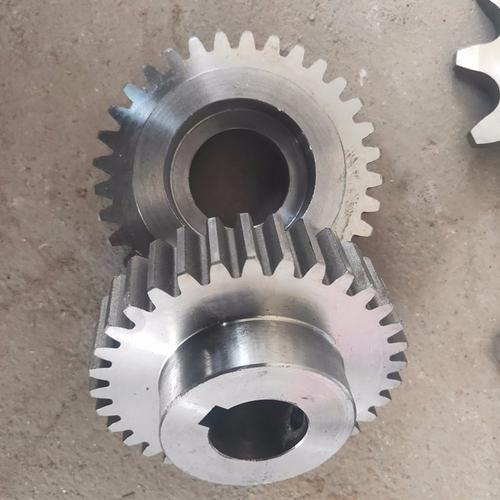
- Properties: Light in weight, high thermal conductivity, corrosion-resistant, easily machinable, but reduced load capacity.
- Applications: Model airplanes, drones, instruments, and small equipment.
The choice of different materials is a trade-off between strength, wear resistance, cost, and operating conditions. For example, precision equipment may use hardened steel, while consumer products may use plastic gears to reduce noise.
Gear manufacturing process
Gear manufacturing is a war between efficiency and precision where every process defines the final performance. From outdated methods to modern technologies, gear processing technologies constantly evolve. The following presents traditional and modern methods.
Conventional Machining Methods
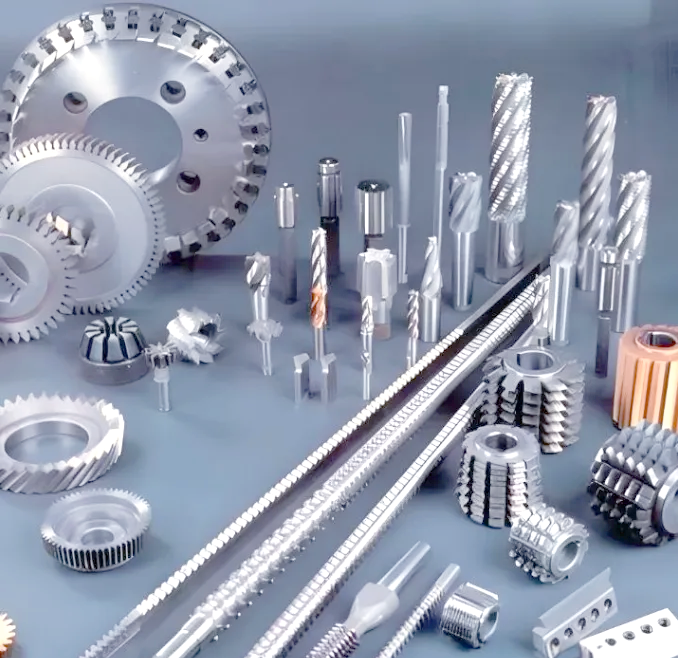
Conventional methods such as casting, milling, and turning are the foundation of gear manufacturing. Although these techniques are well-established, they require strict control over precision and efficiency.
- Casting Process and Key Considerations
Casting is like giving a gear its initial shape—it is the initial manufacturing step, especially well suited for large or complicated non-standard gears. By pouring molten metal into a pre-existing mold, the process of casting can quickly produce a gear blank, laying the foundation for subsequent machining. The precision of the mold design straightaway impacts the dimension accuracy and structural integrity of the casting and therefore is a success factor.
The critical steps in the casting process include:
Mold Design: Tolerates high temperature and accuracy.
Melting and Pouring: Control metal purity and pouring rate to preclude oxidation, inclusions, and porosity.
Cooling and Demolding: Control rate of cooling with care to avoid shrinkage cavities, crack, and other defects.
Post-Treatment: Castings have heat treatment being performed to remove internal stress and machining for the improvement of the surface finish.
Casting is economical and suitable for bulk production, but it has a coarse surface finish with higher tolerances that may require secondary machining to meet the final accuracy requirements of the gear.
- Milling Technology and Parameter Settings
Milling, as a master modeler, forms exact tooth profiles on metal blanks with spinning cutting tools. It is one of the most widely used gear manufacturing processes, most appropriate for small to medium batch sizes. The process is most frequently utilized for rough gear tooth machining, setting up for final finishing.
The accuracy of the milling is largely a function of proper setting of the crucial parameters including:
Feed rate and cutting speed: Cutting speed and feed rate directly influence both surface finish quality and machining efficiency.
Tool type and geometry: Low-speed, fine machining is most suitable with high-speed steel tools, and carbide tools are better suited for high-speed cutting to improve productivity.
Cooling and lubrication: Proper coolant minimizes thermal deformation and tool life.
Tool wear monitoring: Check regularly to maintain tooth profile accuracy and consistency.
Common equipment includes gear milling machines and hobbing machines. Spindle speed, feed rate, and tool material significantly affect their machining accuracy. Proper parameter settings not only improve surface quality but also greatly enhance processing efficiency and product consistency.
- Key Control Points in Turning Process
Turning is the “shaping surgery” of gear manufacturing, primarily for turning the outer diameter or gear hub, and as a foundation for precision finishing. Through high-precision turning, a solid foundation of accuracy is established for subsequent processes.
The most critical control points in turning are:
Workpiece Clamping: The workpiece must be firmly clamped to avoid vibration, which will disrupt machining accuracy.
Tool Geometry: Ideal tool angle optimization reduces cutting forces and extends tool life.
Cutting Speed and Feed Rate: Optimize according to the nature of the material. Low speed and high feed rates are often used in the case of steel in order to create surface smoothness.
For shafts with integral gears or demanding high concentricity, turning is generally the preferred method. This process emphasizes control over spindle runout, tool wear, and clamping techniques. Especially during rough machining, reducing the need for extensive finishing is key to maintaining overall machining precision.
Advanced Machining Technologies
With the rise of smart manufacturing, advanced machining technologies have brought new vitality to gear production, significantly enhancing both precision and efficiency.
- Advantages of Five-Axis CNC Machining
Five-axis machining is a type of mechanical flexible hand with unlimited capacity for high-accuracy manufacture of intricate gears. In contrast to the traditional three-axis method, five-axis CNC machinery governs the motion of a number of axes at once, allowing multi-angle, multi-surface cutting within a single fixture—ideal for gears with intricate shapes and asymmetrical layout.Its major advantage is its precision and efficiency. Five-axis machining easily accommodates complex surfaces, large helix angles, and off-center profiles, greatly enhancing product uniformity and flexibility of machining. It also eliminates repositioning and repeated clamping between operations, effectively eliminating cumulative error and overall productivity gain.
In addition, five-axis machining is highly flexible and therefore most suitable for small-lot, high-mix custom manufacturing. It is widely applied in high-tech sectors such as aerospace, precision reducers, and robotic joints. The technology, however, demands higher requirements: advanced CNC systems, challenging programming, significant equipment investment, and a need for skilled operators and maintenance personnel.Overall, five-axis CNC technology has become an inevitable means in accurate gear manufacturing and is one of the most significant trends for the creation of high-tech manufacturing.
- Application of EDM in Complex Gear Manufacturing
Electrical Discharge Machining (EDM) is a micro-sculptor that can engrave with precise accuracy complex tooth profiles on extremely hard materials, making it particularly well-suited for precision gears with complex geometries, miniature sizes, or extremely high hardness. EDM is based on high-frequency electrical discharges to induce instantaneous high temperatures on the surface of the workpiece, locally eroding the material and achieving non-contact machining and avoiding deformation caused by forces in traditional cutting methods.
The most advantageous aspect of EDM is its high material flexibility, as it can machine hard materials such as carbide and quenched steel. EDM also provides high surface finish, minimal heat-affected zones, and preserves the gear material properties and the dimensional stability. These benefits make EDM widely used for the manufacture of high-quality components such as micro-gears, precision molds, and aircraft engine turbine rotors.
Although it is slower than traditional mechanical cutting methods, EDM is one of the prominent processes to produce high-value gears with complex structure with excellent accuracy in industries where precision and form requirement are tremendously stringent.
- The Innovation of 3D Printing Technology in Gear Manufacturing
3D printing technology, with its unique layer-by-layer material addition technique, is revolutionizing traditional gear manufacturing methods. It is a science fiction movie magic, realizing digital designs into physical gears in no time. With additive manufacturing, gear manufacturing no longer requires traditional molds or complex processing steps, and it is providing unmatched manufacturing freedom.
Its advantages include the elimination of the need for molds, which significantly reduces the cost of mold-making, making it especially well-suited for rapid prototyping and low-volume production. It is also capable of producing complex internal structures difficult to achieve through traditional machining operations, e.g., lightweight gears. The wide variety of available materials, including metals and composites, provides increased freedom for optimization of gear performance. 3D printing has been used heavily in high-end industries such as aerospace and medical industries, with tremendous potential being shown, particularly in the production of tailored gears and quick prototyping.
However, the surface precision and strength of 3D printed gears are yet to be enhanced. Currently, they are mainly suitable for non-load-bearing components with relatively low accuracy demands or the production of high-performance plastic gears. As technology continues to develop, additive manufacturing is bringing a new era of gear machining, and in the future, it will play an important role in more high-requisition areas.
Common Problems and Solutions in Gear Machining
There are some quality issues even in precision gear machining operations, which, if not corrected on time, can hinder the performance and life of the gear. Tooth profile errors, high surface roughness, thermal distortion, and dimensional deviations are some of the common issues. There are a series of effective solutions to these problems.
Tooth profile errors are primarily the result of tool wear or machine tool vibrations. These inaccuracies can compromise gear meshing and reduce transmission efficiency. To address this, regular inspection of tool wear is essential, with timely replacement of worn tools to avoid error buildup caused by dull edges. Additionally, using high-rigidity machine tools helps minimize vibrations, while optimizing cutting parameters plays a crucial role in enhancing machining accuracy.
Secondly, improper surface roughness can compromise the stability of gear meshing.The most prevalent causes are insufficient cooling or improper cutting speeds. Increasing the rate of coolant flow will more effectively relieve cutting temperatures, preventing overheating and surface roughness. Altering the cutting speed and feed rates, and using fine grinding technology, can also improve gear surface smoothness and reduce roughness.
Thermal deformation is also a common problem, normally caused by heat expansion of the material during machining. This may lead to shape and size deviations in the gears. Thermal deformation can be avoided by controlling the machining temperature strictly. A stepwise rough and finish machining process can reduce the impact of temperature fluctuation in one cutting process. If extreme deformation has occurred, there can be employed treatment for aging to eliminate stresses inside the material and reduce thermal deformation.
Finally, dimensional inaccuracies are typically caused by unstable clamping of the workpiece or inaccurate measurements. To prevent this from happening, there should be high-precision fixtures used to ensure stable workpiece clamping. In addition to that, proper measurement should be done after machining using a coordinate measuring machine (CMM) to ensure that the dimensions of the gear meet design specifications.
Through effective process control, precise machining techniques, and high-precision inspection equipment, these problems can be properly controlled to produce good quality and reliability in gear machining.
Difference Between Forged Gears and Machined Gears
Forged gears and machined gears are quite different in manufacturing techniques and performance aspects and therefore best utilized for dissimilar applications. Forging and machining are two karate masters, both of which increase strength and hardness but in their respective ways. How do these two operations impart their respective properties to gears?
Forged Gears are manufactured by plastic deformation of metal at elevated temperature. During the process, the metal grain structure is fine-grained, enhancing the strength and toughness of the gear significantly. Forged gears are therefore used in heavy-duty and impact use, such as gears used in heavy machinery and construction machines. Good fatigue characteristics and load-carrying capacity are the major advantages of forged gears. But due to the process of molding, accuracy is relatively low, and therefore post-machining is required in order to achieve the final dimensional requirements.
Machined Gears, on the other hand, are made using cutting processes that actually create the teeth directly, with better dimensional precision and surface finish. Machined gears are suited to applications requiring high-precision transmission, such as instruments and precision machinery gears. The advantages of machined gears are their very good machining accuracy and surface quality. However, due to the limitations of the machining process, material utilization is very poor, and the strength is slightly lower than forged gears.
In practical applications, forging is generally used to manufacture the gear blanks, while machining is utilized for finishing. The simultaneous application of both processes facilitates the balance between strength and precision, meeting the performance criteria of gears in various industries
Practical Applications of Gears in Industries
Gears are ubiquitous in our daily lives, playing an indispensable role in various industries. Whether it’s the massive gears in wind turbines or the tiny gears in watches, these mechanical “elves” drive the pulse of modern industry, becoming a crucial force behind technological innovation.
Automotive Industry: Planetary gear sets are utilized in automatic transmissions to provide smooth shifting. For example, Ultirapid used high-precision alloy steel gears for BYD vehicles and boosted transmission efficiency by 10%.
Aeronautical Industry: Bevel gears in turbofan engines need to withstand severe heat and intense loads. Five-axis CNC machining combined with titanium alloy materials offer incredibly high reliability and very long lifespan.
Wind Power Generation: Low-speed planetary wind is transformed into high-speed rotation for generators with the help of huge planetary gearboxes. The strength and accuracy are ensured by the integration of casting and precision machining processes.
What Ultirapid Can Do for You in Gear Processing
Ultirapid has been in the gear industry for 15 years, showcasing exceptional advantages in gear processing thanks to its advanced technology and extensive experience. Leveraging high-precision technologies such as five-axis CNC, CNC turning, and EDM (Electrical Discharge Machining), Ultrapid achieves tolerances as low as ±0.001 inches, meeting the stringent requirements of industries like aerospace, automotive, and energy. Its 3D printing technology accelerates rapid prototyping and small-batch production, supporting over 70 material options to flexibly address diverse needs. Automated production lines and digital quality inspection ensure efficient production and reliable quality, while customized services and 15 years of industry experience further strengthen its market competitiveness, providing customers with comprehensive gear solutions from design to delivery.
Conclusion
Gears, the focal point of mechanical transmission, reflect the progress of industrial manufacturing by enhancing the processing technology of their own design. From the ancient casting and milling to five-axis CNC, EDM (Electric Discharge Machining), and 3D printing, each technological leap has added more accuracy and performance to gears. Forward-looking, smart manufacturing and environmentally friendly production will be future pathways of gear processing, i.e., optimizing processing parameters through AI or utilizing recyclable materials to manufacture gears. Gears will continue to propel the boundless power of human industry with their precise rotation in the automotive, aerospace, or medical sectors.
FAQS
What is the strongest material for gears?
For heavy-duty gears, alloy steel is the preferred choice, while nickel-based alloys are considered for high-temperature or corrosive environments. When weight reduction is a priority, titanium alloys offer high strength but have slightly lower wear resistance. Therefore, considering a balance of strength, cost, and machinability, carburized and quenched alloy steel remains the most common and durable gear material.
What is the difference between hobbing and broaching?
Hobbing is well-suited for machining external gears and involute tooth profiles. It offers high efficiency and strong flexibility, making it widely used in medium to large-scale production with moderate cost. Broaching excels in ultra-high precision machining of internal gears and splines. While extremely efficient, it comes with higher costs and is best suited for high-volume production with fixed tooth profiles.


