
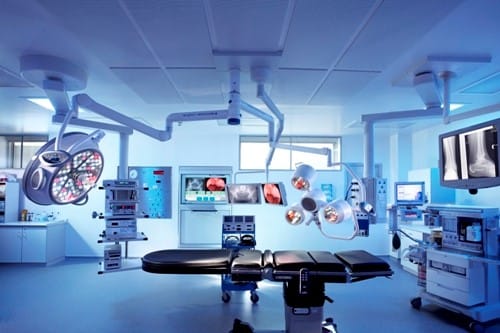
Surgical tools—Medicine needs sharp and biocompatible medicine. Traditional methods lack such severe requirements; hence, several deficiencies based on performance and safety have often been recorded within medical devices. This is where medical CNC machining, with its computer-controlled precision and much flexibility, has rapidly transformed the face of the industry.
Medical CNC machining multiplied the quality of producing surgical instruments and spawned various innovations within the medical sector according to the ceaseless march of technology.
Applications and benefits of medical CNC machining vary, and this article will depict how this technology ensures life-saving instruments are fabricated, as well as propels inclusive advancement in the medical field.
Why Is CNC Machining Suitable For Medical Industries And Applications?
The medical industry requires extreme precision and accuracy, and quality control and reliability are paramount. CNC machining totally goes in sync with these reasons as it is inherently capable of producing precisely machined components. For this fact alone, the method turns out to be an ideal alternative for the making of medical devices and instruments.
In addition, CNC machining allows the flexibility of design and the making of intricate designs from different available materials for the manufacture of machined parts, thereby meeting various demands within medical device manufacturing. The repeatability of the process ensures that large production lots stay within the same quality benchmark under the compliance of ISO 13485 and 9001 certification.
What Are The Commonly Used CNC Machining Methods In The Medical Field?
From surgical tools to implants, CNC machining is everywhere in the medical field. Several CNC machining methods find extensive use in the medical field, each catering to specific needs.

CNC Milling
This highly versatile method is applied for creating complex 3D shapes. Therefore, it is ideal for the manufacture of orthopaedic implants, surgical instruments, and custom medical components. CNC milling gives the possibility of creating complex designs with close tolerances, greatly required in the functionality of medical devices.
CNC Turning
It is a manufacturing process employed in the creation of cylindrical parts with a high degree of accuracy. In medical applications, it finds extensive use in the manufacture of shafts, pins, and other rotary components of machines. It is in this light that the possibility of reaching tight tolerances underlines the importance of CNC turning during the manufacture of critical medical components.
CNC Swiss Machining
CNC Swiss machining is one of the methods used in the manufacture of small and complicated parts with a high degree of accuracy. Moreover, CNC Swiss machining generally produces miniature components dealing with minimally invasive surgical tools and diagnostic devices. Small and complex parts in large quantities would give good production.
Electrical Discharge Machining
This is used to create complex shapes in hard metals, thus enabling manufacturing of special surgical instruments and implants. The technique will provide the same degree of accuracy in machining the material that is difficult to cut by conventional methods; hence, it will be possible to manufacture quality medical devices.
What Materials Are Mainly Used In Medical CNC Processing?
Material selection for medical components is critical regarding performance and safety. Material choice for medical CNC machining depends on a number of critical factors: biocompatibility, sterilizability, strength, and durability. Do you know what materials are the most common for medical CNC treatment?

Stainless Steel:Corrosion-resistant and strong, it finds wide applications in surgical instruments and implants.
Titanium:It is highly biocompatible and features outstanding strength-to-weight ratio, thus being widely used for orthopaedic implants.
Cobalt-Chrome Alloys:Excellent wear resistance and strength for joint replacements.
Polymers (PEEK, PTFE ):Biocompatible, resilient materials for implantation and catheters.
Ceramics (Alumina, Zirconia):Wear-resistant and biocompatible materials used in dental implants.
These materials are chosen for their strength, corrosion resistance, and compatibility with the human body, making them ideal for orthopedic implants and surgical instruments.
What Are The Applications Of CNC Machine Tools In The Medical Industry?
From the tiniest screw in your glasses to life-saving medical equipment, everywhere in health is being taken over by CNC machining.

CNC machine tools have become indispensable in the medical industry because they offer a wide range of high-precision component and device fabrication. Application areas range from orthopedic implants, such as knee replacements, hip implants, and spinal implants that are fabricated for the best fit and compatibility within the human body, to surgical instruments manufacturing like scalpels, forceps, and drills using the operation of CNC machining, which plays a vital role in ensuring both effectiveness and safety during surgical procedures.
Besides, CNC machining plays a very important role in the development of dental implants and prosthetics, including crowns and bridges, through customized solutions with improved patient outcomes. It is also used in the precise fabrication of components for diagnostic equipment like MRI machines and CT scanners, ensuring accuracy within medical imaging. Finally, CNC machining plays an important role in the manufacturing of life-saving medical devices, like pacemakers and insulin pumps, where precision and reliability are literally a matter of life and death. These applications build up to the transformative effect of CNC machining on the medical field.
What Are The Advantages Of Using CNC Machining In The Medical Industry?
What’s more, the benefit of CNC machining is not confined to efficiency only. Probably, you might be interested in how the CNC would add quality to medical devices. Some of the major uses of CNC Machining in the medical industry come with several advantages.
Computer Numerical Control machining has enormous advantages in the medical industry and therefore is irreplaceable in the qualitative production of devices and components. Among the major advantages are high precision and accuracy, which ensure the fulfillment of strict specifications of surgical instruments and implants-so important for patient safety. Besides, CNC machining allows quality control consistently, enabling rigorous monitoring of every component to conform to medical standards.
Other key benefits involve the creation of complicated geometries in manufacturing intricate designs required in top-of-the-range surgical devices. This is augmented by repeatability in large-scale production whereby CNC machines replicate components with accuracy to provide batch-to-batch consistency of output. Versatility in material choice also allows the manufacturer a range of materials, optimizing choice based on the intended application.
CNC machining provides assurance of meeting medical industry standards, such as ISO 13485 and ISO 9001:2015, reinforcing adherence to quality and regulatory requirements. It is cost-effective for both prototyping and mass production, hence presenting an effective means of bringing new designs to the market. Lastly, automation reduces human error in manufacturing significantly, thus offering more reliable results that improve patient safety. All of these advantages combined make CNC machining a leading means of advancing technology in the medical field.
What Are Your Best Tips For Designing CNC Machined Medical Parts?
The selection of a correct material for a medical device is just as important as choosing the perfect ingredient to make a gourmet dish. What then do we look for?
When designing CNC-machined medical parts, there are a number of key considerations to optimize the manufacturability-performance relationship. First, apply DFM principles: The design should be simplified to minimize machining complexity and reduce production costs. Material selection is important; materials selected need to be compatible with bodily contact, sterilization, and/or other mechanical properties for their basic safety in medical applications.
Specify tight tolerances for proper fit and function; precision is critical to patient outcomes. Next, identify the surface finish required for each part functionality-smooth finishes can reduce friction for implants and a textured surface can improve adhesion in other applications. Finally, design for sterilization: parts should be able to be properly cleaned and sterilized. These foregoing tips will refine the design and manufacturability of CNC-machined medical parts to improve their performance and safety in general.
The Future Of CNC Machining In The Medical Field
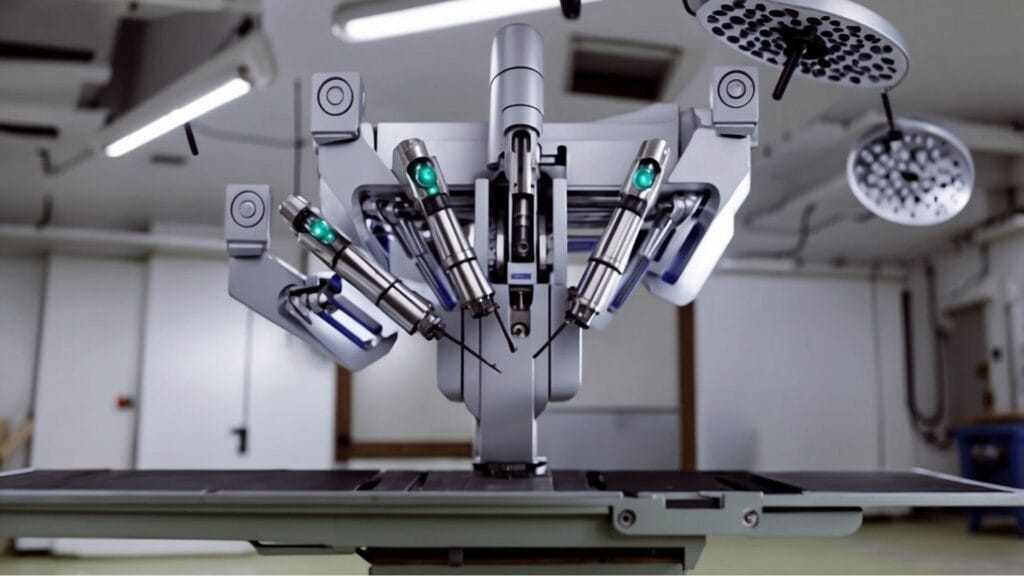
The future of CNC machining in the medical sphere will proceed through transformative changes to a greater degree of precision and efficiency, andcapability. Much integration is going on with 3D printing for hybrid manufacturing, which combines both additive and subtractive processes in creating these really complex geometries and optimizing material usage. This hybrid manufacturing allows for innovative designs and increased efficiency in producing such parts. In addition, higher automation and light-out manufacturing will make operations of the facilities do as little as possible with human intervention, hence streamlining operations and reducing costs in the process.
Other major developments are the focus on advanced materials for better biocompatibility, translated to safer and more effective medical devices. Application of AI and machine learning will further optimize the machining process by allowing real-time changes and enhancements in quality control. Furthermore, design specifications for personalized medical devices and implants that fully meet the needs of specific patients will be emphasized. These features put together will notably enhance the role of CNC machining in the future of medical technology.
Conclusion
With the ability to fabricate components to exact specification with great precision and accuracy, it becomes the perfect avenue for the high demand imposed by this important sector. Countless medical miracles, from surgical instruments to orthopedic implants, have CNC machining right at their core.
Due to the continuous development in the CNC area and its fusion with other innovative manufacturing processes, injection molding among them, the future of CNC machining for the medical field may be one of evolution and growth. This constant quality focus-endorsed by standards like ISO 9001 2015 and ISO 13485-will be important in assuring that the CNC machined parts deployed in life-critical applications in medicine are reliable and accurate.
It is the use of CNC machining that has been changing the medical industry, with many life-saving devices and instruments manufactured to a degree of precision never before thought possible. Its future is bright, with endless possibilities to innovate and improve.
Final Thoughts
As a worker with 15 years of CNC machining service experience, I’ve witnessed the profound impact of CNC machining on the medical industry. Precision is vital for surgical instruments and orthopedic implants, where even slight inaccuracies can compromise patient safety. CNC machining enables the production of high-quality components that meet strict industry standards.
At Ultirapid, we specialize in delivering custom medical parts compliant with ISO 13485 and ISO 9001. Recently, we collaborated with a medical device manufacturer to produce titanium implants, optimizing our machining parameters to achieve a 20% reduction in lead time while ensuring tight tolerances. This commitment to quality and innovation makes Ultirapid a reliable partner for enhancing your medical manufacturing capabilities.


