
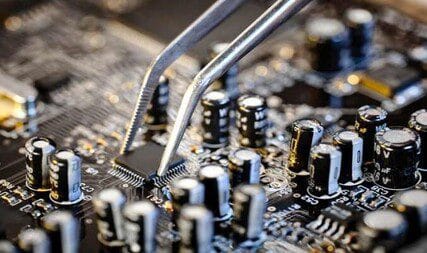
In this rapid-development technological era, the electronics industry-the largest and one of the most powerful industries in the world-continuously pushes and develops innovation. It is a major industry that covers everything from high-value professional equipment to everyday consumer electronics. Precision CNC machined parts are used in many such pieces of equipment. Whether plastic or metal parts, quality and precision are guaranteed by CNC machining technologies such as CNC milling and CNC turning. These technologies enable the manufacturing of even the most complicated parts, including circuit boards, which enable the mass production that developing market demand needs.
This article describes the uses and significance of CNC machining in the electronics industry and shows how important it is to today’s manufacturing.
What Role Does CNC Machining Play In Modern Electronics Manufacturing?
Accuracy is the keyword in modern electronics manufacturing. CNC machining forms a very important part of this process, making it possible to manufacture high-quality parts to impressive accuracy. Computer numerical control thus enabled the automation of the manufacture of complicated shapes and designs required by the electronic equipment. The technology helps reach higher productive efficiency and ensures that each machined part will maintain tight tolerances that could lead to malfunctioning in sensitive applications.
How Do CNC Techniques Enhance Precision And Reliability In Electronic Component Production?
Imagine trying to build a complex puzzle where each piece must fit perfectly with the others. In the world of electronics, even the smallest misalignment can cause significant issues. CNC techniques ensure that every part is crafted with exact precision, enhancing both the reliability and performance of electronic components.
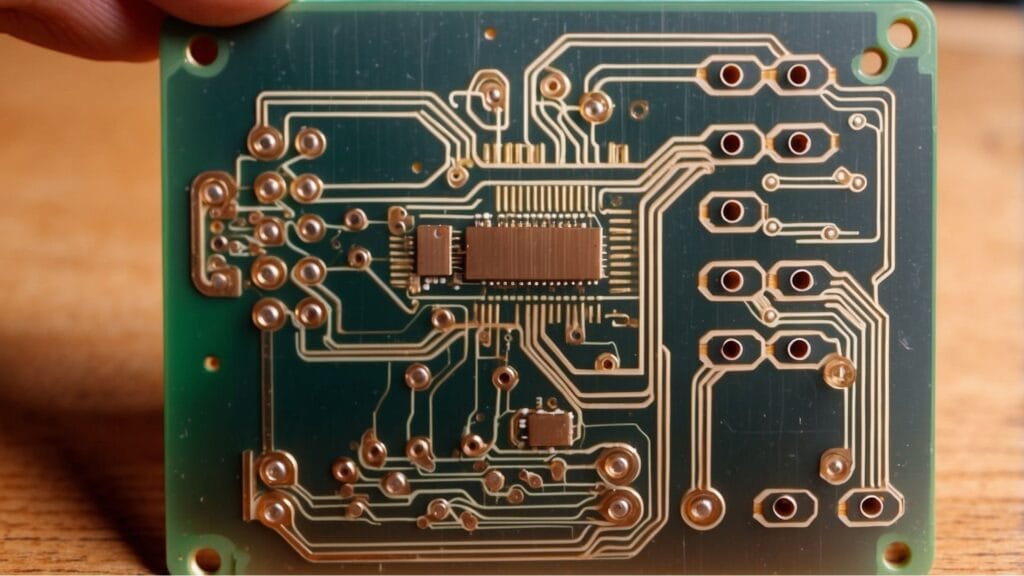
CNC (Computer Numerical Control) techniques significantly enhance precision and reliability in electronic component production. By using pre-programmed instructions to control cutting tools, CNC machining eliminates human error and ensures consistent results. This automation is crucial for maintaining tight tolerances, often down to microns, which is essential in the electronics industry, where even minor deviations can lead to performance issues.
Additionally, the automated nature of CNC machining ensures consistent material removal, resulting in uniform parts and predictable performance. By minimizing human intervention, CNC techniques further reduce the risk of errors and inconsistencies. These enhancements collectively contribute to the production of high-quality electronic components that meet the rigorous demands of modern technology, ultimately improving their reliability and performance in various applications.
What Types Of Materials Are Commonly Used In CNC Machining For Electronics?
When it comes to crafting electronic components, the choice of material is just as crucial as the machining process itself. From metals to plastics, each material brings unique properties to the table.
Metals
Aluminum is favored for its lightweight nature and excellent thermal conductivity, making it ideal for heat sinks and enclosures. Copper, known for its high electrical conductivity, is commonly used for connectors and electronic components. Brass offers good conductivity and corrosion resistance, making it suitable for connectors and terminals. Stainless steel is chosen for its durability and resistance to corrosion, particularly in demanding environments.
Plastics
ABS (Acrylonitrile Butadiene Styrene) is popular due to its impact resistance and good machinability, making it a go-to material for enclosures and housings. Polycarbonate stands out for its strength and transparency, making it ideal for protective covers and lenses. Acrylic is appreciated for its clarity and weather resistance, often used in displays and light guides.
Ceramics
Alumina is a key material in specialized electronic applications due to its high dielectric strength and thermal stability, making it suitable for components requiring electrical insulation and heat resistance.
Advantages Of CNC Machining In The Electronics Industry
With so many fabrication options available today, why does CNC machining stand out, even within the electronic industry? There are lots of advantages, from achieving high precision to cost-effectiveness.
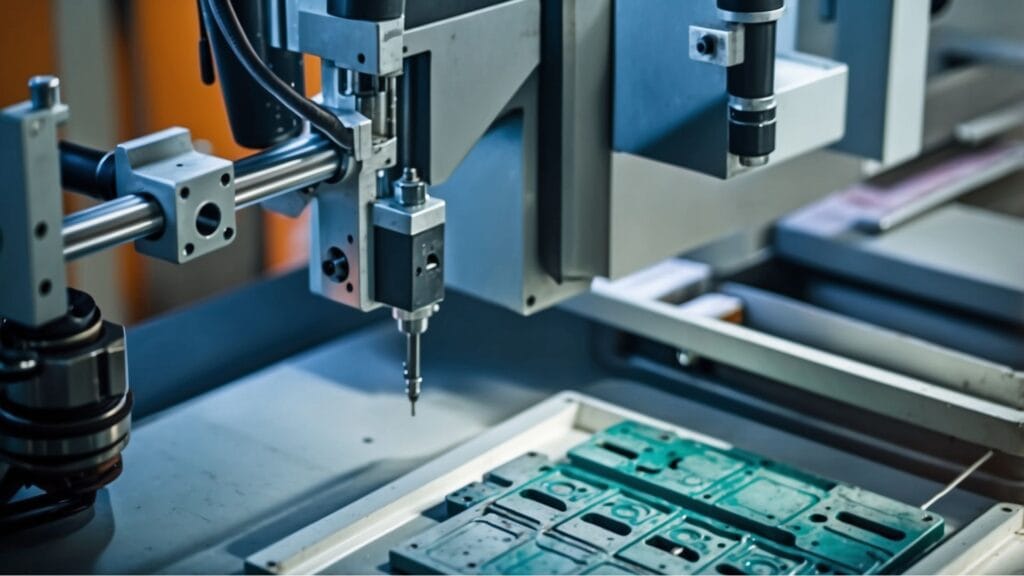
This technology greatly contributes a lot of value to the electronic industry, mainly through high precision and tight tolerances. This technology is necessary for intricate, reliable electronic parts that will make sure even the most minute detail is produced correctly. Repeatability and consistency ensure uniformity in parts for predictable performance important in maintaining quality standards at par with the competition.
Moreover, CNC machining supports any material ranging from metals to plastics and ceramics. This enables the manufacture to attain the best performance by choosing appropriate materials for their applications. In addition, on geometric capability, the level of complexity provided by CNC machining allows the making of intricate shapes required in electronic components. Last but not least, its scalability-from prototyping into production-enhances its application for operational efficiency and is, therefore, a highly valued solution for the electronics industry.
What Are The Examples Of CNC Machined Electronic Parts?
You might be surprised at how many components within your electronic devices are fabricated using the CNC machining process. From the circuit boards that drive functionality to the casings that protect these fragile components, CNC machining is found everywhere.
From different electronic components to casings and enclosures, CNC machining fabricates all these items with the accuracy and dependability their making demands. Further, printed circuit boards use the precision hole drilling and pattern-making capabilities of the CNC machines in the most critical manufacturing of electronic circuits. Protection from physical and environmental exposure allows internal components to remain functional and protects the devices they are contained within.
Other examples are CNC-machined heat sinks that serve to dissipate heat well, maintaining optimum performance in electronic devices, and connectors and terminals, where precision machining ensures a reliable electrical connection. Lastly, mounting brackets and frames provide structural support and alignment for various components, hence enabling stability and functionality within electronic systems. These are just some of the key examples of how important CNC machining is in the electronics industry.
The Future Of CNC Machining In The Electronics Industry
Emerging technology opens new dimensions for CNC machining within the electronics industries. Now, are you excited about the future of this industry? Automation and artificial intelligence are emerging trends that can increase precision and efficiency in the manufacturing process with high credibility.
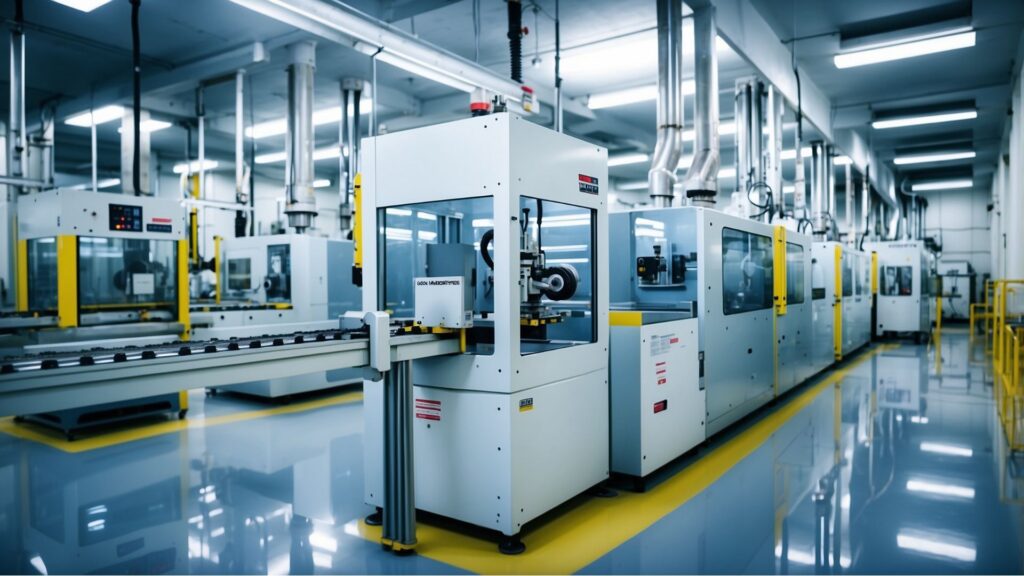
The capability of CNC machining for the electronics sector is going to increase manifold with the advancement in technology. This can be expected to reach a whole new dimension by the integration of automation and artificial intelligence, boosting precision and efficiency. These coming-of-age trends will enable designers to create increasingly complex designs while allowing production at faster rates, enabling manufacturers to meet the burgeoning demand for high-quality electronic components.
Further development of the capabilities of CNC machining will be attained with new materials and techniques of machining. A possibility to work with a wide range of materials, including advanced composites and special metals, allows creating special products for specific applications. Going forward, it is a fact that as the electronics industry continues to progress, CNC machining will lead the charge that will ensure the continuity of the ability of manufacturers to make components that work and meet the challenges ahead. In fact, considering how flexibly the ongoing dynamics are met with CNC machining, the outlook for this sector is exciting.
Conclusion
CNC machining plays a vital role in the electronics industry, delivering the high precision and reliability necessary for modern electronic components.From CNC machined heat sinks to intricate casings and circuit board parts, this technology enhances the overall quality and performance of electronic devices.
As advancements continue, CNC machining will remain at the forefront of innovations in electronics manufacturing, addressing new challenges and opportunities in the field.By understanding the applications and benefits of CNC machining, manufacturers can continue to push the boundaries of what is possible in the ever-evolving electronics landscape.
Final Thoughts
As a machining with 15 years of CNC machining service experience, I can attest to the critical role CNC machining plays in the electronics industry. The ability to produce high-precision components—like heat sinks and casings—ensures the reliability and efficiency of electronic devices. At Ultirapid, we have successfully delivered intricate machined parts for leading electronics manufacturers, consistently meeting tight tolerances and enhancing product performance. Our commitment to quality and innovation makes us an ideal partner for your CNC machining needs, ensuring your electronic components are crafted to the highest standards. Let us help you push the boundaries of what’s possible in electronics manufacturing.


