

Imagine an aircraft engine grinding to a halt mid-flight due to a single impeller failure, triggering millions of dollars in damages and jeopardizing passenger safety. In the blistering conditions of supersonic flight, how do impellers endure 1,600°C temperatures and extreme mechanical stresses? NASA’s research highlights that advanced aerospace impellers can enhance thrust efficiency by 15%, slashing fuel consumption and emissions, directly impacting operational economics and sustainability. This comprehensive guide dives deep into the science and engineering of aviation engine impellers, exploring materials, design innovations, manufacturing breakthroughs, and maintenance strategies that make high-precision impellers the backbone of high-performance flight. Keywords: aerospace impeller, aviation engine impeller, high-precision impeller.
Extreme Environment Adaptability Of Aerospace Impellers
How do impellers thrive in the fiery heart of a jet engine? High-temperature impellers rely on cutting-edge materials to conquer extreme conditions.
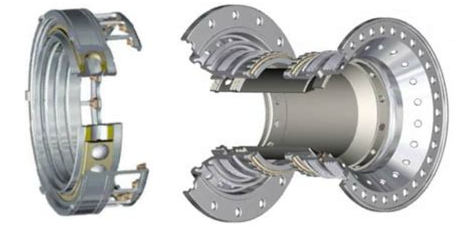
Nickel-based superalloys, such as Inconel 718, are the gold standard, maintaining structural integrity and oxidation resistance at 1,600°C. These alloys exhibit a yield strength of 1,100 MPa at high temperatures, making them ideal for turbofan engines. In contrast, titanium alloys, with a density of 4.5 g/cm³, perform well up to 600-900°C but lose strength beyond this range due to phase transformations. GE Aviation’s proprietary Inconel 718 variant, optimized with niobium additives, extends impeller lifespans by 20% and raises temperature thresholds by 50°C.
For even harsher conditions, ceramic matrix composites (CMCs) are emerging, offering temperature resistance up to 1,800°C and a 30% weight reduction compared to nickel alloys. However, their brittleness and high cost (up to $50,000/kg for aerospace-grade CMCs) limit widespread adoption. Aviation engine material selection hinges on a delicate balance of temperature tolerance, mechanical strength, and cost-effectiveness. For instance, Rolls-Royce’s Trent XWB engines use a hybrid approach, combining nickel alloys for high-stress zones and titanium for lighter components, achieving a 12% efficiency gain. This strategic material synergy ensures impellers deliver consistent thrust under extreme thermal and oxidative stresses.
Lightweight Aerospace Impeller Design
In aerospace, every gram shaved off an impeller translates to fuel savings. How are lightweight impellers engineered for maximum efficiency?
Titanium alloy impellers, with their low density and high strength-to-weight ratio (550 MPa at 4.5 g/cm³), are a cornerstone of modern designs. Boeing 787’s GEnx engines leverage titanium impellers to reduce weight by 15%, cutting fuel consumption by 1,200 tons annually per aircraft. Carbon fiber-reinforced polymer (CFRP) composite impellers push weight reduction further, with densities as low as 1.6 g/cm³, but their temperature limit of 300°C restricts them to low-heat components like fan blades. Airbus A350’s hybrid titanium-CFRP impellers achieve a 10% weight reduction while maintaining structural integrity.
Design optimization plays a critical role. Finite Element Analysis (FEA) simulates stress distribution, allowing engineers to sculpt blade geometries that minimize material use without sacrificing strength. For example, topology-optimized impellers in CFM56 engines reduced mass by 8% while improving fatigue resistance. Titanium alloy impellers require meticulous machining to achieve ±0.01 mm tolerances, ensuring aerodynamic precision. Advanced cooling channels, integrated via laser drilling, further enhance thermal performance, allowing lightweight designs to withstand 1,200°C environments. These innovations underscore the critical role of lightweight impeller design in fuel-efficient, high-performance aviation.
Fatigue Resistance And Vibration Control In Aerospace Impellers
Vibration is a silent threat to impeller longevity—how is stability maintained at 30,000 RPM? Impeller vibration control is non-negotiable.
The ISO 1940-1 G2.5 standard mandates impeller imbalance below 0.1 g·mm/kg, critical to preventing resonance-induced fatigue. Topology optimization, guided by computational models, reduces stress concentrations by 30%, lowering crack initiation risks. For instance, a military turbofan engine adopting optimized impellers saw vibration amplitudes drop by 40%, extending service life to 10^7 cycles.
Active vibration damping, using piezoelectric actuators, is an emerging solution. These systems adjust blade dynamics in real-time, reducing vibration by 25% in high-speed conditions. Rolls-Royce’s Trent 1000 engines incorporate such technologies, achieving a 15% reduction in fatigue-related failures. Aviation impeller dynamic balancing also involves laser-based mass correction, ensuring precision down to 0.01 g. These advancements ensure impellers withstand cyclic stresses, maintaining reliability in demanding flight profiles like supersonic or vertical takeoff scenarios.
Precision Manufacturing Technologies For Aerospace Impellers
Crafting impellers with micron-level precision is an aerospace engineering triumph. Which reigns supreme: five-axis machining or additive manufacturing? Impeller precision machining decoded.

Five-axis CNC machining delivers unparalleled accuracy (±0.01 mm), essential for complex blade geometries and narrow flow channels. Using diamond-coated tools, it achieves surface roughness of Ra 0.8 μm, optimizing aerodynamic efficiency. However, multi-setup processes increase costs, with production times averaging 40 hours per impeller. Pratt & Whitney’s PW4000 impellers, machined with five-axis systems, achieve 99.9% dimensional compliance.
Additive manufacturing (3D printing), particularly Selective Laser Melting (SLM), reduces costs by 20% by producing near-net-shape impellers with intricate cooling holes. While precision is slightly lower (±0.05 mm), SLM enables rapid prototyping, cutting development cycles by 50%. NASA’s 3D-printed rocket impellers, made from Inconel 718, demonstrated a 15% weight reduction. Hybrid approaches—3D printing for blanks followed by five-axis finishing—are gaining traction, balancing cost and precision. 3D-printed impellers are poised to revolutionize aerospace manufacturing, especially for custom or low-volume applications.
Thermal Barrier Coatings For Aerospace Impellers
How do coatings protect impellers in blazing engine cores? Impeller thermal protection coatings are a lifeline for longevity.
Thermal Barrier Coatings (TBCs), typically yttria-stabilized zirconia, reduce surface temperatures by 200°C, extending lifespans by 50%. Pratt & Whitney’s PW4000 engines validated TBCs’ efficacy, with coated impellers enduring 12,000 hours of operation. Wear-resistant coatings, such as tungsten carbide, protect against Foreign Object Damage (FOD), common in runway debris scenarios. Coating thickness, maintained at 0.1-0.3 mm, is critical to prevent cracking under thermal cycling.
Plasma spraying ensures uniform TBC application, while Electron Beam Physical Vapor Deposition (EB-PVD) enhances adhesion for high-stress zones. Safran’s LEAP engines use EB-PVD TBCs, achieving a 20% reduction in thermal fatigue. Regular coating inspections, using infrared thermography, detect delamination early, preventing failures. Aviation impeller wear-resistant layers are indispensable for maintaining performance in extreme thermal and erosive environments.
Key Performance Indicators For Aerospace Impellers
What metrics define impeller excellence in aerospace? Impeller performance parameters are the benchmark for success.
Six critical KPIs include:
- Thrust-to-Weight Ratio: >8, driving aircraft takeoff performance.
- Fatigue Life: ≥10^7 cycles, ensuring decades of reliability.
- Creep Resistance: Withstands deformation at 1,600°C under sustained loads.
- Surface Roughness: Ra≤0.8 μm, minimizing drag and maximizing efficiency.
- Material Defect Tolerance: Meets ISO 9712 Non-Destructive Testing (NDT) standards.
- Corrosion Resistance: Resists fuel, salt, and oxidative degradation.
Aviation impeller testing leverages ASTM E139 creep tests, ASTM E466 fatigue trials, and X-ray diffraction for defect detection. Ultrasonic NDT ensures zero internal flaws, critical for safety-critical components. These rigorous standards, enforced by FAA and EASA, guarantee impellers meet the demands of commercial and military aviation.
Aerospace Impeller Selection And Supply Chain Management
Selecting an impeller supplier is akin to choosing a partner for mission-critical success. How is quality assured? Aerospace impeller supplier strategies unveiled.
AS9100D and NADCAP certifications are non-negotiable, ensuring compliance with aerospace quality standards. GE Aviation’s military-grade expertise contrasts with Safran’s commercial aviation prowess, each offering unique strengths. Suppliers must provide 10-year case studies, such as GE’s contributions to Boeing 737 MAX engines.
Supply chain resilience is critical, with lead times for Inconel 718 impellers averaging 12-16 weeks. Risk mitigation involves dual-sourcing and digital supply chain platforms, reducing delays by 30%. AS9100-certified impellers undergo audits for material traceability, ensuring compliance with MIL-STD-810 environmental standards. Selecting suppliers with proven aerospace pedigrees guarantees reliability in high-stakes applications.
Aerospace Impeller Industry Applications And Case Studies
Impellers are at the core of propulsion systems across all aerospace sectors, from commercial aircraft to reusable rockets. Their design, materials, and performance directly affect engine efficiency, thermal resilience, and overall mission success. Let’s take a detailed look at how impeller technology is applied in some of the most advanced aerospace systems.

Commercial Aviation: Titanium Impellers In The Boeing 787 GEnx Engines
In the realm of commercial aviation, the Boeing 787 Dreamliner utilizes GEnx engines equipped with titanium impellers in the low-pressure compressor stages. Titanium’s exceptional strength-to-weight ratio allows for a significant reduction in engine mass—by as much as 15%. This weight savings translates directly into enhanced fuel efficiency, with the GEnx engine improving fuel economy by approximately 10% compared to earlier models. Over time, this efficiency yields substantial economic benefits, saving airlines up to $2 million per aircraft annually. Moreover, titanium offers excellent corrosion resistance and fatigue life, ensuring the impellers remain reliable and structurally sound throughout thousands of flight hours at high rotational speeds.
Military Aviation: Inconel 718 Impellers In The F-35B Fighter Jet
In the military sector, the F-35B Lightning II fighter jet employs Inconel 718 impellers in its vertical lift and propulsion system. These components are engineered to perform under extreme conditions—enduring temperatures of up to 1,400°C and rotational speeds exceeding 50,000 RPM. Inconel 718’s high-temperature resistance and mechanical strength make it ideal for maintaining structural integrity during rapid thermal cycling and intense flight maneuvers. These impellers are a critical factor in the F-35B’s ability to execute vertical takeoffs and landings from aircraft carriers and short runways, delivering unmatched maneuverability and mission versatility in combat and tactical scenarios.
Space Exploration: Cryogenic Impellers In Blue Origin’s BE-4 Rocket Engine
In space exploration, Blue Origin’s BE-4 rocket engine employs cryogenic impellers in its liquid oxygen (LOX) pump system. These impellers operate at extremely low temperatures, often reaching -200°C, and must resist the highly corrosive nature of liquid oxygen. Constructed from cryogenically toughened stainless steel or oxidation-resistant alloys, the impellers are engineered for both performance and durability in harsh space launch environments. Their ability to maintain structural integrity while delivering high-pressure cryogenic fluids is essential to the functionality of the engine. Additionally, their durability contributes to the BE-4 engine’s reusability—a cornerstone of modern spaceflight economics and sustainability.
Challenges And Solutions In Aerospace Impeller Manufacturing
Machining impellers from Inconel 718 or titanium is fraught with challenges:
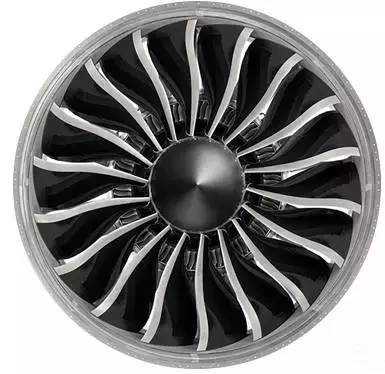
High Tool Wear
Challenge: Inconel’s hardness accelerates tool wear, inflating costs.
Solutions:
- Use PCD tools for finishing, extending tool life by 200%.
- Apply TiAlN-coated carbide tools for roughing.
- Optimize five-axis tool paths to reduce forces.
Thermal Deformation
Challenge: High cutting temperatures distort thin blades.
Solutions:
- Implement 70-100 bar coolant systems.
- Use cryogenic cooling (liquid nitrogen) for superalloys.
- Adjust parameters (50-100 m/min speed, 0.1-0.2 mm/rev feed).
Surface Quality
Challenge: Achieving Ra<0.8 μm is critical but difficult.
Solutions:
- Employ continuous five-axis cuts.
- Use chemical polishing for mirror finishes.
- Monitor tools to prevent chatter marks.
Complex Geometries
Challenge: Curved blades and cooling holes demand precision.
Solutions:
- Use CAM software (NX, PowerMill) for collision-free paths.
- Leverage additive manufacturing for blanks.
- Simulate with digital twins to optimize processes.
Conclusion
Aerospace impellers are the lifeblood of advanced flight, blending materials science, precision manufacturing, and predictive maintenance. From Inconel 718’s thermal resilience to titanium’s lightweight efficiency, five-axis machining to AI-driven smart systems, each innovation pushes aviation boundaries. Selecting high-precision impellers requires aligning performance with robust supply chains. As the “jewel in the crown of industry,” aviation engine impellers embody engineering excellence, paving the way for sustainable, high-performance flight.


