

CNC programming requires training and experience to master, thus posing as an eventual bottleneck in increasing productivity in machining activities. One practical method of staying competitive is optimizing NC files through review.This article will discuss how to optimize G-code to achieve faster and more efficient machining.
Even if your machine cycle times are already below average, there’s always room to push for greater efficiency. Refining your computer numerical control (CNC) programs, whether through manual code analysis or the use of a G-code optimization tool, remains one of the quickest and most cost-effective ways to achieve significant efficiency gains. By improving these programs, you can unlock faster production speeds and reduce operational costs.
G-code, or geometric code, is a programming language that directs CNC machine operations. It uses alpha-numeric commands to define motion, position, functions, and other parameters. For example, G00 signifies rapid movement, G01 indicates a linear feed move, and G02/G03 represents clockwise or counterclockwise feed movements. Its flexibility allows it to adapt to specific machining needs, making it a powerful tool for customizing production processes.
However, mastering G-code programming requires both training and experience, which can pose challenges for programmers and operators. This complexity often becomes a barrier to improving productivity in machine shops. Despite these hurdles, investing in optimizing G-code is essential for staying competitive and maximizing the potential of CNC machining.
A Key To Reducing Cycle Times And Enhancing CNC Efficiency
A job’s duration will be affected by things such as geometric difficulty, material being used, and job size, i.e., surface feet-per-minute measures that could range anywhere from a handful to hundreds. Unless your cycle times are pretty fast, even so, it probably can’t be done a whole lot quicker.
The CNC world keeps changing with fresh machines, techniques, and programs. Operations that make investments in cutting-edge equipment achieve a competitive advantage, reaping the benefits of faster cycle times, better product quality, and higher profitability.
For existing plants employing aging production technologies, optimizing G-code is vital in lowering cycle times and sustaining productivity.
Avoiding G-Code Errors For Faster And More Efficient Machining
The simplest way of optimizing G-code for quicker machining is by avoiding programming mistakes. Syntax errors are among the most typical issues, leading to unnecessary downtime and erroneous cuts. For instance, entering “O” instead of “0” can make the program unable to load.
At best, errors will cause metal scraps to be catapulted or ruin equipment. Using G1 instead of G0 for non-extrusion movement could drive the spindle into the table, and applying negative curvature to a non-curved cutting zone could mangle the part.
Imperfect geometry can lead to overlaps, gaps, or duplications. Even when these do not affect surface finish, they still result in inefficient instructions. Any time spent cutting air or rehtracing toolpaths is wasted downtime that can be eliminated with strategic improvement.
Have you ever had a scale error? The loss of one character can cause the machine to read 35 millimeters instead of 0.35 millimeters—a huge and undesirable difference. Although errors like these are normally simple to pick up, picking them up during programming saves a lot more time than it does during setting or operation.
G-Code Optimization Techniques
Use these optimization techniques to reduce cycle times. Whether you utilize a G-code optimizer or remove block numbers, you can expect noticeable improvements.
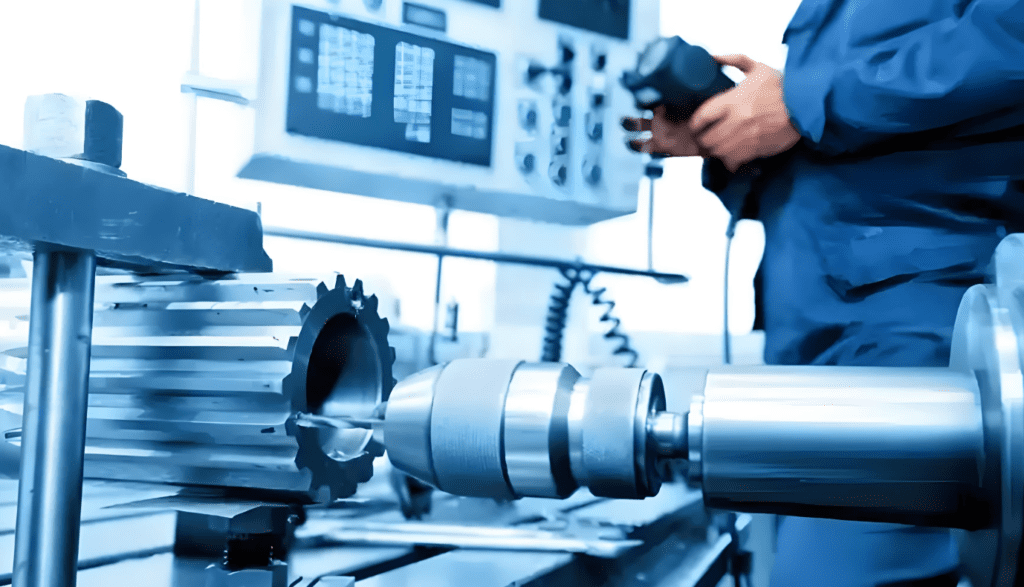
Automating Programming
A lot of machining work has stringent cycle times, which can be stressful and distracting. Like most individuals, you will tend to make more errors, especially when handling precision-based work or juggling a number of processes at once.
In such instances, automation is a great way of enhancing efficiency. It reduces the production time per piece without compromising accuracy, with the cost savings on resources being especially evident in projects that have complex geometries.
Use Smoothing Functions.
Applying smoothing functions to refine jagged geometry decreases curvature and sharp transitions, reducing deceleration and jerky movements at junctions. Additionally, it shortens the toolpath, allowing the machine to operate faster and lowering cycle times.
Use A G-code Optimizer.
Post-processing tools, such as a G-code optimizer, help pinpoint areas for improvement. With optimization software alone, you can cut cycle times by up to 70%, even on toolpaths already refined through computer-aided manufacturing.
Reduce Your Program’s Size.
Although CNC memory limitations are rare in modern machines, legacy models may still face this issue. You can manage program size efficiently by using drip feeding, which transmits instructions in small segments.
To simplify G-code, make your program more concise and streamlined. Remove unnecessary comments and block numbers, and utilize subroutines and loops for repetitive operations to eliminate redundant code.
Test And Verify G-code.
Always test and verify your program before executing it on a CNC machine. Use test cuts, the emulator included with it, or third-party simulation software to detect and fix bugs, errors, and inconsistencies efficiently.
Apply Lean Manufacturing Principles
Lean manufacturing principles focus on defining value, creating flow, and making processes perfect. Apply them to your programming by recognizing and eliminating waste. Start by cutting out code redundancy, air cuts, and add-ons that have no function. How much of the functionality in your custom CNC software do you actually use on a regular basis?
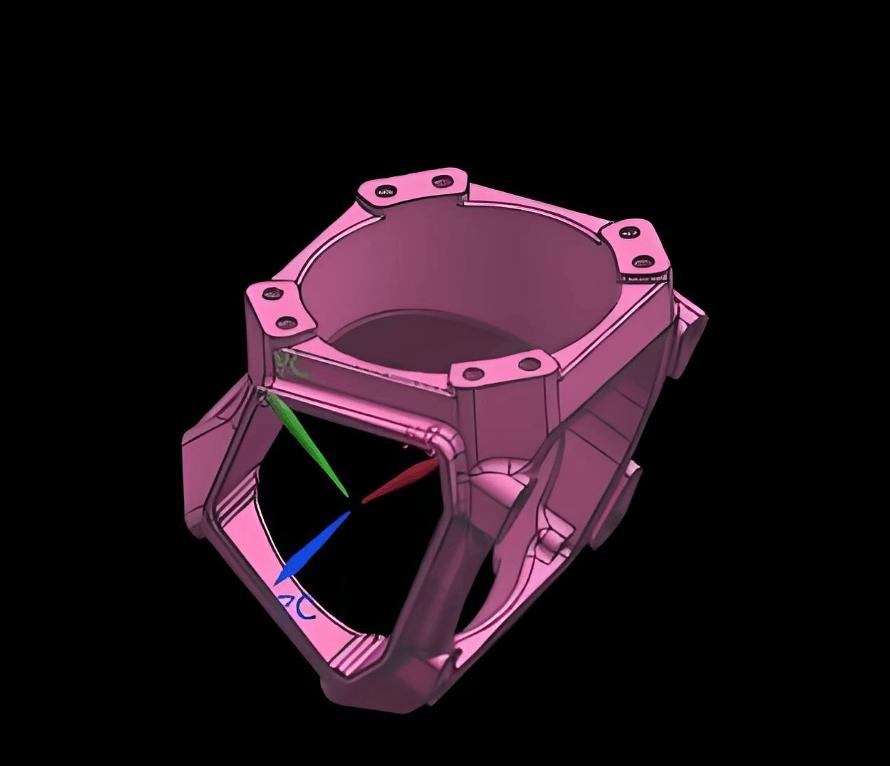
Conciseness is the foundation of lean principles. While programming adjustment for every job can be more efficient in operation, it can unnecessarily extend programming time. Unless you produce custom parts repetitively, reuse is prioritized. Recycled G-code and canned cycles reduce program length and complexity.
Prevent defects before they happen rather than fixing them later. Apply lean principles to your numerical control files—optimize speeds and feeds for cycle time and product quality, and optimize toolpaths for efficiency.
Most of all, strive for continual improvement. It takes experience to train your eye to spot inconsistencies and opportunities for optimization. To accelerate this, attempt to use a G-code optimizer or post-processing visualization software to quickly optimize code while gaining practical intuition.
Conclusion
Optimization of G-code is the secret to more efficient and quicker machining. By eliminating redundant movements, air cuts minimization, toolpath optimization, and exploitation of automation, cycle times and overall efficiency can be significantly improved by manufacturers. Lean manufacturing principles utilization, G-code optimizers usage, and verification of programs through simulations also increase accuracy and efficiency.
Even if it is not always feasible to invest in the latest CNC technology, numerical control file optimization allows companies to squeeze every last bit of performance out of the equipment that they do have. Continued optimization of G-code allows manufacturers to reduce costs, produce higher-quality parts, and stay competitive in an increasingly demanding marketplace.
Final Thoughts
With 15 years in the CNC machining service, I’ve seen how G-code optimization dramatically improves efficiency. Many manufacturers struggle with long cycle times, redundant tool movements, and unnecessary air cuts, leading to wasted time and resources.
For example, an aerospace client reduced cycle times by 40% after we optimized their toolpaths and feed rates. A medical device manufacturer cut material waste by 30% by eliminating overlapping toolpaths. These improvements resulted in higher productivity without additional machine investments.
At Ultirapid, we specialize in CNC programming, G-code optimization, and advanced machining strategies to help businesses maximize efficiency and reduce costs. Our solutions streamline processes, enhance precision, and improve overall production performance.


