

Pins are versatile fasteners essential for securing, positioning, or connecting components across industries like automotive, aerospace, and crafting. From machinery to furniture, they play a pivotal role in ensuring structural integrity.
This guide delves into the types, uses, and materials of pins, helping you select the pin suited to your needs.
What Are Pins?
From machines to furnitures, all these tiny pins connect powerful fasteners. Circular fasteners used in equipment and machinery to secure, position, or join components, are available in a variety of shapes, sizes, and materials, each for particular applications. Pins find great importance in industries like automobiles, aviation, buildings, and manufacturing, where accuracy and reliability are paramount.
The main function of pins is restraining movement between two pieces, either for temporary or permanent attachment. For instance, pins may be used to hold hinges or position machine components in assembly. Unlike bolts or screws, pins often use friction or close fits instead of threading, which makes them easy but effective.
With centuries of history, pins have evolved from basic wooden dowels to precisely manufactured metal components. Today, pins are produced using advanced techniques to meet stringent tolerances, ensuring durability and performance in demanding applications. Understanding pins begins with recognizing their diversity—each type has a unique purpose, which we’ll explore in detail next.
Different Types Of Pins And Their Uses
Pins come in many varieties, each tailored for specific tasks. From dowel pins to cotter pins, wondering which pin suits your project? Let’s break down the types and their applications!
Dowel Pins

Dowel pins are accurate cylindrical pins used to achieve precise component positioning in machinery and furniture. They are essential in applications involving close tolerances, like matching automobile engine blocks, assembling furniture frames while working wood, or locating industrial jigs. Entering wood or metal, dowel pins are generally pressed in by press fit or small interference fit into pre-drilled holes, providing positive alignment with no additional fasteners. Accuracy and simplicity are excellent advantages, although installing requires precise hole sizing to prevent loosening or damage.
Cotter Pins
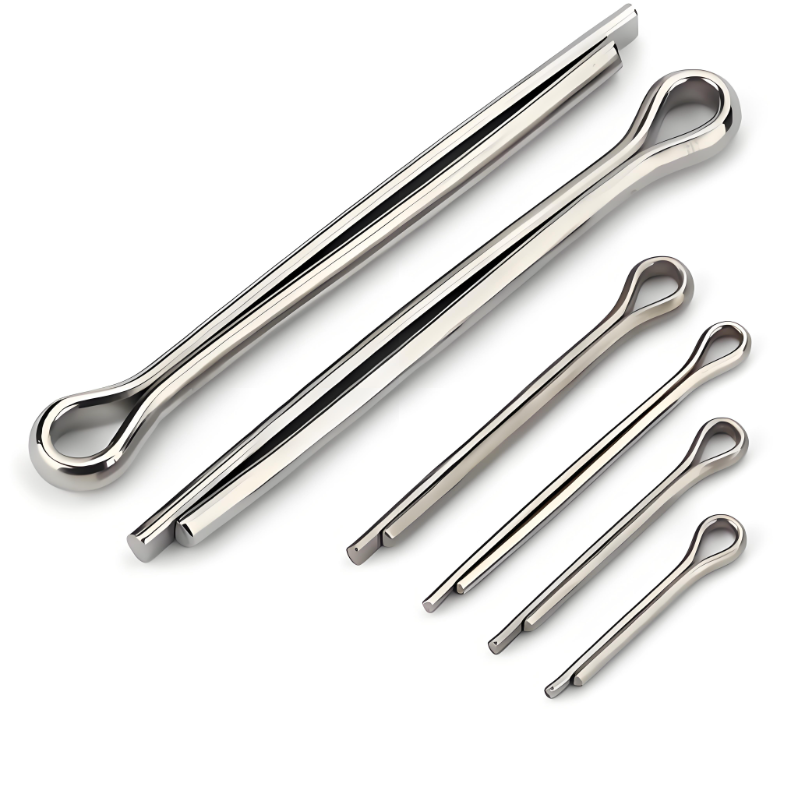
Cotter pins are cost-effective, split pins locking parts by inserting into holes and bending their prong-shaped ends. In automobile, agricultural machinery, and ship equipment applications worldwide, they hold nuts on shafts, limit rotation of bolts, or lock trailer couplings. Mild steel or stainless steel, typically being their material of production, the cotter pins are ductile with good corrosion resistance. Their ease of manufacture permits them to be quickly installed and removed, which renders them appropriate for use where there is a need for frequent maintenance. But cotter pins are weak and not optimally used for high shear loads, so they are typically utilized in combination with bolts or shafts.
Taper Pins

Taper pins consist of a tapered body that wedges into associated tapered holes and creates a fixed fit. They are usually used on mechanical assemblies to locate and hold items like gears, pulleys, or flywheels and prevent relative movement. Taper pins are removable and reusable, thus suitable for equipment that may be serviced or adjusted from time to time, like industrial machinery or marine drive systems. Usually made of hardened steel, they may be coated or polished to be tougher. In selecting taper pins, make sure to select the right taper standard for insertion into the hole.
Spring Pins

Spring pins are hollow cylindrical slotted pins that spring into compression when driven in, establishing spring-like tension for a positive friction fit. They are best used in high-vibration or impact applications such as automotive suspension parts, railway vehicles, or articulating heavy machinery parts. Their design absorbs shock and resists loosening, with spring steel or stainless steel offering high resilience and fatigue life. Installation involves dedicated tools for even compression, and hole tolerances need to be strictly controlled not to over-deform.
Clevis Pins
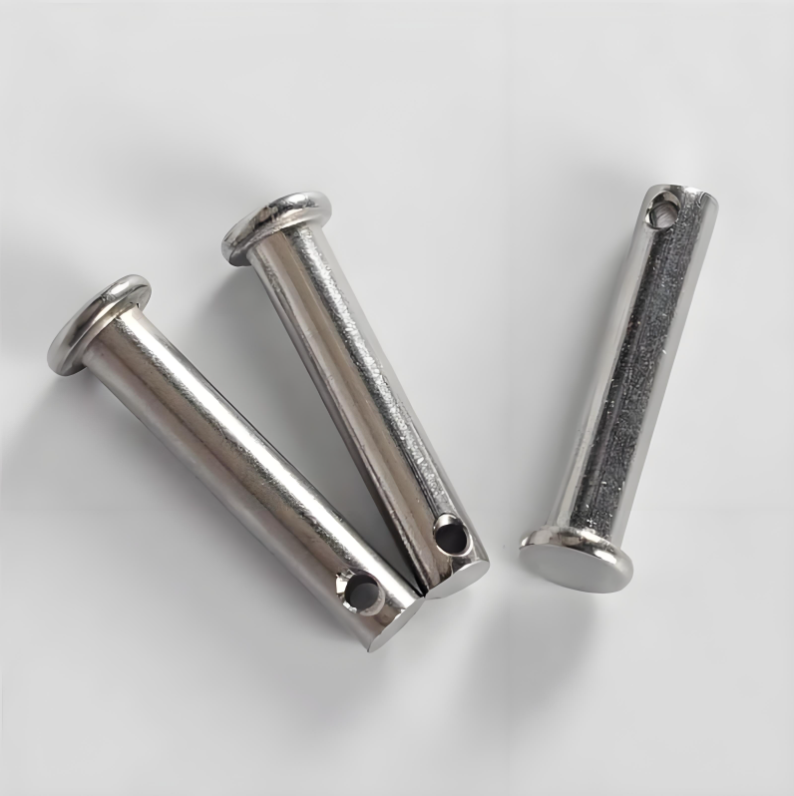
Clevis pins consist of a head and a hole at the other end, typically used with a cotter pin or clip to make a temporary attachment. They are appropriate for points of linkage requiring rotational movement, e.g., towing gear, hydraulic cylinders, or agricultural equipment linkages. Clevis pins can carry tensile loads with pivoting motion and are suitable for dynamic use. Made of stainless steel or carbon steel, they are usually galvanized to resist corrosion. In choosing clevis pins, consider hole size, pin length, and clip or cotter pin compatibility.
Grooved Pins

Grooved pins have longitudinal grooves along the length, which deform slightly upon insertion to create a close fit without additional fasteners. Grooved pins are used in applications with high shear strength such as mechanical hinges, drive shafts, or components of construction equipment. Grooved pins are easy to install and have heavy pull-out resistance, often made of alloy steel or hardened steel. They are ideal for semi-permanent connections but can be subject to occasional inspection in high-dynamic-load applications to ensure stability.
Knurled Pins

Knurled pins have a roughened surface to create greater grip and friction. Knurled pins find best application in assemblies with softer material like plastic, wood, or soft metals in applications such as enclosures of electronic devices, assembly of plastic components, or light material construction of furniture. Press fit installed, knurled pins provide a firm connection without excessive stress to adjacent material. Stainless steel or brass material provides appropriate corrosion resistance. In selecting knurled pins, consider knurl pattern and hardness of material to achieve maximum grip.
Each type of pin offers its distinct functionality and advantages, adapted for use from precise positioning to heavy load-bearing. Selection of the appropriate pin is based on evaluating factors like operating conditions, load parameters, material compatibility, and installability. Later in this chapter, we will discuss more extensively how to make these selections and consider pin manufacturing processes and materials to assist in optimizing project performance.
How Are Pin Fasteners Manufactured?
From CNC machining to forging, manufacturing processes for pins vary depending on their application and material. Pin fasteners, such as dowel pins, cotter pins, and spring pins, are essential components of mechanical assemblies. Their production incorporates advanced technologies to deliver precision, strength, and durability. Here is a detailed overview of three significant manufacturing processes—CNC machining, forging, and stamping—and their applications in pin manufacturing.
CNC Machining
CNC machining serves as a pillar to high-precision pin manufacturing, particularly for fasteners like dowel and taper pins that necessitate tight tolerances. Using computer numerically controlled (CNC) equipment, tool and workpiece travels are controlled by programmed commands to shape raw materials, i.e., stainless steel or alloy steel rods, into precise cylindrical, tapered, or grooved pins. Confined in a CNC milling machine or fixed lathe, the material is milled, turned, or ground based on pre-programmed geometry. In the case of complex pins, including knurled pins with surface finish, multi-axis machining allows for the correct development of complex geometry details with tolerances as small as ±0.001 mm.
The advantages of CNC machining render it highly appropriate for high-demanding applications in aerospace and medical device industries. Its automated feature guarantees consistency, minimizes human intervention, and allows for small-batch and custom production. CNC machining is used to produce dowel pins for precise alignment, knurled pins for improved grip, or custom designs for particular requirements. Post-processing, such as polishing or zinc plating, enhances surface smoothness and corrosion resistance to provide durability and performance. Accuracy and versatility that CNC machining provides cement the position of being the first choice for designing high-performance pins.
Forging
Forging is a robust manufacturing process where metal is shaped into high-strength pins, such as clevis or grooved pins, utilized in heavy machinery and the automotive sector. The process begins with heating alloy or carbon steel to a temperature that makes it malleable before the hot metal is inserted into a die and subjected to an enormous amount of pressure through a hydraulic press or hammer to form the initial shape of the pin. For precision pins, room-temperature cold forging may be used to bring about an enhancement of the surface finish and dimensional accuracy with the reliability that stringent applications demand.
Forging makes the metallic structure of grain stronger, producing pins with improved mechanical properties of increased shear strength, superior fatigue life, and improved resistance to impact and heavy load. All these make forged pins such as auto suspension spring pins or building construction pins extremely reliable for applications that involve high stress.
The forging process is economical for production quantities, while secondary processing operations like excess material removal, heat treatment to achieve maximum hardness, and protective corrosion-resistant coating contribute to performance and longevity. Due to its ability to create strong and durable parts, forging remains a sought-after process for high-reliability applications.
Stamping
Stamping is an excellent metal forming process for producing thin-walled or plain-shaped pins, e.g., cotter pins and spring pins, in large-scale production. Metal sheets, preferably brass or stainless steel, are loaded into a stamping press in which dies punch, bend, or shape the metal into precise pin shapes using high pressure. For instance, cotter pins are created by folding and cutting metal strips into their split shape, while spring pins are stamped and rolled into hollow slotted shapes to produce standardized parts rapidly.
The advantages of stamping include economy and speed, making it perfect for producing large quantities of pins with complex geometries and low secondary processing. Stamping is widely utilized for mass-producing clevis pins with specified geometries like holes, light pins for use in electronics, or cotter pins used for farm machines. Processes such as cleaning, coating, and deburring enhance finish and durability via post-processing. With such economy and versatility, stamping has become the most favored method for cost-effective pin production in consumer products and light industries.
Common Materials Used For Manufacturing Pins
The purpose of pins, whether heavy steel or light plastic, depends on the composition of their material. Material choice depends on strength, conditions, and price, ensuring pins for a wide range of uses, from huge machinery to sensitive electronics.
- Stainless Steel:Stainless steel is greatly appreciated due to its high corrosion resistance and strength, and it is the perfect choice for moisture- or chemical-exposed environments, like marine, medical, or food processing industries. They use common grades 304 and 316, which provide reliability and durability, with 316 offering greater resistance to severe conditions.
- Carbon Steel:Carbon steel offers excellent strength and low cost, well-suited for heavy service in machinery or construction. Carbon steel is, however, prone to rusting, and anti-rust coatings like zinc are typically applied to enhance corrosion resistance and enhance service life.
- Alloy Steel:Alloy steel, reinforced with additives like chromium or molybdenum, offers superior strength and wear resistance. It is well suited to aerospace or automotive pin applications for high-stress applications where resistance under harsh conditions is critical.
- Brass:Brass pins combine corrosion resistance with an attractive, decorative look and are well suited to furniture, electronics, and plumbing applications where appearance and moderate strength are required. Brass is also machineable, making it popular.
- Aluminum:Aluminum pins are corrosion resistant and light weight, ideal for weight-critical applications in portable device or aerospace industries. Less than steel but stronger where weight and environmental strength are not so critical.
- Plastic :Plastic pins, made of nylon or Delrin-type materials, are used in low-load, nonconducting applications such as electronics or light assemblies. Plastic pins are cheaper and will not corrode but lack the strength of metal pins, thus their use is in less demanding applications.
- Titanium:Titanium pins possess a better strength-to-weight ratio and are resistant to corrosion and are well adapted to aerospace, medical implants, and high-performance machinery. They are too costly to use extensively, but in critical, high-value uses, they have no substitute.
Each material has inherent strengths and trade-offs. Stainless steel, for instance, is good in high-usage environments but is costlier than carbon steel. The right material to select depends on application conditions such as load, temperature, or exposure, which are important in achieving optimum performance.
Advantages Of Using Pin Fasteners
Why pins over other fasteners? Their strength and simplicity make them unique, with characteristic advantages that make them the go-to for most applications. The following are the highest benefits of pin use:
Ease And Simplicity
Pins require minimal tools for their installation, i.e., a hammer or press, because of their simplicity. This renders them less time-consuming to build, and they can be installed where there is involved high-volume production and where efficiency is key.
Cost-Effectiveness
Compared to threaded fasteners like screws or bolts, pins are less expensive. Both the cheap nature and durability of pins make them an affordable choice for both small and large applications, from consumer goods to industrial applications.
High Shear Strength
All pins, such as dowel pins or grooved pins, are intended to sustain high shear forces and can hence be utilized in load-bearing applications in machinery components or structural components. Their sturdy design ensures consistent performance under stress.
Versatility
Since being of many forms, sizes, and materials, pins can be engineered to meet many applications, ranging from the placement of automobile engines to the assembly of furniture. Such adaptability makes them unmatched in tolerating diverse project needs.
Removability
Taper pins and clevis pins can be readily removed for maintenance or disassembly, unlike fixed fasteners such as rivets. This removability is crucial in high-maintenance industries like aerospace and heavy machinery, where frequent servicing is essential.
Low Maintenance
Once installed, pins usually require little to no maintenance, especially when made from corrosion-resistant materials like stainless steel or titanium. This ensures minimal downtime and maintenance costs.
Precise Alignment
Dowel pins and similar kinds ensure precise component alignment, reducing wear and extending the life of assemblies or machinery. This level of precision is critical in tight tolerance applications such as automotive or manufacturing.
Factors To Consider When Choosing A Pin Type
Selecting the right pin makes or breaks a project. In order to choose a pin that will perfectly fit your needs, certain key aspects have to be taken into consideration to give the best performance and compatibility.
Load and Stress
Determine whether the pin must resist vibrational, tensile, or shear loads. If the application is high-shear, grooved pins or dowel pins are ideal since they possess a robust design, while cotter pins are ideal for lower loads with lower stress.
Material Compatibility
The pin’s material should be compatible with the equipment pieces it connects to avoid galvanic corrosion. For instance, using stainless steel pins with aluminum components avoids corrosion and provides reliability over a long duration.
Environmental Conditions
Consider exposure to moisture, chemical, or temperature extremes. Stainless steel or titanium pins work best in corrosive environments, such as marine or chemical processing, and plastic pins may be suitable for dry, low-stress use.
Size And Tolerance
Pins must fit precisely to provide a solid connection. Verify the stated diameter, length, and tolerance, especially in precision assemblies like engines, where slight deviations will compromise performance.
Installation Method
While some pins, like spring pins, need to be press fitted, other pins like cotter pins need to be pressed in by hand. Ensure the installation is within your level of skills and tools to avoid issues.
Removability
In event of dismantling or maintenance, employ removable pins like taper pins or clevis pins. When dealing with permanent installations, grooved pins or dowel pins could be a good option since they fit snugly.
Cost Constraints
Balance performance with budget. Carbon steel pins are low cost for general use, while titanium or special pins offer greater performance at a higher price.
Applications Of Pins In Various Industries
Pins are ubiquitous—from cars to airplanes to furniture! All-purpose fasteners, these pins play a pivotal role in various industries, providing seamless fastening and alignment solutions. Curious about how small components fuel big industries?
Automotive Industry
Dowel pins, cotter pins, and spring pins are essential for engines, transmissions, and suspensions, aligning components, fastening bolts, and dampening vibrations to ensure vehicle reliability and safety in challenging conditions.
Aerospace Industry
Precision pins such as taper pins and dowel pins play a crucial role in aircraft production. They locate structural components and withstand rigorous conditions, meeting stringent aerospace performance and safety standards.
Construction and Architecture
Pins hold together scaffolding, locate structural beams, and couple modular parts. Dowel pins are also critical in furniture assembly with rugged, concealed joints for form and durability.
Manufacturing And Machinery
Pins are employed in jigs, fixtures, and machine tools to locate parts during manufacturing. Grooved pins and spring pins transmit high shear loads in heavy machinery to deliver rugged performance.
Electronics Industry
Knurled pins and plastic pins retain parts in circuit boards and cases, with insulation and light fastening without damaging delicate parts, ideal for small devices.
Medical Devices
Surgical implants, prosthetics, and medical devices utilize stainless steel or titanium pins. Their corrosion resistance and biocompatibility are crucial for patient health and device longevity.
Marine Industry
Pins crafted from corrosion-resistant stainless steel or brass are utilized in offshore equipment and ships, withstanding harsh saltwater conditions to guarantee dependable marine performance.
Agriculture
Cotter pins and clevis pins join up tractor, plow, and harvester parts together, offering strength and ease of maintenance in harsh outdoor conditions.
What Can Ultirapid Do For You?
Partner with Ultirapid for custom pin solutions, from dowel to grooved pins, with close tolerance requirements for aerospace, automotive, and medical markets. With our cutting-edge facilities and quality emphasis, we offer expert material choice—stainless steel, titanium, brass, or plastic—and professional consultation to satisfy your environmental and load requirements.
From prototype to mass production, our veteran engineers provide technical support to create pins designed for performance. Stock or custom applications, Ultirapid provides accuracy, strength, and value.
Conclusion
Though tiny, pins make a massive impact! From fastening machinery to aligning structures, they are vital to engineering. Ready to select the ideal pin for your upcoming project?
Pins are the backbone of countless applications, offering convenience, strength, and versatility. In this manual, their type, material, manufacturing process, and uses have been explained in order to provide a guide for making the right selection of pin. From auto to aviation to building construction, understanding the nuances of pins translates into better performance and money’s worth.
As you begin your next project, consider load, environment, and material to select the ideal pin. With the right pin, your assemblies will be stronger, more reliable, and durable.
Faqs
What Are The Common Challenges With Using Pin Fasteners?
Common challenges with pin fasteners include improper use or selecting unsuitable pins, which can lead to corrosion, stress-induced bending, or mechanical failure. Using pins with incorrect material or size for specific machinery may compromise durability and safety. Inadequate installation techniques or neglecting environmental factors can exacerbate issues. Regular inspections, proper pin selection based on load and conditions, and adherence to industry standards are essential to mitigate these risks.
Can Pins Be Customized For Specific Industrial Applications?
Yes, pins can be tailored to meet diverse industrial needs by customizing their material, shape, size, and features. For instance, stainless steel pins resist corrosion in marine environments, while heavy-duty pins suit high-load machinery in aerospace or automotive sectors. Unique shapes or specialized coatings can enhance functionality, ensuring optimal performance, durability, and compatibility with specific applications, all while adhering to precise engineering standards.
How Do I Ensure The Pins I Choose Are Corrosion-resistant?
To ensure pins are corrosion-resistant, select materials like stainless steel or galvanized steel for applications in humid, chemical, or marine environments. These materials provide superior durability and longevity under harsh conditions. Verify the material’s corrosion resistance rating, such as AISI 316 for stainless steel, and consider protective coatings like zinc or passivation. Match the pin’s specifications to the environment and consult industry standards for optimal performance.
How Do I Determine The Correct Size And Tolerance For Pins?
To determine the correct pin size and tolerance, ensure the pin’s diameter and length match the hole’s dimensions and material thickness for a secure, reliable fit. Assess the application’s load and environmental factors to set precise tolerances, adhering to engineering standards like ISO or ASME. Consult technical guidelines, use precision measuring tools, and consider custom sizing for specialized applications to achieve accurate positioning and assembly.


