
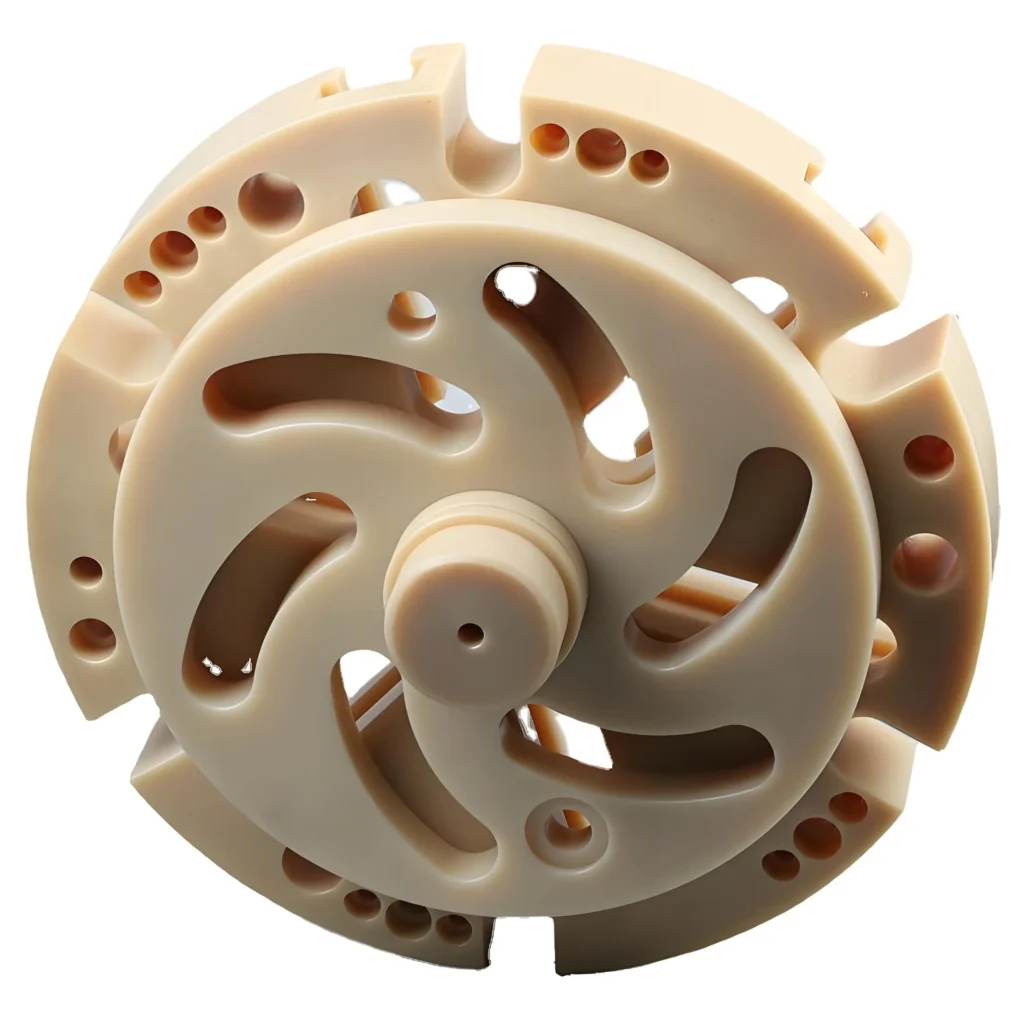
PEEK (polyether ether ketone) stands as a high-performance polymer that has revolutionized industrial applications with its exceptional thermal resistance, chemical inertness, and mechanical strength. As industries demand ever more durable and efficient components, PEEK’s use in impellers—critical parts for pumps, motors, and fans—has surged. However, protecting PEEK impellers against wear, corrosion, and environmental stress is crucial for longevity and performance. Powder coating, a popular surface treatment known for durability and eco-friendliness, presents a promising option. But is powder coating truly suitable for PEEK impellers? This article explores PEEK’s material properties, powder coating principles, and practical considerations, helping manufacturers decide if this technology aligns with PEEK impeller requirements.
PEEK Material Properties and Industrial Applications
Exploring PEEK’s unique physical and chemical characteristics highlights why it’s favored across demanding sectors and how these features impact surface treatment choices.
PEEK is prized for its combination of high temperature tolerance, chemical stability, and mechanical durability, making it ideal for components exposed to harsh environments.
Physical and Chemical Performance of PEEK
- Thermal Stability
PEEK maintains mechanical integrity at temperatures up to 250 °C continuously and can withstand short bursts of even higher heat without degradation. This allows PEEK components to operate reliably in engines, pumps, and electrical motors exposed to heat.
- Chemical Resistance
Its aromatic polymer backbone provides exceptional resistance against a wide range of chemicals, including acids, alkalis, hydrocarbons, and solvents, making PEEK components suitable for corrosive environments like chemical processing plants or automotive fuel systems.
- Mechanical Properties
With tensile strengths often exceeding 90 MPa and high fatigue resistance, PEEK offers toughness and wear resistance, which are essential for rotating impeller parts undergoing repetitive stresses.
- Electrical Insulation
Low dielectric constant and excellent insulating properties allow PEEK to be used in electrical motor impellers where electrical interference or sparking must be minimized.
Industrial Applications of PEEK
- Aerospace Components
PEEK’s lightweight nature combined with heat and chemical resistance makes it suitable for gear wheels, seals, and airflow control surfaces that must endure extreme conditions.
- Automotive Parts
Applications include piston rings, bushings, and impellers within cooling or fuel systems where temperature resistance and durability are mandatory.
- Household Appliances
A notable example is the motor impeller of Dyson vacuum cleaners, which demands lightweight strength and dimensional stability under thermal cycling.
- Medical and Semiconductor Industry
Due to sterilizability and chemical inertness, PEEK is used for specialized parts exposed to harsh cleaning processes and chemicals.
Potential of PEEK in Powder Coating
Though powder coatings have traditionally been applied to metals, engineered polymers like PEEK present new frontiers. The combination of PEEK’s heat tolerance and chemical resistance opens doors for innovative powder formulations. However, surface preparation and adhesion remain critical hurdles, requiring thorough analysis.
Powder Coating Process Overview
Powder coating has become a widely favored surface finishing technique due to its durability, environmental friendliness, and excellent protective qualities. This process is especially valuable for components with complex geometries, such as impellers, where uniform coating thickness and strong adhesion are critical for long-term performance. Understanding the key steps of powder coating—from surface preparation to curing—is essential to appreciate how this method enhances both aesthetics and functional resilience.
Surface Preparation
The foundation of a successful powder coating lies in meticulous surface preparation. Before applying the powder, the impeller or other component must be thoroughly cleaned to remove any oils, grease, dirt, or oxidation. These contaminants can severely impair powder adhesion and lead to coating defects such as peeling or uneven coverage. Often, cleaning involves solvent degreasing followed by rinsing with water or alkaline solutions to ensure a pristine surface.
In many cases, light mechanical abrasion or blasting is applied after cleaning to roughen the surface slightly. This micro-roughness improves mechanical interlocking between the powder particles and the substrate, enhancing overall adhesion strength. Proper surface preparation also reduces the risk of coating failure during operation, especially in environments subject to thermal cycling or mechanical stress.
Electrostatic Application
The heart of the powder coating process is the electrostatic application of powder particles. The powder, usually a fine polymer-based material, is electrically charged as it passes through a spray gun. The impeller or component being coated is grounded, creating an electric field that attracts the charged particles uniformly across its surface. This electrostatic attraction ensures even distribution of the powder, even reaching intricate areas, undercuts, and tight blade passages typical of impellers.
This step not only allows for minimal material waste but also provides a consistent thickness of the coating layer. The charged powder particles cling well to complex shapes, reducing the need for multiple passes and ensuring comprehensive coverage. The electrostatic method is versatile, applicable to a wide range of powders and substrates, and is a key reason why powder coating is preferred in demanding industrial applications.
Curing Stage
After application, the powder-coated part moves to the curing oven, where elevated temperatures trigger the melting and chemical cross-linking of the powder particles. As the powder melts, it flows into a smooth, continuous film that encapsulates the substrate, filling in any gaps and bonding firmly to the surface. The curing process is critical for developing the final hardness, chemical resistance, and durability of the coating.
The oven temperature and curing time are carefully controlled to ensure complete polymerization without overheating, which could degrade coating properties. Proper curing results in a tough, resilient finish that resists abrasion, corrosion, and environmental degradation. This stage finalizes the transformation from loose powder to a solid, protective barrier that extends the service life of coated impellers and other precision components.
Advantages of Powder Coating
Powder coating has gained widespread popularity not only for its functional performance but also for its significant environmental and economic advantages. Compared to traditional liquid painting methods, powder coating offers a more sustainable and efficient solution that aligns well with modern industry demands for eco-conscious manufacturing. Beyond its green credentials, powder coating provides superior durability and aesthetic versatility, making it a preferred choice across various sectors.
Environmental Benefits
One of the most notable environmental advantages of powder coating is its near-zero emission of volatile organic compounds (VOCs). Unlike liquid paints, which rely on solvents that evaporate into the atmosphere and contribute to air pollution, powder coatings are free from these harmful emissions. This makes powder coating a much cleaner option that reduces the environmental footprint of manufacturing operations and helps industries comply with increasingly strict environmental regulations.
Furthermore, the curing process in powder coating involves no hazardous air pollutants, minimizing health risks to workers and surrounding communities. As sustainability becomes a central focus for manufacturers worldwide, powder coating stands out as an eco-friendly alternative that supports greener production without sacrificing quality or performance.
High Material Efficiency
Material efficiency is another major benefit of powder coating. During the application process, not all powder lands on the part being coated, and some overspray inevitably occurs. However, unlike liquid paints that are wasted once sprayed, powder overspray can be collected, filtered, and reused multiple times. This recycling capability significantly reduces material waste and lowers overall production costs
This high transfer efficiency not only conserves raw materials but also decreases the frequency and volume of powder required for a given batch of components. Industries that coat large volumes of parts, such as automotive or aerospace manufacturers, benefit greatly from the cost savings and sustainability gains enabled by powder recycling. This efficient use of materials exemplifies how powder coating supports both economic and environmental goals.
Superior Durability
Powder-coated surfaces exhibit outstanding resistance to abrasion, corrosion, chemical exposure, and ultraviolet (UV) radiation. These protective qualities extend the lifespan of coated components, such as impellers, by preventing surface degradation and maintaining structural integrity even in harsh operating conditions. The durability of powder coatings translates to less frequent maintenance, fewer replacements, and improved reliability of critical machinery.
In particular, powder coatings form a hard, uniform film that adheres tightly to substrates, providing long-lasting protection against mechanical wear and environmental factors. This robust durability is essential for applications in aggressive chemical environments or outdoor settings, where continuous exposure to elements can rapidly deteriorate lesser coatings.
Wide Range of Effects
Beyond performance, powder coating offers remarkable aesthetic flexibility. It can be formulated to produce a wide array of textures, colors, and finishes—from smooth glossy surfaces to matte or textured effects. This versatility allows manufacturers to meet specific design requirements and enhance the visual appeal of products.
Custom colors and special effect powders, such as metallic or wrinkle finishes, provide branding opportunities and product differentiation without compromising coating performance. The ability to combine function with form makes powder coating an attractive choice not only for industrial parts but also for consumer goods where appearance matters.
Limitations of Powder Coating
Powder coating, while advantageous in many industrial settings, is not without its limitations. These challenges become particularly apparent when dealing with specialized materials like PEEK (polyether ether ketone) or intricate component geometries such as those found in closed impellers. Recognizing these constraints is essential for selecting the right surface treatment and ensuring long-term component performance under demanding conditions.
High Curing Temperature
Typical powder coatings require curing temperatures ranging from 150°C to 200°C. While this range is suitable for high-performance polymers like PEEK, it can be problematic for temperature-sensitive substrates or assemblies with mixed-material components. Excessive heat may cause warping, dimensional instability, or degradation in polymers with lower thermal thresholds, limiting the universality of powder coating across different material systems.
Surface Energy and Adhesion
PEEK’s low surface energy makes it inherently difficult for powder particles to adhere effectively without thorough pretreatment. Techniques such as plasma treatment, chemical etching, or roughening are often necessary to improve bonding strength. Even then, ensuring consistent adhesion can be challenging, especially on surfaces that are smooth or contamination-prone.
Color and Texture Constraints
Compared to liquid coatings, powder options offer a more limited range of colors and finishes. Custom pigmentation and ultra-fine detail work, such as sharp edges or graphic patterns, are more difficult to achieve due to the nature of the powder and the curing process. This limits the aesthetic flexibility of powder coatings in design-driven applications where precision detailing or specific visual attributes are crucial.
Complex Geometry Challenges
Closed impellers and components with deep channels or sharp recesses present difficulties in achieving uniform coverage. Electrostatic application may not reach shadowed or recessed areas effectively, leading to thin spots or inconsistent coating thickness. Ensuring full and even deposition on such complex geometries requires advanced spraying techniques and often additional manual intervention, which can affect efficiency and consistency.
Suitability of Powder Coating for PEEK Materials
Polyether ether ketone (PEEK) is a high-performance engineering polymer known for its exceptional thermal stability, chemical resistance, and mechanical strength. These properties make it an ideal candidate for demanding environments such as aerospace, medical, and chemical processing. However, applying powder coatings to PEEK components involves specific challenges and preparation steps that distinguish it from metal substrates. The success of the coating process hinges on careful control of powder properties, surface treatment, and environmental conditions.
Powder Formulation and Granulometry
PEEK powders must be engineered with precision, particularly in terms of particle size distribution. For optimal electrostatic application and melt flow, particles are typically sized between 10–50 μm. This tight granulometric control ensures uniform charging and deposition during spraying, while also facilitating smooth flow and leveling during the curing phase. Deviations in particle size can result in poor coverage, sagging, or surface defects, compromising both functional and aesthetic quality.
Pre-treatment of PEEK Substrate
PEEK’s inherently low surface energy (~35 mN/m) makes it resistant to adhesion without proper surface modification. To counteract this, pre-treatment processes such as plasma activation, corona discharge, or chemical etching are employed to raise surface energy and enhance wettability. These treatments create a receptive surface that allows the powder particles to anchor more effectively, which is critical for ensuring a robust and long-lasting bond between the coating and the PEEK substrate.
Moisture and Contamination Control
As a hygroscopic material, PEEK can absorb moisture from the environment, which may interfere with powder adhesion and curing. Additionally, surface contaminants such as oils or dust can act as barriers to uniform coating. To address these issues, PEEK parts are typically subjected to pre-bake drying cycles and anti-static cleaning before powder application. This ensures that the surface remains dry, clean, and electrically neutral—conditions that are essential for achieving a consistent and defect-free coating layer.
Case Studies
Polyether ether ketone (PEEK) powder coatings have become a reliable solution across industrial and consumer sectors where durability, chemical resistance, and thermal stability are essential. In oil & gas and semiconductor industries, PEEK-coated stainless steel and aluminum components—such as valves, housings, and fittings—demonstrate exceptional resistance to aggressive chemicals, high-pressure steam, and abrasive wear. These coatings extend equipment lifespan and reduce maintenance frequency. Similarly, in electronics, electrostatically applied PEEK powders form dielectric insulation layers that shield circuit boards and sensitive connectors from heat, contaminants, and electrical discharge, offering stable protection even at temperatures exceeding 200 °C.
In the consumer market, PEEK coatings are used in premium household appliances like food processors and vacuum cleaners. These coatings contribute to both hygiene and performance by providing smooth, non-stick, and heat-resistant surfaces that are easy to clean and resistant to chemical damage. Aesthetic options such as color and texture customization further enhance product appeal. These case studies demonstrate that PEEK powder coating not only protects components in harsh environments but also adds long-term value and reliability across a wide range of applications.
Advantages of Powder Coating on PEEK Components
In high-performance engineering applications, polyetheretherketone (PEEK) has become a preferred material for powder coating due to its exceptional thermal, chemical, and mechanical stability. When applied as a powder coating, PEEK provides a durable, chemically inert, and thermally resilient protective layer. This makes it particularly valuable for coating components with complex geometries—like impellers—and in environments where corrosion, wear, or high heat present major operational challenges.
Excellent Adhesion After Treatment
With proper surface pretreatment—such as plasma activation, chemical etching, or corona discharge—PEEK powder coatings achieve remarkably strong adhesion to both metal and polymer substrates. These treatments increase the surface energy of the substrate, enabling better electrostatic deposition and melt bonding of the powder particles. Even intricate geometries like impeller blades can receive uniform and robust coatings through optimized application processes.
This strong adhesion ensures long-term performance and resistance to delamination under stress or thermal cycling. In fact, the bond strength of PEEK powder coatings can rival that of traditional epoxy powders on metal substrates, significantly expanding their suitability for demanding sectors such as aerospace, energy, and medical devices.
Corrosion and Chemical Protection
PEEK’s inherent resistance to a wide range of chemicals—including acids, alkalis, and organic solvents—is retained in its powder coating form. This makes it an ideal solution for components exposed to highly corrosive fluids, such as those found in offshore, petrochemical, or pharmaceutical processing environments.
When applied to impellers or sealing components, PEEK coatings act as a robust barrier against chemical infiltration, protecting both the surface and the structural integrity of the part. Over time, this reduces maintenance requirements, prevents system failure, and contributes to safer and more reliable equipment performance.
Thermal Resistance During Curing
Unlike many polymers, PEEK can withstand high curing temperatures—well above 200 °C—without structural degradation. This thermal robustness enables full powder melt and crosslinking during curing, resulting in dense, well-bonded, and high-performance coatings.
This property is especially critical in applications where thermal cycling or exposure to sustained heat is unavoidable. PEEK coatings maintain their insulating, mechanical, and chemical resistance properties under these conditions, making them highly effective in aerospace propulsion systems, electronic insulation housings, and high-temperature pump components.
Challenges and Technical Limitations
Powder coating with PEEK offers exceptional performance, but its application also presents several technical challenges. These challenges stem from the material’s unique physical and chemical characteristics, as well as the demands of applying coatings to geometrically complex components like impellers. Addressing these limitations requires careful control of environmental conditions, equipment precision, and material handling protocols.
Powder Flow and Electrostatic Behavior
PEEK powders are highly sensitive to environmental humidity, which can lead to clumping or erratic flow during electrostatic spraying. Inconsistent flow behavior may cause uneven powder deposition, resulting in coating defects like thin spots, rough surfaces, or excessive overspray waste. To mitigate these issues, environmental control systems—such as humidity-controlled spray booths and pre-dried powder feed systems—are essential during the application process.
Furthermore, the electrostatic charging behavior of PEEK can vary with particle morphology and size distribution. Maintaining a consistent powder granulometry (typically 10–50 μm) is necessary to achieve reliable electrostatic attraction and smooth deposition. Specialized tribocharging or corona charging systems may be required to improve consistency in application across different geometries.
Coating Uniformity in Complex Shapes
Applying a uniform PEEK coating to components with intricate geometries, such as closed impellers or turbine vanes, presents a significant technical barrier. Narrow channels, undercuts, and curved surfaces can obstruct powder flow or cause uneven electrostatic attraction, leading to non-uniform coverage and potential performance failures in service.
To overcome this, engineers often utilize programmable rotary fixtures, multi-axis robotic arms, or custom nozzle designs that adjust spray angles and flow rates dynamically. Additionally, manual inspection and touch-up processes may be needed to ensure complete coverage, especially in critical areas that are prone to erosion or corrosion in operation.
Cost and Equipment Requirements
Compared to standard powder coating materials like epoxy or polyester, PEEK powder is considerably more expensive due to its complex synthesis and high-performance capabilities. This cost factor makes PEEK coating less viable for low-budget or high-volume applications unless the added performance justifies the investment.
Moreover, the curing process demands high-temperature ovens capable of exceeding 350 °C, which are not standard in many coating facilities. Alongside this, specialized spray equipment with precise temperature control, fluidization systems, and electrostatic charging capabilities is necessary. These capital requirements can limit adoption in small-scale operations or for non-critical components.
Impeller Structures and Their Functional Demands
Impellers are critical components in pumps and turbines, responsible for directing fluid flow and converting mechanical energy into hydraulic energy. Their performance and durability depend heavily on structural design and the operational environment. Different impeller types present unique challenges in terms of surface stress, fluid dynamics, and wear resistance—particularly when fabricated from high-performance polymers like PEEK. Understanding these functional demands is essential when selecting protective coatings or surface treatments.
Types of Impellers and Their Roles
Impellers are generally classified as open, semi-open, or closed based on their structural configuration. Open impellers have exposed blades and are easier to clean or inspect but are more susceptible to wear. Semi-open types strike a balance by providing partial shrouding, improving fluid control while retaining accessibility. Closed impellers, such as those used in high-efficiency or corrosive-flow applications, feature vanes enclosed between two discs. This design traps fluid between the vanes and housing, enhancing pressure generation and minimizing leakage.
However, the complex internal channels and tight geometries of closed impellers—especially when injection-molded from PEEK—pose a major challenge for uniform coating. These areas are difficult to access during powder spraying, often requiring specialized fixtures or multi-axis robotic systems to achieve complete surface coverage.
Common Failure Modes Without Coating
When left uncoated, PEEK impellers can experience a range of failure modes, especially under high-speed or chemically aggressive conditions. One of the most common is cavitation erosion, where vapor bubbles form and collapse violently against the surface, leading to pitting and material loss. In addition, chemical erosion from acids, solvents, or alkalis can compromise the impeller’s structure, especially at elevated temperatures.
Friction-induced wear is also significant, particularly at the vane tips and hub interface, where sliding contact occurs. Thermal degradation may follow in high-load systems where continuous operation leads to material softening or fatigue. Protective powder coatings help mitigate these risks by forming a barrier against both mechanical and chemical stressors, preserving the impeller’s structural integrity over time.
Materials in Contact and Friction Dynamics
PEEK impellers frequently operate in assemblies where they interact with other high-performance polymers, ceramics, or metal components. These contacts are subject to rapid movement and turbulent flow, increasing the risk of surface wear and mechanical abrasion. Frictional interactions at the impeller’s periphery can cause heat build-up and localized damage over repeated cycles.
Applying specialized powder coatings can reduce the coefficient of friction between these contact points. Some coatings act as sacrificial layers, wearing down gradually while protecting the underlying PEEK substrate. This not only extends component life but also reduces energy loss in the system by improving surface smoothness and reducing fluid resistance.
Powder Coating Process Flow for Impellers
Achieving a high-quality powder coating on impellers, especially those made from advanced polymers like PEEK, requires a carefully controlled multi-step process. Each stage plays a crucial role in ensuring the coating adheres well, uniformly covers complex geometries, and delivers long-lasting protection against wear, corrosion, and chemical attack.
Step 1: Surface Cleaning and Etching
Ultrasonic degreasing removes oils and contaminants from the impeller’s surface, followed by light sandblasting or plasma activation to increase surface roughness and energy. This preparation is essential to improve powder adhesion, especially on low-energy substrates like PEEK.
Step 2: Electrostatic Powder Spraying
Using a rotating fixture, the powder is applied with corona or tribo guns that electrically charge the particles. The charged powder is attracted to the grounded impeller, ensuring an even coat over complex shapes. Precise control of spray distance, voltage, and feed rate is vital for uniform coverage.
Step 3: Thermal Curing
Coated impellers are cured in ovens at 340–380 °C for 30–45 minutes, allowing the PEEK powder to melt and chemically bond into a continuous film. Controlled curing ensures full polymerization and mechanical strength without damaging the substrate.
Step 4: Cooling and Inspection
After curing, parts cool slowly in ambient air to prevent thermal stress. Inspections under fluorescent light detect coating defects such as bubbles or thin areas, ensuring only parts with consistent and defect-free coatings move forward for use.
Benefits for Impeller Performance
Enhancing the performance of impellers is critical in industries where reliability, efficiency, and longevity are essential. Powder coating PEEK impellers offers multiple advantages that directly impact their operational effectiveness across various demanding applications. These benefits stem from the material’s inherent properties combined with the protective and functional qualities imparted by the coating.
Corrosion Protection in Chemical Applications
PEEK powder-coated impellers provide exceptional resistance to corrosive fluids such as acids and alkalis commonly encountered in chemical processing. This protective barrier prevents pitting and surface degradation, which often compromise impeller integrity and lead to premature failure. As a result, coated impellers maintain their hydraulic efficiency and operational performance over extended service periods, reducing downtime and maintenance costs.
Wear Resistance in High-Speed Rotors
The powder coating significantly improves the surface hardness of impellers, lowering friction between moving parts. This reduction in wear extends the lifespan of impellers operating under continuous high-speed rotation, where mechanical stresses are intense. By minimizing material loss and surface damage, powder coatings help maintain balance and efficiency, which are critical for safe and reliable pump operation.
Improved Cleanability and Hygiene
In food processing, pharmaceutical, and other hygiene-sensitive industries, preventing biofilm buildup is vital. Powder-coated PEEK impellers offer a smooth, chemically inert surface that resists microbial adhesion and fouling. This ease of cleaning supports compliance with strict hygiene standards and enhances product quality, while also simplifying routine maintenance and reducing the risk of contamination.
Limitations in Real-World Application
Applying powder coatings to PEEK impellers presents unique challenges that can impact coating quality and overall component performance. While the benefits are substantial, real-world applications must address specific limitations to ensure reliable, uniform, and durable coatings. Understanding these hurdles is essential for optimizing the coating process and achieving consistent results in industrial environments.
Coating in Narrow Vane Gaps
Impellers often feature tightly spaced vanes with narrow gaps, creating difficult-to-reach areas during powder spraying. The limited spray reach and uneven electrostatic charge distribution in these confined spaces can result in irregular coating thickness and buildup. Such inconsistencies may lead to weak spots prone to premature wear or corrosion, compromising the impeller’s protective function.
Curing-Induced Warping Risks
Although PEEK powder coatings require high-temperature curing—typically between 340 and 380 °C—the heat exposure must be carefully controlled. Uneven heating or rapid temperature changes during curing can cause warping or distortion, especially in thin-walled or large impeller structures. This deformation can affect dimensional tolerances and impair the component’s hydraulic performance or mechanical fit.
Rework Difficulty
Once applied, powder coatings on PEEK are durable but challenging to repair or remove. Stripping a failed coating without damaging the underlying polymer substrate is often complex and costly. This difficulty limits rework options and may necessitate complete part replacement if defects arise, impacting maintenance strategies and operational costs.
Conclusion
Choosing the appropriate surface treatment for PEEK impellers is crucial for optimizing their performance and longevity in demanding industrial applications. Powder coating, as a versatile and environmentally friendly technique, offers several advantages that align well with the intrinsic properties of PEEK materials. However, whether powder coating is suitable for PEEK impellers depends on multiple technical and operational factors.


