

Multi-axis CNC machines are now a must-have in contemporary manufacturing, especially for the machining of complicated surfaces. Impellers, being a key part of turbines, compressors, and jet engines, have twisted blades and complex curvature, which present a formidable challenge to traditional machining. Traditional three-axis systems tend to lack dimensional control and efficiency. On the other hand, multi-axis machines integrate extra rotational axes with advanced CAM toolpath strategies to attain high precision in one setup. This article explores how multi-axis CNC machining streamlines impeller production with greater precision, streamlined toolpaths, and streamlined operations—based in real-world applications and cutting-edge technologies. From aerospace design to CNC coding to production scheduling, this comprehensive guide provides practical advice on reducing cycle times, preventing collisions, and maximizing equipment returns. SEO keywords are the following: multi-axis machine tools, machining of an impeller, complex surface, CNC machining, linkage of multi-axis, five-axis machining, toolpath optimization, MasterCAM, solidCAM, UG, and NX.
Machine Type Overview
With more complex impeller designs and the demand for higher material requirements, machine tool configurations are evolving to meet precision and efficiency demands.
3-Axis Machining
Three-axis machines travel along the X, Y, and Z linear axes and are the most elementary type of CNC machines. They are most suited to machine simple prismatic parts, such as flat surfaces, slots, and drilled holes. Tool paths are linear, and the programming is comparatively straightforward. However, since the equipment is able to work on the part from only one angle, 3-axis machines struggle when dealing with complex angled surfaces or 3D contours, typically requiring an array of setups and re-clamping. This increases the potential for compounded errors in high-precision applications.
4-Axis Machining
Four-axis machines add to 3-axis designs a rotation axis—sometimes the A or B axis—so that the workpiece can be rotated or indexed in machining. This permits multiple sides of a part to be machined in a single set-up, significantly improving efficiency and reducing setup time. Although the specific rotary axis is usually not continuous (i.e., not completely simultaneous), 4-axis machining is acceptable for roughing operations or symmetrical parts, especially in applications for impellers or turbines.
5-Axis Machining
Five-axis CNC machines are the most advanced type, with three linear axes (X/Y/Z) and two rotation axes (e.g., A and B or B and C), allowing for full spatial control of tool orientation. Their greatest advantage is that they are able to machine complicated geometries in single setup with exceptionally high accuracy. The device is able to maintain optimal contact angles during processing, improve surface finish, remove interference, and reduce cutting loads. Five-axis machining is inevitable in aerospace, energy, and medicine sectors, and the future evolution reduces to more integration with AI algorithms, digital twin simulation, and smart adaptive systems to realize smart and flexible manufacturing.
Advantages Of Multi-Axis Coordination
As advanced manufacturing continues towards increased complexity and accuracy, multi-axis coordination, especially in five-axis machining, has become the standard in sectors like aerospace, energy, and medical device production. Coordinated motion among linear and rotating axes gives not only geometric flexibility but also vital performance and quality advantages. The following are key advantages of the technology:

Greater Precision And Reduced Tolerances
Multi-axis machining allows tools to remain at the best cutting angles over curved surfaces, with minimal position error, and offer tolerancing to microns. This precision is more critical for impellers, turbine blades, and orthopedic implants, where even slight errors can mean compromised performance.
Single-Fixture Machining — Lower Errors, Higher Throughput
By eliminating re-clamping and re-positioning of the workpiece, multi-axis coordination reduces the process. Cumulative error is trimmed in one setup, cycle time is minimized, and consistency is enhanced. Operator safety and productivity are also increased, as there are fewer human interventions.
Freedom of Tool Orientation Minimizes Deflection and Wear
Dynamic control of tool angles allows for consistent contact with the workpiece. This reduces side loading and deflection—both common causes of tool wear and surface inaccuracy. Tool life is therefore optimized, and part quality ensured, even when machining difficult-to-machine materials like titanium or Inconel.
Ability to Access Side Features And Undercuts without Re-Clamping
One of the most groundbreaking advantages of multi-axis coordination is the ability to access undercuts, deep cavities, or sloping side walls that cannot be accessed with traditional methods. This access to geometry reduces the need for special tooling and multiple setups, enabling highly complex parts with functional features to be produced in fewer operations.
Comparison Between 3-Axis And 5-Axis CNC Machining
It is necessary in the age of precision manufacturing to understand the difference between 3-axis and 5-axis CNC machining so that the appropriate technology can be selected for complex parts. While 3-axis machines give the common functionality suitable for simpler geometries, 5-axis CNC machines are versatile, accurate, and efficient as they combine rotational motion with the linear axes.
| Feature | 3-Axis CNC | 5-Axis CNC |
| Linear Axes | X, Y, Z only | X, Y, Z plus A/B or C rotation |
| Tool Orientation | Static (fixed angle) | Dynamic (adjustable angles) |
| Fixture Setups | Multiple setups needed | Often completed in a single setup |
| Surface Accessibility | Limited | Excellent (can reach complex areas) |
| Cycle Time | Longer | Shorter |
| Accuracy Deviation | Higher | Lower |
Tailoring To Complex Surfaces
In machining such complex parts as impellers, it is very challenging to achieve high accuracy on curved thin-walled surfaces. Tailoring the machining process to those complex shapes calls for advanced control of tool movement and orientation.
Multi-axis machining centers dominate here by enabling continuous variation of the tool angle relative to the workpiece. With this capability, the best cutting conditions are achieved in multiple planes without creating scalloping and tool marks associated with simple setups. Through this, the surface finish quality is greatly improved, and the dimensional accuracy is maintained even on extremely sensitive, curved features.
By precisely following the contours of complicated surfaces, multi-axis machines provide cost-effective, high-quality manufacture of impellers and other aerospace or automotive components where smooth finishes and close tolerances are essential.
Machining Challenges Of Complex-Surface Impellers
Impellers present the triple threat of: intricate geometry, thin-walled areas that are machinist-sensitive, and difficult-to-cut materials like nickel superalloys and titanium. All these heighten the risk of dead zones, errors in material removal, and tool breakage.
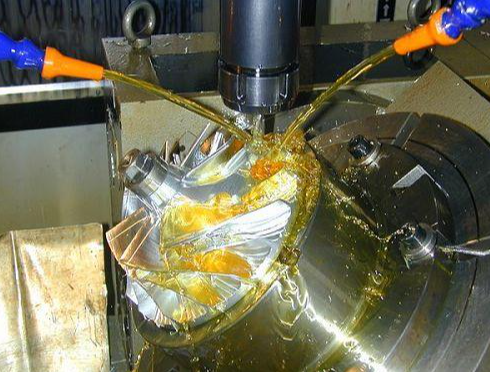
Blade Geometry & Thin-Wall Issues
Impeller blade sections are usually thin, usually about 2mm thick, and have complex twists from the hub to the shroud. This unique geometry is extremely difficult since the blades are not rigid and therefore subject to deformation during machining. Thin walls are easily warped by cutting forces, which affects dimensional accuracy and surface finish.
Further, excessive tool overhangs required to reach intricate blade regions worsen the issue by causing vibration and chatter. This type of cutting instability may lead to poor surface finishes, increased tool wear, and potentially even workpiece damage. All these need to be controlled to ensure accuracy and consistency in the production of impellers.
Errors: Overcut, Undercut, And Interference
Overcutting and undercuts or missing material are common overages when machining complex curved surfaces like impeller blades. They can degrade aerodynamic performance and require costly rework or scrapping. To prevent them, CAM software must have advanced collision detection that anticipates and avoids tool-path collisions with the workpiece geometry.
In addition, it needs sophisticated tool tilting and orientation techniques to maintain the best engagement angle of the cutting edge with the blade surface. These techniques have gouge-free smooth material removal, as well as maintaining full contact of the surface. Effective simulation and verification tools help in finding and solving these issues before real machining.
Material Considerations
Nickel superalloys and titanium alloys used in the manufacture of impellers do not lose hardness at elevated temperatures, substantially increasing cutting forces and generating intense heat during machining. This heat and mechanical stress pose issues such as excessive tool wear and even tool breakage.
To neutralize such effects, machining parameters including spindle speed, depth of cut, and feed rates must be carefully optimized. Multi-axis machining setups facilitate enhanced control over such parameters, making possible the ideal balance between efficient material removal and tool retention. Proper parameter adjustment also minimizes work hardening of the material, which contributes to maximum tool life and surface finish.
Tool & Path Strategy Adaptations
The use of short, rigid tool holders with minimum overhang is required for maintaining the rigidity of tools when machining complicated impellers. Larger overhangs result in more deflection and vibration hazards, which have adverse effects on accuracy and surface finish.
In addition, toolpath strategies must provide equal tool engagement and stiffness to prevent unstable changes in cutting forces. Stable cutting condition path planning that encompasses all the surfaces with minimal risk of defects minimizes the possibility of defects. Without optimal toolpaths, multi-axis machining can ironically produce inferior results compared to straightforward 3-axis machining, indicating the importance of advanced planning and control.
Multi-Axis Machining Techniques In Impeller Production
Multi-axis machining enables full impeller profiles like hub and blade in a single setting. CAM software (MasterCAM, SolidCAM, UG, NX) generates special toolpaths for roughing, semi-finishing, finishing, and cleanup.

Five-Axis Synchronized Roughing
Five-axis synchronized roughing leverages coordinated machine axis movement to perform quick, high-feed stock removal from intricate impeller geometry. Approaches such as 5-axis plunge milling and multi-coordinate multi-toolpath strategies enable efficient clearing of material from intricate curved geometries without compromising toolholder interference and tool vibration. Dynamic adjustment of tool orientation during cutting ensures tool stability and improves tool life, thus minimizing cycle time without compromising accuracy.
This roughing operation is used to prepare the workpiece for subsequent semi-finishing processes because it achieves an aggressive material removal against exact control so that it does not cause excessive mechanical stress or thermal deformation on thin-walled impeller blades.
Semi-Finishing Strategies
In the semi-finishing phase, coordinated toolpaths optimized for the impeller’s blade contours bring the rough surface near-net shape. Advanced tool axis control is applied in the process to ensure continuous contact with the blade surface, avoiding undercuts and missing material. Toolpath planning positions the cutter path in close proximity to the complex curvature of the blades and hubs, ensuring equal material removal and dimension consistency.
The semi-finishing process acts as a vital link, preparing the surface for the final finishing pass by reducing machining marks and imposing geometry. Tight control of tool orientation in this process prevents sudden changes in cutting forces, keeping sensitive features’ structural integrity intact.
Precision Finishing
The finishing process is aimed at achieving superior finish surface and tight dimensional tolerances. Precise toolpaths such as spiral or trochoidal motions are employed, with the axis of the tool maintained normal to the local surface at all locations. This frequent contact minimizes cutting load fluctuation and encourages surface roughness, usually to values suited for high-performance aerospace and automotive applications.
By continuous realignment of the orientation of the cutter in five axes, finishing passes eliminate scalloping and residual tool marks, producing smooth aerodynamic surfaces critical to impeller efficiency. Precision control during finishing also reduces the need for subsequent manual rework or polishing.
CAM Software In Depth
CAM software nowadays plays a critical role in generating optimized multi-axis toolpaths and collisions-free machining. For example:
- MasterCAM both continuous and indexed five-axis toolpath capabilities and hence is highly appropriate for unbroken integration of processing between hub and blade.
- UltiMotion of SolidCAM features intelligent collision avoidance to ensure there are safe five-axis high-speed motions even for very constrained geometries.
- UG/NX (Siemens NX) offers advanced algorithms for blade-milling and smoothing along with high-performance visual simulation and interference checking such that machining strategies can be correctly verified in advance before actual processing.
Technological Breakthroughs In Multi-Axis Machining
Advancements in toolpath management, tool selection, and interference detection are the pillars of modern multi-axis precision.Multi-axis machining has been enhanced through improved tooling, process simulation, and NC code engineering.
Optimized Multi-Axis Toolpaths
The great leap in multi-axis machining is seen in the generation of highly optimized toolpaths that change dynamically with respect to the complex shapes of impeller blades. Techniques such as scallop height-compensated toolpaths precisely control the distance between successive cutter passes to achieve uniform surface finish and eliminate unnecessary cutting. Advanced blending technology smoothes out the cut between adjacent machining zones, and curvature adaptation allows the tool to follow intricate curves more naturally, with less tool and workpiece stress.
These improvements yield extremely low rework, better surface uniformity, and superior dimensional accuracy, all of which are most critical to aerodynamic and structural performance of impellers.
High-Speed Precision Combinations
Merging high-speed spindles and synchronized multi-axis motion revolutionized precision curved surface machining. The sharp, clean cut is provided by high spindle speeds and uniform multi-axis tool orientation so that the cutting edge remains in harmony with the intricate blade curvature. This synergy achieves maximum productivity without compromising on critical parameters like flatness and surface roughness.
Through maintaining the optimal tool angles along complicated toolpaths, such high-speed machines minimize tool deflection and vibration, causing better surface finish and greater tool life, even on difficult nickel and titanium alloys to cut.
Advanced Tool Geometry & Materials
There has also been technological progress in tooling, where short, rigid tool holders combined with high-performance cutting inserts, for example, carbide, ceramic, or cubic boron nitride (CBN), provide higher stability and deflection resistance. The tool geometries are optimized so that the tool axis is perfectly aligned with the local blade surface angle of the impeller to achieve maximum cutting efficiency and minimize cutting forces.
This specially designed technique reduces mechanical stress on both workpiece and tool, allowing higher feed rates and improved surface finish without chatter and chances of premature tool wear.
Collision Detection Strategies
Advanced collision detection software, both real-time and pre-machining simulation, are now the norm in multi-axis machining. These pieces of software constantly monitor tool, holder, and machine component distances from the workpiece and dynamically adjust axis motion to prevent gouges, tool crash, or interference.
Through the integration of collision avoidance software with CNC controls and CAM programming, machinists are able to push the limits of challenging toolpaths with confidence, while ensuring both operator safety and integrity of expensive impeller components.
Case Studies In Impeller Production
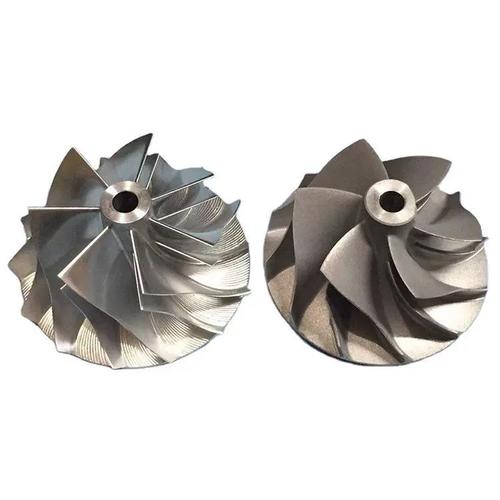
Notable instances show CAM hardware and software integration enabling seamless blade-hub manufacture.Although a longstanding customer, the leading turbine manufacturer efficiently utilized MasterCAM’s advanced 5-axis machining capability to enhance impeller manufacture. The firm was able to carry out blade and hub machining in a single setting by linking multi-axis toolpaths. This innovation saved setup time by approximately 40%, significantly reducing the manufacturing cycle. In addition, the optimized toolpaths also improved the surface quality of blades by 30%, improving aerodynamic performance and reducing post-processing time. The case illustrates how combined CAM software and multi-axis machining can deliver both efficiency and quality simultaneously.
Similarly, a turbomachinery producer utilized UG’s innovative toolpath smoothing and unbroken 5-axis milling methods to mill complex impeller shapes. The integrated machining process preserved part accuracy to ±20 micrometers and reduced cycle time by a quarter. Yet another use showcased Siemens NX software demonstrate dramatic improvements with curvature-based tool tilting and adaptive feed rate control. This achieved a 28% increase in surface quality, namely on the challenging tight flow channels of impellers. These examples show how advanced CAM systems coupled with multi-axis machining deliver enormous productivity and accuracy benefits to impeller manufacturing.
Future Directions In Multi-Axis Machining
The future of multi-axis machining in impeller production is increasingly shaped by smart automation and data-driven process optimization. Artificial intelligence-powered toolpath planning integrates real-time sensor inputs to enable adaptive feed rates and predictive tool wear control, reducing downtime by half and improving tool life. Smart machining systems are able to constantly monitor edge conditions and modify cutting parameters adaptively in real-time, automatically both in terms of quality and efficiency. Along with this, virtual simulation technologies—included in CAM software—are evolving into full digital twins that mimic machine kinematics, tool movement, and workpiece interaction. This end-to-end simulation capability dismisses costly physical testing and reduces time-to-part delivery by allowing engineers to test and improve toolpaths virtually before machining.
At the same time, path planning algorithms advancements are solving long-standing mechanical problems such as the smooth control of rotation A-axis motion. Techniques like A-spline and quintic spline interpolation minimize axis stick-slip and kinematic stress while offering increased dimensional accuracy and smoother surface finish. Furthermore, the development of large parameter libraries and segmented zone machining approaches allows producers to tailor cutting conditions to specific blade zones, material traits, and stages of tool wear. This methodical approach allows for regular, repeatable machining operation between runs. Collectively, these technologies vow a new age of smarter, faster, and more predictable multi-axis machining optimally suited to the intricacies of impeller production.
Conclusion
Multi-axis CNC machining has become the standard for manufacturing sophisticated surface impellers. With the use of additional degrees of freedom, sophisticated CAM software, best-in-class toolholder positions, and intelligent tooling, manufacturers eliminate numerous setups, reduce cycle time, and achieve high-geometry precision with excellent surface finish. With case studies and imminent advances—like AI-driven toolpath generation, virtual simulation, and intelligent machinery—the industry is poised on the edge of even greater productivity and consistency. Impellers will be further supported by high-end automation, reducing the cost of production, enhanced performance, and providing clean aerospace and energy production in the coming years.


