
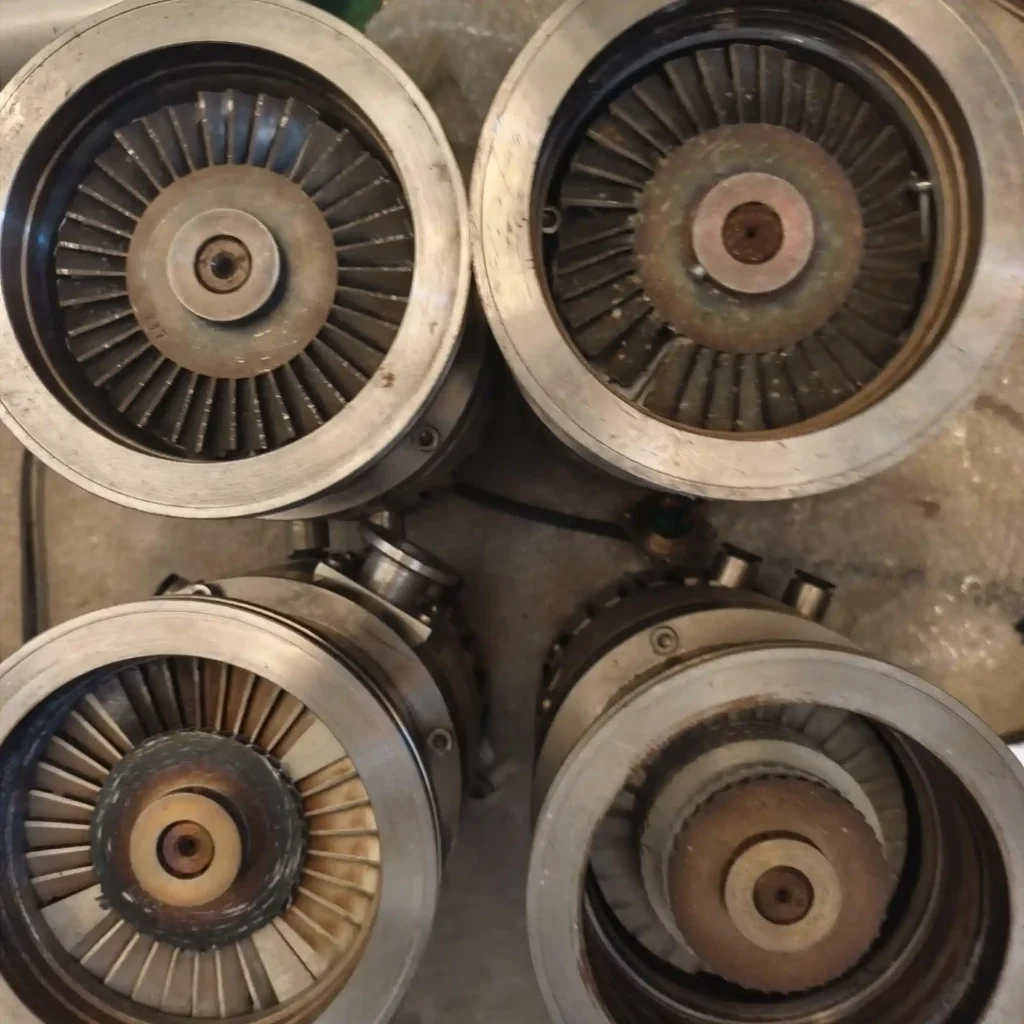
In high‑vacuum systems, turbomolecular pumps serve as critical enablers for advanced semiconductor manufacturing, ultra‑precision metrology, and space simulation. The impeller, spinning at tens of thousands RPM, acts as the heart of these pumps—its dynamic balance directly determines pumping efficiency, vibration levels, noise emission, and service life. Even minute asymmetries in blade mass or geometry can introduce catastrophic instability and performance degradation. This article targets that challenge: how to achieve micro‑level dynamic balance in impeller machining. We will evaluate limitations of conventional methods, explore breakthrough laser‐based balancing, highlight five‑axis CNC and digital simulation integrations, outline quality control protocols, and anticipate future trends in smart manufacturing. By mastering these techniques, manufacturers can produce impellers that deliver unmatched vacuum performance, lower maintenance costs, and ensure reliability in the most demanding applications.
Dynamic Balance: Core Concepts and Principles
In high-speed rotating machinery such as turbomolecular pumps, achieving dynamic balance is fundamental to performance, longevity, and safety. As rotational speeds rise into tens or hundreds of thousands of RPM, even minute asymmetries in mass distribution can produce significant centrifugal forces. These forces, if uncorrected, lead to vibration, reduced efficiency, mechanical stress, and eventual failure. Dynamic balancing ensures that rotational inertia is evenly distributed, enabling smooth, stable, and high-precision operation.
What Is Dynamic Balance?
Dynamic balance refers to the even distribution of mass around a rotational axis so that centrifugal forces cancel each other out during spinning. This balance prevents unwanted radial forces or torque, enabling the rotating part to operate smoothly without generating excessive vibrations.
The core goal of achieving dynamic balance is to minimize the net torque produced during rotation, thereby reducing vibration and overloading of bearings. For high-speed machinery, dynamic balance forms the foundation for ensuring reliable operation and precision.
Why Balance Matters for Turbomolecular Impellers
Turbomolecular impellers spin at extremely high speeds, often exceeding 60,000 to 90,000 revolutions per minute. At these speeds, even minute mass deviations generate powerful centrifugal forces that cause vibration and mechanical wear.
An unbalanced impeller accelerates wear on air bearings, degrades vacuum performance, and causes dynamic instability in the system. These issues not only lower efficiency but also shorten service life and may result in structural fatigue or catastrophic failure if left unaddressed.
Limits of Traditional Balancing Methods
Traditional balancing techniques typically involve mechanical modifications such as drilling, trimming, or adding counterweights to adjust the mass distribution of rotating parts. While these methods are widely used, their precision generally only reaches the range of 10 to 20 microns.
Furthermore, these approaches are often manual, time-consuming, and invasive, which can damage delicate thin-walled or complex impeller geometries. Due to their limited precision and efficiency, traditional methods struggle to meet the demands of modern high-speed, high-precision equipment.
Rise of Laser Balancing
Laser balancing technology employs laser Doppler vibrometry and optical scanning to enable contact-free, sub-micron resolution measurements of imbalance. It can pinpoint imbalance locations precisely on the rotating impeller, allowing engineers to perform targeted corrections.
This method offers not only higher accuracy but also faster measurement times and better repeatability, greatly improving balancing efficiency. With the rise of digital twin technology and smart manufacturing, laser balancing is increasingly integrated into automated workflows, enabling real-time monitoring and dynamic correction.
Impeller Machining: Dynamic Balance Challenges
Machining turbomolecular impellers presents unique dynamic balancing challenges due to their complex geometry, extremely high rotational speeds, and stringent precision requirements. Achieving perfect balance is essential to ensure smooth operation, minimize vibration, and extend the life of these critical components. However, factors such as intricate blade design, material removal processes, and the demanding balance tolerances at microscopic levels complicate the manufacturing process. Understanding these challenges is key to developing effective machining strategies and quality control methods for impellers used in high-speed vacuum pumps and turbines.
Complex Geometry and Dense Blade Arrays
Turbomolecular impellers feature narrow, tightly spaced blades arranged in dense arrays. This intricate geometry limits tool accessibility during machining, making it difficult to achieve uniform material removal on every blade. Additionally, the thin and delicate nature of the blades increases the risk of tool deflection and vibration, which can cause dimensional inaccuracies or damage if cutting paths and forces are not carefully controlled through precise programming and advanced CNC strategies.
High-Speed Instability
Impellers often operate at extremely high speeds, exceeding 60,000 revolutions per minute. At such velocities, even micro-level imbalances generate significant centrifugal forces that induce severe whirling and resonant vibrations. These dynamic instabilities place excessive loads on air bearings, seals, and other critical components, accelerating wear and drastically reducing pump lifetime. Maintaining precise balance at this scale is therefore essential to ensure mechanical stability and reliable operation.
Material Distribution and Machining Limits
The process of machining impeller blades requires extremely precise control over material removal. Uneven cutting or slight thickness variations across blades lead to mass imbalances that are amplified at high rotational speeds. Even minimal weight differences between blades can cause disproportionate centrifugal forces. Moreover, the limited access to internal blade surfaces restricts the ability to correct these imbalances purely through machining, posing significant manufacturing constraints.
Micro-Level Balance Requirements
The dynamic balance tolerances for turbomolecular impellers are extraordinarily tight, often quantified in terms of micro-Newton meters of residual imbalance. Achieving these tolerances demands sub-micron level precision in both measurement and correction. This necessitates the use of highly accurate, non-contact measurement tools such as laser vibrometers and sophisticated balancing equipment capable of detecting and correcting minute mass deviations during or after machining.
Analyzing & Improving Traditional Balancing Methods
Traditional balancing methods have long been the standard approach for correcting imbalance in turbomolecular impellers. These techniques typically involve machining to nominal dimensions followed by iterative testing and manual mass removal. While established and widely used, these methods face inherent limitations in both accuracy and productivity, especially as impellers operate at increasingly higher speeds requiring finer balance tolerances. To meet these challenges, manufacturers are adopting advanced strategies that enhance precision, reduce cycle times, and improve overall process control.
Workflow of Traditional Balancing
The traditional balancing workflow begins with machining the impeller to its nominal design dimensions. After this initial step, static and dynamic balance tests are conducted to identify any residual imbalance. Based on these measurements, technicians drill or otherwise remove mass from specific blades to correct the imbalance. This process of measuring, adjusting, and re-testing is repeated iteratively until the impeller’s imbalance falls within acceptable tolerance limits. Although straightforward, this cycle can be time-consuming and requires skilled operators to avoid compromising blade integrity.
Limitations: Accuracy & Productivity
Traditional balancing methods come with several critical drawbacks. Drilling to remove mass weakens the blades structurally and may introduce residual stresses that affect long-term durability. The iterative nature of the process involves multiple measurement and correction cycles, significantly increasing production time and costs. Additionally, conventional imbalance measurement techniques often have limited resolution, typically within tens of microns, which is insufficient for the ultra-fine balance requirements of high-speed turbomolecular impellers. These limitations highlight the need for more precise and efficient balancing approaches.
Enhancement Strategies
To overcome the shortcomings of traditional methods, several enhancement strategies have been developed. Utilizing high-precision CNC finishing allows for more controlled and uniform material removal, reducing the need for invasive drilling. Statistical process control (SPC) can be implemented to monitor manufacturing trends and detect patterns that lead to imbalance, enabling proactive process adjustments. Moreover, adaptive drilling techniques, guided by real-time imbalance data from advanced sensors, enable targeted corrections with minimal blade damage and fewer iterations. These improvements collectively boost both the accuracy and productivity of the balancing process.
Laser Dynamic Balancing: Application & Benefits
As turbomolecular impellers reach ever-higher rotational speeds and tighter tolerance requirements, traditional balancing techniques often fall short in precision and efficiency. Laser dynamic balancing has emerged as a cutting-edge solution, leveraging advanced laser vibrometry technology to deliver highly accurate, non-contact imbalance measurement and correction. This approach not only enhances product quality but also significantly reduces balancing cycle times and protects the structural integrity of delicate impeller blades. Below, we explore the core principles, performance advantages, and real-world applications of laser dynamic balancing.
Principles & Operational Workflow
Laser dynamic balancing uses laser vibrometry to precisely measure blade deflection at multiple points while the impeller spins. The system captures vibrational data and, through sophisticated software algorithms, calculates the imbalance vector—indicating both the magnitude and angular position of the unbalanced mass. Corrections are then applied via non-contact methods such as laser ablation (removing tiny amounts of material) or controlled mass addition, ensuring accurate, minimally invasive balance adjustment in real time. This workflow enables highly repeatable and efficient balancing suited to complex impeller geometries.
Traditional vs. Laser: Performance Comparison
| Criteria | Traditional Balancing | Laser Balancing |
| Accuracy | 10–20 µm | < 1 µm |
| Time per Cycle | Several hours | Minutes |
| Structural Integrity | Risk of blade weakening | Non-invasive, preserves blades |
Laser balancing dramatically improves accuracy by an order of magnitude, slashes balancing time, and eliminates the structural risks associated with manual drilling or mass trimming. These benefits make it especially valuable for impellers operating at extreme speeds where balance precision is critical.
Real-World Example: Pfeiffer Vacuum’s Laser Balancing™
Pfeiffer Vacuum, a leading turbomolecular pump manufacturer, has successfully implemented their proprietary Laser Balancing™ system. Their results demonstrate an over 80% reduction in residual imbalance and a halving of cycle times compared to traditional balancing methods. This advancement not only improves throughput but also enhances overall product reliability and performance, setting a new industry standard for high-speed impeller balancing.
Advantages Summary
Laser dynamic balancing offers several key benefits:
- Non-contact measurement preserves the delicate structure of impeller blades, avoiding damage and stress.
- Automation and software integration ensure consistent, repeatable results with minimal operator intervention.
- Sub-micron precision enables impellers to meet the stringent demands of ultra-high-speed operation, improving pump longevity and efficiency.
- Flexibility in handling complex geometries and dense blade arrays without compromising accuracy.
Together, these advantages make laser dynamic balancing a transformative technology for modern turbomolecular impeller manufacturing.
Machining Process Optimization
Achieving optimal performance and reliability in turbomolecular impellers requires not only precise machining but also intelligent process optimization. Modern manufacturing leverages advanced technologies such as five-axis CNC machining, digital simulation, and integrated balance-aware toolpath strategies to enhance accuracy, surface quality, and dynamic balance. These innovations reduce rework, lower cycle times, and help produce impellers that meet stringent aerospace and vacuum industry standards. Below, we outline key elements of machining process optimization that drive these improvements.
Five-Axis CNC in Impeller Machining
Five-axis CNC machining offers significant advantages for impeller fabrication. By allowing simultaneous movement along multiple axes, it provides uninterrupted access to complex blade surfaces without frequent repositioning of the part. This capability reduces geometric errors caused by multiple setups and improves surface finish consistency. Additionally, five-axis machining enhances control over material removal, resulting in better mass distribution across blades—a critical factor in maintaining dynamic balance at high rotational speeds.
Digital Machining Simulation
Before actual cutting, digital machining simulation tools model the entire machining process virtually. These simulations replicate thousands of tool passes, predicting how material removal affects blade geometry and mass distribution. By analyzing imbalance trends early, engineers can adjust toolpaths and machining parameters to minimize imbalance before production starts. This predictive approach decreases trial-and-error cycles, reduces scrap rates, and ensures more reliable first-pass accuracy.
Path Optimization & Balance Integration
Optimizing toolpaths for consistent and controlled mass removal is essential for producing high-quality impellers. Toolpaths are carefully programmed to balance material removal uniformly, minimizing imbalance accumulation during roughing and finishing stages. Furthermore, integrating machining processes with laser dynamic balancing techniques allows manufacturers to fine-tune impeller balance after CNC machining. This hybrid approach delivers smoother, higher-performance impellers capable of operating at extreme speeds with enhanced durability.
Ensuring Quality: Post‑Balance Validation
Maintaining the dynamic balance of turbomolecular impellers after machining is crucial to ensure optimal performance, longevity, and safety in high-speed applications. Post-balance validation involves stringent testing against industry standards, precise measurement of residual imbalance, and thorough operational checks within assembled systems. These steps confirm that the impeller meets required tolerances and performs reliably under real-world conditions. Below, we detail the critical components of the post-balance validation process.
Standards for Dynamic Balance After Machining
Adhering to recognized standards is essential to guarantee impeller balance quality. ISO 1940 G2.5 is a commonly applied standard for high-speed rotating components like turbomolecular impellers. This standard specifies acceptable residual imbalance tolerances, typically ranging from 0.4 to 0.8 gram-millimeters per kilogram (g·mm/kg), depending on the impeller’s rotational speed and mass. Meeting these stringent criteria helps prevent excessive vibration and extends component life during operation.
Testing Flow and Methods
Post-machining, impellers undergo dynamic balancing testing through a systematic process:
- The impeller is carefully mounted on a dynamic balancing machine designed for high-speed rotation.
- It is spun at the intended operational RPM to replicate real conditions.
- Advanced sensors or laser vibrometry systems measure the imbalance vector precisely, detecting even sub-micron deviations.
- The measured imbalance is compared against specified tolerance thresholds.
If necessary, corrective actions such as laser ablation or controlled material addition are applied to reduce imbalance, followed by re-testing to verify results.
Assembly and Operational Testing
After achieving the required balance, the impeller is assembled into the turbomolecular pump. Comprehensive trial runs under vacuum conditions are conducted to validate performance. Critical parameters such as temperature stability, vibration levels, and leakage rates are closely monitored to ensure the impeller functions smoothly without undue stress on bearings or seals. Successful operational testing confirms the impeller’s readiness for deployment in demanding environments.
By rigorously validating balance post-machining and during assembly, manufacturers ensure turbomolecular impellers meet the highest standards of precision and reliability, supporting long-term, trouble-free operation in high-speed vacuum systems.
Future Trends in Dynamic Balancing
As turbomolecular pumps continue to evolve, the demand for higher precision, efficiency, and reliability drives innovation in dynamic balancing technologies. Emerging advances leverage automation, artificial intelligence, and integrated manufacturing systems to push the boundaries of what’s possible in rotor balance accuracy and process optimization. These future trends promise to transform how impellers are balanced, tested, and fine-tuned, ultimately enhancing vacuum pump performance across cutting-edge industries. Below, we explore key developments shaping the future of dynamic balancing.
Automation and AI-Driven Balancing
Artificial intelligence and machine learning algorithms are revolutionizing imbalance correction by analyzing vast datasets from balancing cycles. These systems predict the optimal material removal or addition strategies, minimizing trial-and-error iterations. Fully automated laser balancing platforms now operate with minimal human intervention, delivering unparalleled consistency and speed. This automation reduces operator error, accelerates throughput, and ensures each impeller meets exacting specifications.
IoT-Enabled Monitoring and Closed-Loop Control
The integration of Internet of Things (IoT) technologies enables continuous, real-time monitoring of impeller balance during manufacturing and operation. Smart sensors connected to balancing equipment feed live data into control systems, allowing dynamic adjustments to machining parameters or balance corrections on-the-fly. This closed-loop feedback system not only enhances precision but also increases equipment uptime by preventing imbalance-related failures before they occur.
Hybrid Machining and Balance Systems
Next-generation manufacturing cells combine CNC machining, laser ablation, and dynamic imbalance detection into a single integrated process. In these hybrid systems, impellers are both machined and balanced seamlessly within one workflow, eliminating the need for multiple setups and reducing lead times. Embedded error correction capabilities ensure that any detected imbalance is immediately addressed, resulting in smoother surfaces, tighter tolerances, and higher overall quality.
Broader Impact on Vacuum Pump Performance
Ultra-precision balancing enabled by these advanced technologies leads to significant performance improvements in turbomolecular pumps. Benefits include drastically reduced vibration, extended bearing and seal life, quieter operation, and greater reliability. These enhancements facilitate breakthroughs in critical applications such as semiconductor fabrication, space exploration, and sustainable energy research, where vacuum system performance is paramount.
Conclusion
Achieving dynamic balance in turbomolecular pump impellers transcends conventional machining limitations. While traditional methods still have value, laser-based balancing delivers unmatched precision, efficiency, and non-invasive correction. Integrating cutting-edge five-axis CNC, digital simulation, and intelligent automation lays the foundation for consistent sub-micron balance at ultra-high RPM. As manufacturers adopt AI, IoT, and hybrid processing, impeller machining co-evolves with pump performance. Such capabilities enhance pump reliability, efficiency, and competitiveness in high‑tech industries. By investing in these advanced balance solutions, engineers can overcome dynamic balance challenges—positioning their turbines to excel in the cleanest, most demanding vacuum environments.


