

Titanium alloy impellers are essential parts generally utilized in aerospace, energy, and defense contexts where strength, corrosion resistance, and low weight are essential. Machining impellers from these alloys is very difficult due to the fact that the alloys are very hard, possess low thermal conductivity, and are prone to cutting force-induced deformation. The required high machining precision not only demands advanced equipment but also high-fidelity and reliable fixturing systems. Precision fixtures are the solution to decreasing workpiece error when machining, ensuring stable clamping, and minimizing deformation. The following article goes deeper into the various causes of error during machining titanium alloy impellers and explains how precision fixture design and usage effectively manage these errors. It also shares auxiliary technologies and engineering case studies that illustrate the tremendous rise in machining accuracy and efficiency with high-end fixtures.
Sources Of Errors In Titanium Alloy Impeller Machining
Understand the root causes of machining errors to design effective fixtures and improve product quality.
Fixture-Related Errors
Precision fixtures are essential in sustaining repeatable alignment and consistency in machining titanium impellers. However, due to the intricate impeller geometry, the fixtures will involve high-level positioning, clamping, and guiding components. Any inconsistency in these elements—e.g., misplaced locators or uneven clamping surfaces—can compromise the setup and result in dimensional irregularities in the final product.
With passage of time, even well-made fixtures experience mechanical wear or fatigue. Repeated clamping, vibrations of multi-axis cutting cycles, and exposure to cutting fluids produce surface abrasion and deformation of important features. Deformations lead to reduced ability of the fixture to hold close tolerances, as well as micromovements of the workpiece that can lead to blade geometry and concentricity deviations.
Machine Tool Errors
Machine tools are another root cause of machining inaccuracy. Spindle issues such as radial runout, thermal growth, or unbalance can directly affect tool positioning accuracy. At high spindle speeds—titanium machining typically involves high spindle speeds—any minor runout will result in a bad chip load, premature tool wear, and size variation over the impeller surface.
Other types of error arise due to the elements of rotation such as bearings and transmission chains. Faulty or under-lubricated bearings lead to spindle wobble, while backlash in drive belts or gear trains imposes non-linear axis response. These impose irregular feed motion and toolpath deviation, which are particularly annoying in high-precision 5-axis machining of complex blade profiles.
Tool Errors
Tool condition is an important consideration in keeping machining accuracy. As tools become worn, cutting edges dull, leading to higher friction and cutting forces. For titanium impellers, this creates thermal build-up and potential thin-wall feature deformation. Ongoing wear also compromises surface finish quality and may result in out-of-tolerance geometry if not immediately detected.
The second is poor tool clamping. Poor torque on the clamping will cause tools to slip when handling heavy cutting loads, whereas excessive pressure will bend the tool shank or holder. Either will cause tool rigidity and concentricity required to provide constant chip loads and avoid surface irregularities or micro-chatter during blade finishing operations.
Workpiece Material Mistakes
Titanium alloys are especially difficult to machine due to their low thermal conductivity and high strength. These material properties lead to heat concentration at the cutting edge and, consequently, greater thermal stress on the workpiece and tool. Dimensional stability is thus compromised, especially while machining narrow unsupported blade sections prone to heat-induced distortion.
In addition, titanium alloys typically have residual internal stresses resulting from forging or heat treatment. When material is cut away during machining, these stresses are relieved inequitably, resulting in unpredictable changes in the form of the part. These deformations can be steady or abrupt, requiring repeated re-clamping and raising the hazard of cumulative error.
Environmental Errors
Outside environmental factors also impact significantly the precision of machining, particularly in high-precision applications. Thermal expansion or shrinkage of tooling, fixtures, and machine components occurs due to changes in temperatures in the workshop. Small differences in temperature are capable of displacing critical dimensions by several microns, which are enough to affect close tolerance features such as hub interfaces and impeller blade tips.
Humidity also plays a role, particularly when working with moisture-sensitive components or fixtures. Drying and wetting may lead to corrosion, swelling of polymer parts, or changing the mechanical behavior of composite materials used in tool holders. These environmental conditions over time contribute to rising variability and uncertainty in the machining process.
The Role Of Precision Fixtures In Titanium Alloy Impeller Machining
Precision fixtures provide the stability and accuracy needed to offset titanium alloy machining challenges.
Enhancing Positioning Accuracy
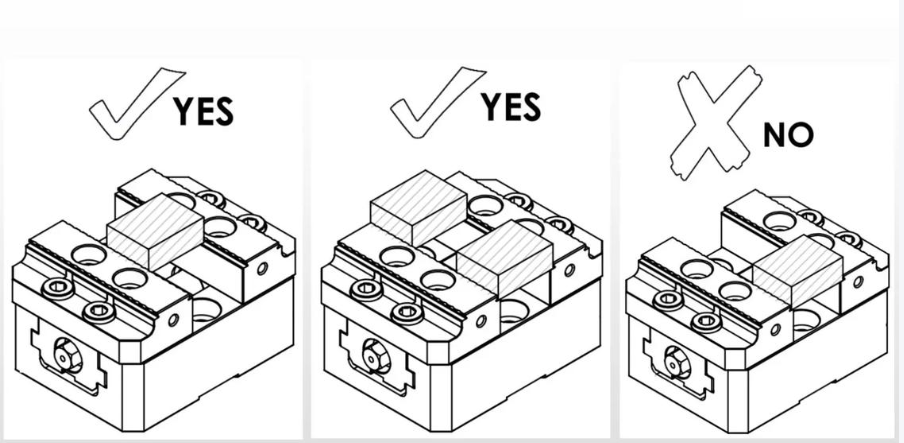
Optimally designed fixtures are key to reproducible, accurate positioning of titanium impellers, especially given their thin-walled, curved geometries. A rigid structural arrangement—closed-loop frames or symmetrical bases, for instance—can succeed in reducing flexing under machining forces, thereby maintaining the spatial integrity of the workpiece during processing.
In addition, high-precision location features such as short dowel pins, hardened bushings, and micro-adjustable positioning blocks provide consistent and repeatable alignment between the impeller and the fixture. Such fine control of part location is significant when multi-axis machining paths must align accurately between setups.
Reducing Clamping Errors
Clamping pressures must be uniform and repetitive to avoid introducing stress or distortion into thin-walled titanium parts. Extremely accurate clamping devices—hydraulic, pneumatic, or cam-lock mechanical systems—distribute pressure uniformly and minimize localized deformation during cutting.
In order to further reduce residual misalignments, some manufacturers use a repeated pre-clamping cycle and re-alignment strategy. Through incremental tightening of clamps and re-checking of workpiece seating, the fixture-part gap is closed to a minimum, removing micromovements that could otherwise displace the workpiece upon tool engagement.
Enhancing Fixture Rigidity
Fixture stiffness directly influences vibration damping and position stability. Deflection can be minimized by employing light-weight, high-stiffness material, i.e., high-tensile aluminum alloy or composite-metal laminate, without adding unwanted mass that would worsen the machine dynamics.
Also, the design aspects of minimizing overhangs and optimizing the ratio of fixture volume to tool engagement area enable one to obtain higher natural frequencies. This works towards preventing vibration resonance, with the impeller being stiffly supported during aggressive roughing or high-precision finishing operations.
optimization Of fixture design For complicated geometry
Titanium impellers usually feature non-uniform, twisted blades and highly recessed hub areas, for which conventional fixtures are not suitable. Custom fixture elements—contoured pads, compliant supports, or indexed locating fingers, for instance—allow clamping to be maintained safely without obstructing tool paths or causing local distortion.
In more advanced setups, the fixture design may even be integrated with the machine tool structure. By aligning fixture supports with the machine’s natural load paths and using synchronized clamping cycles, part deformation and stress transfer are minimized during 5-axis machining.
Reducing Fixture Wear
Ultimately, even precision fixtures can lose their accuracy due to repeated mechanical stresses, chip abrasion, and coolant exposure. Regular inspection schedules, such as wear checks on seating pads, clamps, and guide elements, are required to maintain consistency between batches.
Preventative treatments, such as DLC-coated or nitrided surface inserts, significantly enhance wear resistance of high-contact zones. These coatings reduce galling and surface damage, thereby holding critical tolerances and avoiding fixture-induced errors in large series.
Enhancing Machining Efficiency
A well-designed fixture not only clamps the part—it also acts to make the operation more efficient. Multi-operation fixture systems allow several machining operations (e.g., roughing, semi-finishing, and finishing) to be performed without part removal, without alignment errors, and with setup time saved.
Quick-change fixture bases, which are equipped with zero-point clamping or modular interfaces, enable operators to switch fixtures rapidly between machining centers. This effectively reduces idle time and supports lean production procedures without loss of accuracy.
Key Design Considerations For Precision Fixtures
Good fixture design balances accuracy, stiffness, ease of use, and flexibility.
Structural Design Principles
A well-designed fixture begins with a sound structural base. Thin beams or arms that are prone to bending with machining loads are to be avoided—especially when dealing with high-force operations like machining of titanium alloy impellers. Use ribbed or gusset-strengthened members instead to provide greater load-carrying capacity as well as reduce elastic deflection.
Symmetrical or closed-loop configurations provide the same level of stiffness in all support axes, promoting vibration resistance and positional stability. Hydraulic three-jaw chucks or pneumatic clamping systems can apply even force distribution without inducing local pressure points. This protects sensitive or thin-walled components against distortion and improves repeatability for high-precision applications.
Selecting Locating Methods
Precise and reproducible positioning is required to provide machining accuracy. One-face two-pin (or three-point support) locating schemes enable restraint of critical degrees of freedom without over-constraint, resulting in part deformation. These arrangements are particularly suitable for rotationally symmetrical impellers.
It is important that the fixture’s locating bases and part design datums align to minimize cumulative positioning errors. Misalignment of the fixture and CAD/CAM reference frames results in systematic deviations, which are compounded in multi-axis machines. Datum-consistent design ensures dimension integrity at all stages.
Fixture Material Selection
Material selection plays a major role in the long-term accuracy and mechanical stability of the fixture. Steels of high strength or hardened tool metals give rigidity in load, whereas temperature-stable materials like cast iron or metal-composite hybrids aid in keeping the geometry stable against temperature fluctuation.
Additionally, materials should offer sufficient wear resistance, especially in regions that experience chip flow, coolant spray, or mechanical clamping cycling. Surface treatments like anodizing, nitriding, or ceramic coating might be applied to contact areas to enhance service life and reduce the potential for galling or corrosion in extreme shop-floor environments.
Assembly Accuracy
Even a fixture that is well-designed will underperform if assembly tolerances are not well controlled. In production, each component of the fixture has to be held to close dimensional specifications. Tolerance stack-up at assembly can cause misalignment and non-uniform clamping forces, impacting the end accuracy of the workpiece.
To meet unavoidable real-world mismatches, precision adjustment provision—i.e., micrometer-adjustable stops, tapered shims, or eccentric bushings—can be incorporated into the fixture. These permit adjustment of locating or clamping positions, enabling minor mismatches at installation or thermal drift over a period to be corrected.
Practical Applications Of Precision Fixtures In Titanium Alloy Impeller Machining
Examples in the real-world reflect the effectiveness of precision fixture design and application.
Forward-Flow And Reverse-Flow Fixture Designs
To record the complicated curled impeller blade geometries, forward-flow and reverse-flow fixture strategies are being adopted. Forward-flow fixtures push down from the pressure side and are tailored to closely approximate blade contours so that deformation is minimized when clamping. Reverse-flow configurations utilize support from the suction side to counteract internal stresses and bending resulting from machining.
Such fixtures are often optimized with CFD-based flow simulations that assist engineers in structural hotspot identification and the optimal design of sealed cavities. An optimum sealed fixture not only improves structural stiffness but also allows for better thermal management by covering up heat-affected areas. This is particularly critical when machining titanium alloys where thermal expansion must be closely controlled.
Integrated Water Jacket And Tool Fixtures
Integrated water jacket fixtures combine cooling passages with mechanical support systems to manage temperature directly at the workpiece-fixture interface. This is particularly efficient for maintaining tight tolerances in titanium machining, where heat concentration can result in thermal warping and material hardening.
Under electrochemical or combined machining conditions, orientation of the electrolyte or coolant stream through the fixture maximizes not only thermal consistency but also surface integrity. Consistent material removal in conjunction with controlled cooling enhances surface finish and reduces the possibility of residual stress-induced warping of complex blade surfaces.
Five-Axis Machining Fixtures
Fixtures for five-axis machining must allow unobstructed access to complicated surfaces with the part maintained in a stiff condition. The engineered designs include support arms with modular construction, multi-surface locating bases, and clamping systems that are not in the way of the toolpaths. Geometry of the fixture is also co-designed along with CAM strategies so full-blade coverage without repositioning is facilitated.
Following machining, the performance of a fixture is confirmed using coordinate measuring machines (CMMs) to take measurements of dimensional and geometric tolerances. By comparing scanned geometry with CAD models, engineers can be assured that support from a fixture did not distort the blade and that multi-axis toolpaths machined as planned. The closed-loop feedback is essential to achieving high part quality for production lots.
Auxiliary Measures To Reduce Machining Errors
Outside fixtures, various support technologies and techniques also contribute to machining accuracy.

Tool Selection And Optimization
Optimization of tool material and coating is crucial to precision of dimensions in turning of titanium alloy impellers. The coated cemented carbide tools, particularly with the AlTiN or AlCrN coating, are more thermally stable, have lower friction, and improved tool life under high-load machining processes. These tools maintain edge sharpness even at elevated temperatures, and therefore there is minimal dimensional drift due to wear.
Apart from material used in tools, toolpath optimization is also crucial. Methods such as high-efficiency milling (HEM) and trochoidal movements reduce tool deflection time and direct cutting forces more uniformly. These reduce deflection and chatter potentiality and provide uniform tool performance throughout the process while helping maintain workpiece geometric accuracy.
Online Monitoring And Intelligent Correction
Inclusion of real-time monitoring systems enhances machining reliability by observing tool deflection, vibration, and temperature during use. Sensors in the spindle, tool holder, or fixture produce data streams, which can be observed to detect anomalies. These systems can alert to excessive tool wear or spindle instability prior to part defects.
More advanced systems can execute closed-loop compensation and, according to deviations sensed, automatically correct using spindle speed, feed rate, or tool tilt. Active compensation minimizes the need for ultra-precise fixturing and manual inspection, particularly valuable in high-mix, low-volume environments such as aerospace impeller production.
Environmental Control
Titanium alloy impeller machining is highly sensitive to environmental changes. Small variations in temperature might produce thermal expansion of the workpiece, fixture, and machine bed, leading to size non-uniformity. A maintained temperature (of 20 ± 1°C) in the machining cell is required for precise manufacturing.
In addition, humidity control avoids corrosion on fixture and machine surfaces, and avoids material behavior changing—especially in composite or polymer-based fixture material. Putting climate-controlled machining enclosures and monitoring systems into position ensures a thermally and mechanically stable environment, which is essential in high-accuracy applications.
Process Optimization
The application of adaptive machining methods allows toolpath real-time adjustment to counteract part geometry, material reaction, and thermal feedback. For example, the application of variable feed rates proportional to curvature and cross-sectional area of the blade distributes heat generation and lessens the concentration of stress inducing deformation risk.
In addition, machine settings such as depth of cut, cutting engagement angle, and spindle speed need to be gradually optimized based on historical run data or simulation outputs. Digital twins and process simulation embedded within CAM can support these optimizations so that the process is also robust across different batches or part geometries while always minimizing error.
Conclusion
Precision fixtures are essential in titanium alloy impeller machining, eliminating errors to near zero and producing high-quality products. Through its focus on accurate positioning, minimizing clamping-induced distortion, improving rigidity, and customizing fixture designs for intricate curves, manufacturers can achieve reproducible high precision. Additional processes such as tool optimization, online monitoring, and environmental control also boost machining outcomes. In the future, the synthesis of smart manufacturing, such as AI-activated adaptive fixturing and real-time error correction, will transform titanium alloy impeller manufacturing to an unprecedented level of precision and productivity.


