
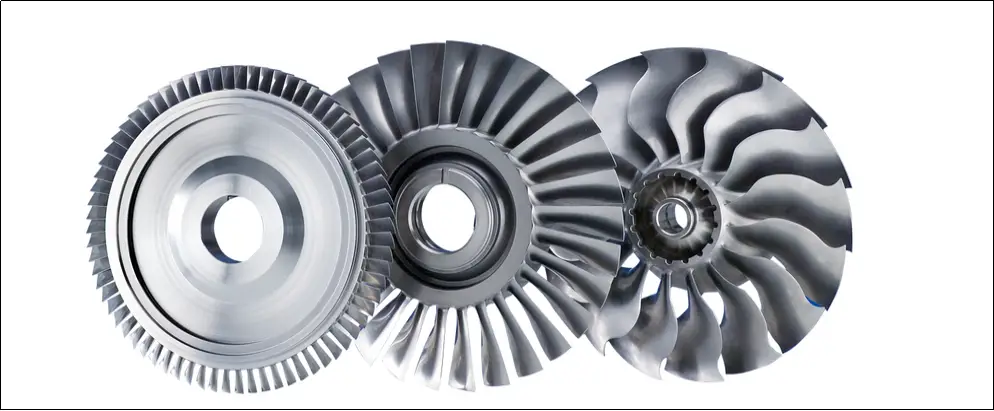
The aerodynamic efficiency and reliability of aeroengine impellers are pivotal to the overall performance of modern aircraft engines. Among various assembly deviations, concentricity error—defined as the misalignment between the impeller shaft and its reference axis—plays a crucial role in deteriorating aerodynamic behavior. This error leads to uneven clearances between the impeller blades and the casing, causing airflow disturbances, flow separation, and vortex formation, all of which degrade compressor efficiency and engine stability. Although extensive research has explored measurement techniques and mechanical implications of concentricity errors, their specific aerodynamic impact remains under-investigated, especially under complex operating conditions. This paper explores the mechanisms by which concentricity error influences aeroengine impeller aerodynamics, examines its effects on vibration and noise, and proposes optimization strategies to minimize performance loss, thereby advancing engine reliability and fuel efficiency.
What Is Concentricity Error?
Concentricity error is a measure of how much the rotational axis of an impeller deviates from a specified reference axis. In ideal conditions, the impeller’s rotation axis should perfectly align with this reference axis to ensure smooth operation and minimize vibrations. However, manufacturing imperfections, assembly inaccuracies, or wear and tear can cause the axis of rotation to shift, resulting in concentricity errors. This deviation is commonly quantified within a cylindrical tolerance zone, defined by a diameter denoted as Φt, which sets the allowable limits for acceptable misalignment.
The importance of controlling concentricity error lies in its direct impact on the performance and longevity of rotating machinery. Excessive misalignment can lead to uneven loading, increased vibration, noise, and premature wear of bearings and seals. In precision equipment like turbines, pumps, and aerospace components, maintaining tight concentricity tolerances is essential to ensure operational efficiency and reliability. Therefore, concentricity error acts as a key quality control parameter during manufacturing and assembly, guiding engineers in achieving optimal alignment and balancing of rotating parts.
Methods to Measure Concentricity Error
Accurately measuring concentricity error is crucial for ensuring the precision and reliability of rotating components such as impellers. Various measurement methods are available, each suited to different applications, tolerances, and operational conditions. Choosing the appropriate technique depends on factors such as part size, complexity, required accuracy, and whether online or offline testing is needed. Below are some common and effective methods used to assess concentricity error.
Coordinate Measuring Machine (CMM)
Coordinate Measuring Machines are widely used for their ability to collect numerous precise data points on the impeller surface. By sampling a dense array of points, CMMs calculate deviations of the rotational axis relative to a defined reference axis. Measurement accuracy depends on factors such as the density of sampling points, the choice of datum references, and environmental conditions like temperature and vibration. CMMs are especially valuable for detailed offline inspection and quality control in manufacturing.
Laser Autocollimator
The laser autocollimator is an optical instrument that provides high-precision angular displacement measurements. It is particularly suitable for assessing concentricity in areas that are difficult to access, such as deep holes or internal bores. Its capability for non-contact measurement makes it ideal for online detection and continuous monitoring during assembly or operation, helping to detect misalignment early.
Dial Indicator Combination
This method involves using dial indicators to measure radial and angular deviations by physically contacting the impeller or shaft surface. It is practical and straightforward, often employed for shorter shafts or simpler geometries where direct mechanical measurement is feasible. While not as precise as optical methods, dial indicators offer good applicability for routine checks and field inspections.
Strain Gauge Method
Strain gauges measure the deformation-induced strain on the impeller or shaft during operation or testing. By correlating strain data with deformation patterns, engineers can indirectly assess concentricity errors under real working loads. This method provides valuable insight into the dynamic behavior of components, complementing static geometric measurements with operational data.
Mechanisms by Which Concentricity Error Affects Aerodynamic Performance
Concentricity error in rotating machinery, especially in impellers and compressors, can significantly degrade aerodynamic performance. This misalignment disrupts the smooth interaction between rotating blades and surrounding airflow, leading to a cascade of mechanical and aerodynamic issues. Understanding the specific mechanisms through which concentricity errors impact performance is vital for improving design, manufacturing accuracy, and operational reliability. The following points detail how these errors affect key aerodynamic factors.
Variation in Clearance Between Impeller and Casing
Concentricity errors cause the impeller’s rotational axis to deviate from the intended centerline, resulting in uneven gaps between the impeller blades and the surrounding casing. This non-uniform clearance disrupts the smooth passage of airflow, leading to turbulence and flow instabilities inside the compressor. Since the compressor relies on precise clearances to maintain high efficiency, any variation can cause a drop in the overall pressure ratio and reduce flow capacity.
Axial misalignments, a direct consequence of concentricity deviations, further worsen clearance variation by causing blade tip gaps to fluctuate during rotation. These fluctuations allow for leakage flow around the blade tips, which not only decreases aerodynamic efficiency but also leads to higher energy losses. In severe cases, it may accelerate blade wear due to contact with the casing, compromising the compressor’s reliability and lifespan.
Flow Separation and Vortex Generation
When concentricity errors alter the impeller position, airflow no longer follows the blade profiles smoothly. This disruption causes flow separation where the air detaches from the blade surfaces, creating regions of reversed flow and vortices. These vortices increase friction and turbulence, leading to higher aerodynamic losses and diminished compressor performance.
Furthermore, the combined effect of axial and angular misalignments amplifies these flow disruptions by introducing irregular pressure gradients and flow direction changes. The result is a complex vortex pattern that not only reduces efficiency but also increases the risk of flow-induced vibrations. This compounded flow instability can trigger stall or surge conditions, which are detrimental to compressor operation.
Changes in Key Aerodynamic Parameters
Concentricity errors impact the fundamental aerodynamic geometry within the compressor by altering blade attack angles and velocity triangles. Changes in these parameters modify how airflow approaches and interacts with the blades, causing uneven pressure distribution along the blade surfaces. This imbalance affects lift and drag forces, destabilizing the compressor’s aerodynamic performance.
Positive or negative axial errors affect blade tip clearance differently, each influencing the flow rate and efficiency in distinct ways. For example, increased clearance may reduce blockage but increase leakage, while decreased clearance risks blade rubbing. Such variations disrupt the delicate aerodynamic balance required for smooth and efficient compressor operation, ultimately lowering the overall system performance.
Vibration and Noise Induced by Concentricity Errors
The eccentric rotation caused by concentricity error generates unbalanced centrifugal forces, which impose dynamic loads on the rotor system. These forces cause vibrations that propagate through bearings and casing structures, potentially leading to fatigue damage and accelerated wear of mechanical components.
In addition to mechanical wear, vibrations also produce noise, which can be both a nuisance and a sign of underlying instability. If the vibration frequency coincides with the natural frequencies of the system, resonance may occur, amplifying the vibrations drastically. Such resonant conditions threaten engine stability, increase maintenance needs, and may lead to catastrophic failure if not properly managed.
Impact of Concentricity Error on Impeller Assembly and Manufacturing
Concentricity error not only affects the aerodynamic performance of impellers but also has significant implications throughout the assembly and manufacturing processes. Precise alignment and accurate machining are critical to ensuring that the impeller operates reliably within its designed parameters. Understanding how concentricity deviations arise and propagate during assembly and manufacturing is essential for minimizing defects and optimizing overall system performance.
Transmission of Assembly Errors
During the assembly of rotating machinery, even minor misalignments in components such as bearings and shafts can propagate through the drivetrain, ultimately affecting the impeller’s rotational axis. These errors can cause the impeller to run eccentrically, altering the intended balance and dynamic behavior. This eccentric motion increases mechanical stress on the impeller blades and bearings, leading to premature wear and potential failure.
Furthermore, misalignment within the assembly exacerbates vibration and noise issues, degrading both mechanical reliability and aerodynamic efficiency. The dynamic imbalance caused by these errors can also shift the impeller’s aerodynamic characteristics, reducing compressor efficiency and increasing operational risks.
Control of Manufacturing Errors
Manufacturing inaccuracies, including deviations in roundness, straightness, and surface finish, are primary contributors to concentricity errors in impellers. Imperfect machining processes introduce geometric distortions that misalign the impeller’s rotation axis relative to the design reference. To address this, advanced machining technologies such as five-axis CNC milling and precision grinding are employed.
In addition, the use of customized precision fixtures and stable clamping systems ensures consistent workpiece positioning and reduces deformation during cutting. These measures collectively improve the geometric accuracy of impeller components, effectively minimizing concentricity deviations and enhancing the overall quality and longevity of the product.
Real-Time Error Detection and Feedback Control
With the increasing complexity and precision requirements in impeller manufacturing, real-time error detection methods have become indispensable. Technologies such as laser autocollimators and high-resolution optical sensors provide continuous, high-accuracy monitoring of impeller alignment during both machining and assembly stages.
Coupled with advanced feedback control systems, these monitoring tools enable dynamic adjustments to machining parameters or component positioning. This proactive correction capability helps to maintain concentricity within tight tolerances, significantly reducing the risk of aerodynamic performance degradation and mechanical failures. The integration of such smart manufacturing technologies is crucial for meeting the stringent demands of modern high-performance turbomachinery.
Optimization Strategies and Recommendations
Ensuring high precision in impeller manufacturing and assembly requires a comprehensive approach that spans measurement accuracy, process control, error compensation, and analytical modeling. By systematically optimizing each stage, manufacturers can significantly reduce concentricity errors, improve aerodynamic performance, and extend component life. The following strategies highlight key areas for improvement and innovation in precision engineering.
Enhancing Measurement Accuracy
Accurate measurement forms the foundation for error control in impeller production. Utilizing high-precision instruments such as Coordinate Measuring Machines (CMM), laser autocollimators, and advanced optical sensors helps minimize baseline uncertainties. Furthermore, optimizing sampling strategies—such as increasing the number of measured points on critical surfaces and selecting appropriate reference features—reduces error amplification effects and improves the reliability of concentricity assessments.
Environmental factors like temperature fluctuations and vibrations should also be controlled during measurement to prevent data distortion. Implementing automated measurement routines ensures consistency and repeatability, further enhancing accuracy across production batches.
Optimizing Machining and Assembly Processes
Refining machining parameters such as cutting speed, feed rate, and tool path strategies directly influences the geometric accuracy of impellers. Advanced machining techniques, including five-axis CNC machining, allow better access to complex geometries and reduce deformation during cutting. Alongside this, the design and use of high-precision fixtures and clamps are critical to maintaining stable workpiece positioning and minimizing assembly-induced errors.
Reverse engineering methods, supported by 3D scanning and digital modeling, help identify deviations early in the manufacturing cycle. This feedback enables adaptive process adjustments to improve dimensional consistency, reduce rework, and shorten production lead times.
Implementing Error Compensation Technologies
Software-based compensation models, such as those developed in ADAMS or similar multibody dynamics platforms, enable detailed error vector analysis throughout the assembly process. These tools allow engineers to simulate the cumulative effects of individual component misalignments and predict their impact on overall concentricity.
By integrating these simulations with automated control systems, real-time compensation can be applied, correcting alignment errors dynamically during assembly. This targeted approach reduces manual adjustments and enhances precision, particularly for complex impeller geometries and tight tolerance requirements.
Developing Sensitivity Analysis Models
Global sensitivity analysis techniques, such as the Extended Fourier Amplitude Sensitivity Test (EFAST), provide valuable insight into which error sources most significantly affect concentricity. By quantitatively ranking these factors, engineers can prioritize corrective actions and resource allocation more effectively.
Such sensitivity models also support robust design optimization by identifying critical tolerances and guiding improvements in manufacturing processes. Incorporating these analyses into early design and planning phases fosters proactive quality control, reducing costly post-production corrections.
Conclusion
Concentricity error significantly impacts aeroengine impeller aerodynamic performance, primarily by altering impeller-to-casing clearances, inducing flow separation, changing aerodynamic parameters, and generating vibration and noise. Effective measurement, manufacturing control, and error compensation are vital for improving engine efficiency and reliability. Future work should focus on developing more efficient online detection, refining error propagation models, and integrating intelligent control systems.


