
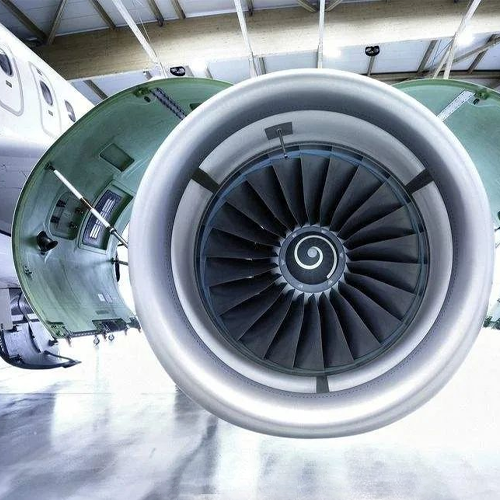
Impellers may seem to be lowly, unobtrusive components, but they are the “heart” of automobile engines, aerospace equipment, and industrial pumps. Their complexity in geometry and stringent accuracy requirements often send manufacturers scratching their heads. With titanium and aluminum alloys in the picture, double the fun. Have you ever struggled with excessive tool wear, compromised surface finishes, or poor efficiency in impeller machining? Don’t worry—this article dives deep into the common difficulties of impeller machining and offers practical solutions. Whether you’re an engineer, a business owner, or simply curious about precision manufacturing, keep reading for insights that could solve your next big problem!
Why Is Impeller Machining So “Maddening”?
The difficulty in machining impellers starts with their design. Complex curved surfaces, thin-wall design, and deep, narrow cavities make them a nightmare for traditional equipment. Whether it’s an impeller in a turbocharger or a spiral blade in a water pump, these components demand extreme precision—tolerances that are commonly measured in microns, where even slight deviation can compromise performance. Add to this the variety of materials employed, from lightweight aluminum alloys to tough titanium alloys, and each has its own set of challenges.

We encounter these challenges on a daily basis at Ultirapid. With a 30,000-square-meter factory, over 200 experienced workers, and over 100 high-technology machines, we have accumulated extensive experience. In this article, we will go through titanium and aluminum alloys, explaining the biggest challenges and how we solve them.
Three Pain Points Of Titanium Alloy Impeller Machining
Titanium alloys, prized for their excellent strength, corrosion resistance, and heat tolerance, are a first-line option for aerospace and high-performance automobile impellers. However, this “dream material” can become a nightmare to machine. Below are the three biggest hurdles and how we overcome them.
Rapid Tool Wear And Soaring Costs
Titanium alloys are hard and have poor thermal conductivity. Heat is built up at the cutting edge in machining, causing tools to wear quickly or even chip—especially when machining the deep grooves and curves of an impeller. Tool life can be reduced dramatically, raising costs.
What’s the solution? We recommend employing high-performance cutter materials like coated carbide or polycrystalline cubic boron nitride (PCBN) cutters, which are more resistant to wear. Optimization of cutting parameters is essential as well—reducing the cutting speed to 40-60 m/min and maximizing feed rates minimizes heat generation. High-pressure coolant or liquid nitrogen cooling will also dissipate heat, extending tool life. At Ultirapid, these practices have significantly lowered our tooling expenses.
Deformation That’s Hard To Control
Titanium’s low modulus of elasticity makes thin-walled impeller geometries prone to elastic deflection during machining. This may lead to out-of-tolerance dimensions or wavy surface finish, compromising performance.
To achieve this, we use the multi-pass procedure of roughing, semi-finishing, and finishing, reducing the material step-wise to reduce stress per pass. Our 5-axis CNC machinery works extremely well here, regulating each step’s depth in a very precise manner. Added support points in special-purpose fixturing help to further reduce vibration and distortion. We even model the process on CAE software in advance, predicting deformation and modifying the procedure accordingly—ensuring flawless results every time.
Subpar Surface Quality
Post-machining burrs and burns are typical in titanium alloys, immediately influencing the aerodynamic efficiency and lifespan of an impeller.
For this, we employ cutters of small diameters and high-speed milling in finishing, and we achieve surface roughness below Ra 0.8. Post-machining processes like polishing or chemical treatment remove burrs and enhance smoothness. In Ultirapid, our CMM (coordinate measuring machines) and XRF spectrometers check surface quality after machining, and every part is made to the mark.
Aluminum Alloy Impeller Machining’s“Hidden Pitfalls”
They are easier to machine than titanium and, as light in weight, they are popular for auto turbochargers and light pump impellers. Don’t be misled, though; they are pains in the neck, too.
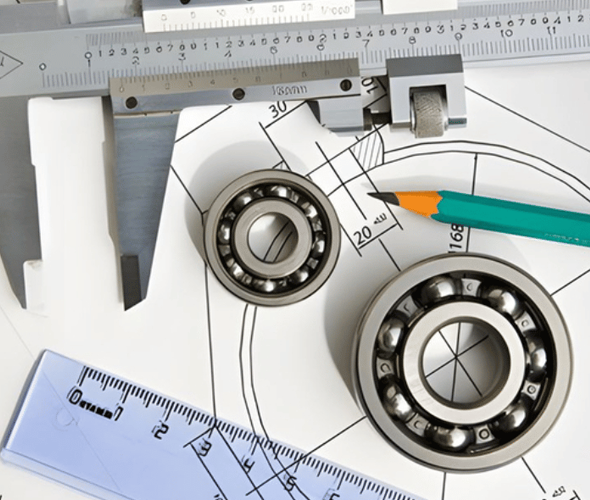
Tool Sticking And Built-Up Edge
The high ductility and low melting point of aluminum make it stick to tools during cutting at high speeds, forming built-up edges. This interferes with accuracy and ruins surface finish.
Our technique is simple but good: DLC coated tools reduce material adhesion. Micro-lubrication (MQL) technology is miracles too—eco-friendly and great at preventing sticking. Parameter tweaking is useful too; we raise cutting speeds to 200-300 m/min with moderate feeds without overheating. The changes have paid for themselves in Ultirapid operations.
Thin-Wall Chatter And Noise
Delicate walls of the aluminum impeller would chatter during high-speed machining, warping accuracy as well as producing ear-shattering noise.
We balance this out with dynamic milling methods on our 5-axis CNC machines, minimizing the shock between tool and workpiece. Tool path optimization—slow entry instead of making deep cuts—minimizes vibration too. And soundproofing measures in our factory keep the noise to manageable levels, protecting both workers and equipment.
Balancing Efficiency And Cost
Though cutting aluminum is a simple process, the complex forms of impellers tend to demand several setups and process changes, bringing efficiency down.
We solve this with 4- or 5-axis CNC machines, completing multi-sided machining in one setup to save time. Automated loading/unloading systems, paired with our 500+ machine fleet, boost throughput even more. For similar impellers, we’ve designed universal fixtures to cut prep time, striking the perfect balance between cost and speed.
3D Printing: A “Secret Weapon” For Impeller Machining
Beyond traditional CNC methods, metal 3D printing (like SLM and DMLS) is revolutionizing impeller production, especially for titanium and aluminum alloys. Its perks? Complex shapes formed in one go, no multiple setups needed; high material efficiency, reducing waste; and rapid prototyping that slashes development timelines.
That said, 3D printing has its downsides—think rough surfaces and the need for post-processing. At Ultirapid, we blend the best of both worlds: printing blanks with SLM, then refining them with 5-axis CNC machining. This hybrid approach delivers efficiency and precision, ideal for small-batch, high-complexity impellers.
How To Pick The Right Impeller Machining Approach?
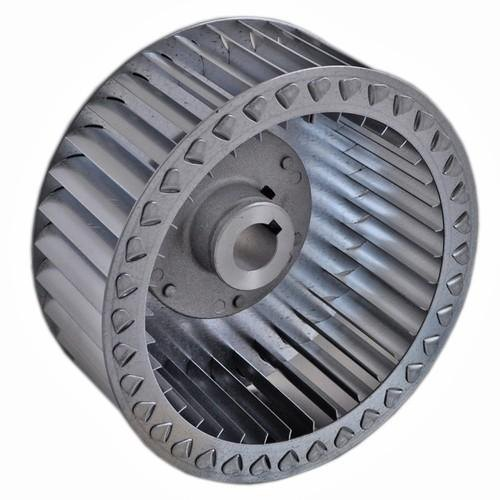
Choosing the best method for titanium or aluminum impellers depends on a few factors. Material properties come first: titanium for strength, aluminum for lightweight economy. Equipment matters too—complex impellers need 5-axis CNC or 3D printing, while simpler ones can stick with 4-axis machines. Budget and volume are also in play: 3D printing shines for small runs, while CNC dominates larger batches.
We tailor solutions to your needs. Whether it’s titanium or aluminum, our customized processes deliver fast, precise, and cost-effective results.
Real-World Success: How Ultirapid Conquered Impeller Challenges
Recently, an automotive client approached us with a rush order for titanium turbocharger impellers, demanding tolerances within ±0.01mm. We sprang into action, combining 5-axis CNC roughing, SLM-printed blanks, and precision finishing. Our engineering team used CAE simulations to optimize paths and minimize distortion. Every part was CMM-inspected post-production, ensuring 100% compliance. The result? On-time delivery and a thrilled client raving about the quality.
Conclusion
The challenges of impeller machining are real, but with smart processes, cutting-edge equipment, and a skilled team, they’re entirely manageable. Whether you need titanium’s durability or aluminum’s lightweight edge, Ultirapid has you covered with end-to-end solutions. From concept to completion, we turn your ideas into reality—fast, accurate, and affordable.


