
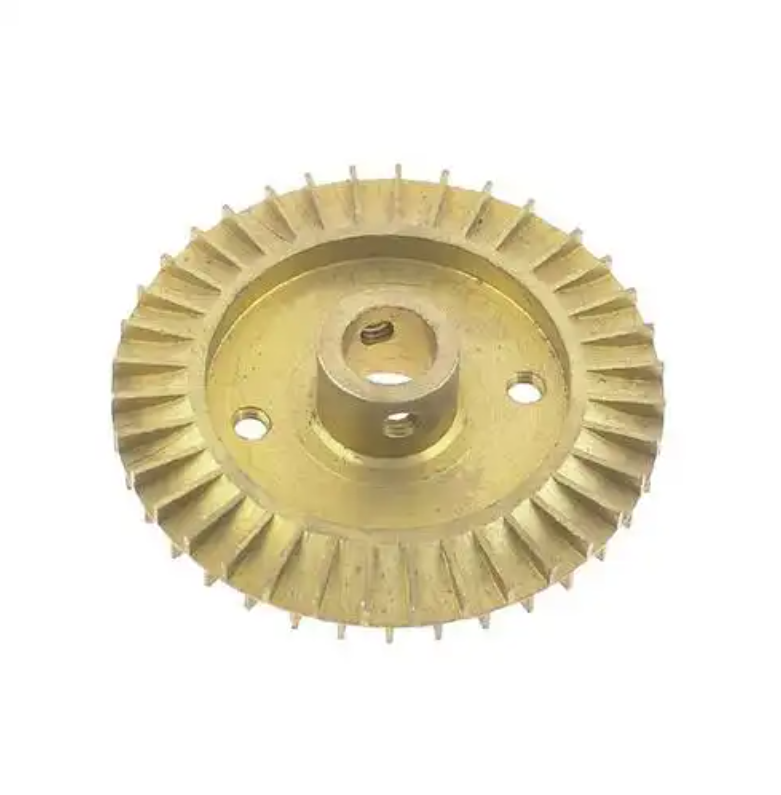
Picture a component that blends corrosion resistance, aesthetic appeal, and robust performance, powering systems from marine vessels to water pumps. Brass impellers are engineering marvels, delivering reliability across industries. Dive into this article to uncover their unique properties, applications, and why they remain a top choice for professionals worldwide.
What Are Brass Impellers?
Brass impellers are rotating components used in pumps, turbines, and compressors, crafted from brass, an alloy of copper and zinc. Renowned for their corrosion resistance and durability, they excel in challenging environments. Curious about their role in modern systems? Explore their composition, functionality, and why they’re a go-to choice for engineers.
Brass, typically composed of 60-70% copper and 30-40% zinc, offers a unique combination of strength, corrosion resistance, and machinability, making it ideal for impellers. These components rotate to move fluids or gases efficiently in systems like water pumps, marine propulsion, and HVAC units. Brass impellers resist corrosion in moist or saline environments, ensuring longevity. Their ability to be cast or machined into precise shapes optimizes fluid dynamics, delivering reliable performance across industries like plumbing, marine, and industrial manufacturing.
The Science Behind Brass’s Unique Properties
What makes brass impellers stand out? Their blend of copper and zinc creates a material with exceptional corrosion resistance and mechanical strength. This section delves into the science behind brass, revealing why it’s a preferred material for impellers in diverse applications.
Brass’s copper content provides excellent corrosion resistance, particularly against water and saltwater, while zinc enhances strength and castability. The alloy’s crystalline structure ensures durability under mechanical stress, ideal for high-speed impeller rotation. Brass also offers low friction, reducing wear in dynamic systems. Its thermal conductivity helps dissipate heat, preventing deformation in high-temperature applications. These properties make brass impellers reliable for environments where corrosion and wear are concerns, such as marine or chemical processing systems.
Key Benefits Of Brass Impellers
Brass impellers combine durability, corrosion resistance, and workability, making them a preferred choice for specific industrial and domestic applications. Especially valued in marine and potable water systems, brass offers a reliable balance between performance and affordability in moderately corrosive environments where other metals may be too aggressive or too costly.
Excellent Corrosion Resistance
Brass impellers perform well in mildly corrosive environments, such as fresh or saltwater systems. They resist dezincification and general corrosion, making them ideal for marine applications, hot water circulation, and plumbing systems.
Suitable For Potable Water
Brass is one of the few metals approved for use in potable water systems. It doesn’t leach harmful contaminants, making it a safe material for domestic water pumps, drinking water distribution, and residential pressure boosters.
High Machinability And Precision
Brass offers excellent machinability, allowing for tight tolerances and detailed vane designs. This precision ensures smoother fluid flow, better hydraulic efficiency, and easier balancing during pump assembly.
Noise And Vibration Dampening
Thanks to its metallurgical structure, brass naturally absorbs sound and vibration. Pumps using brass impellers tend to operate more quietly, which is beneficial in residential, commercial, and marine environments where low noise levels are preferred.
Long Service Life
Brass impellers offer a long operational lifespan due to their resistance to corrosion and mechanical wear. With proper maintenance, they perform reliably for years, making them a smart investment in systems with moderate operating conditions.
Thermal Conductivity
Brass has good thermal conductivity, which helps it dissipate heat quickly. This quality can be beneficial in applications like hot water circulation, where managing temperature buildup is essential for system efficiency and safety.
Aesthetic And Anti-Friction Properties
Brass’s smooth surface reduces friction and wear in contact areas, which improves efficiency and decreases cavitation. Its golden finish also makes it a preferred choice in visible plumbing installations where appearance matters.
Applications Of Brass Impellers Across Industries
Brass impellers are valued across diverse industries for their corrosion resistance, machinability, and compatibility with potable water. Their durability in mild to moderate environments makes them ideal for both residential and industrial fluid movement systems. Here are the main industries where brass impellers play a crucial role.
Plumbing And Domestic Water Systems
Brass impellers are widely used in residential and commercial water pumps, especially for clean or potable water. Their non-toxic properties and resistance to mineral buildup make them ideal for booster pumps, circulators, and pressure systems in homes, hotels, and office buildings.
Marine And Shipbuilding
Brass performs well in seawater environments, making it a popular choice in marine pumps for bilge, cooling, and fuel transfer applications. Its resistance to saltwater corrosion and dezincification ensures longer service life in coastal and offshore systems.
HVAC Systems
In heating and cooling systems, brass impellers are used in circulating pumps and compact chillers. Their ability to withstand temperature changes and resist corrosion makes them ideal for long-term performance in climate control applications.
Agriculture And Irrigation
Brass impellers are used in irrigation pumps for distributing water and fertilizers in fields and greenhouses. They resist common chemicals and are rugged enough for continuous outdoor use in moderately corrosive or mineral-rich water.
Fire Protection Systems
Brass is commonly used in sprinkler pumps and fire suppression systems due to its reliability under pressure and compatibility with both fresh and treated water. It ensures smooth operation in critical, life-safety installations.
Industrial Manufacturing
Industries that require non-sparking, corrosion-resistant pumps—such as oil refineries, chemical plants, and food processing units—employ brass impellers in secondary fluid systems where stainless steel may be too aggressive or expensive.
Automotive And Engine Cooling
Some engine cooling systems use brass impellers for their excellent thermal conductivity and strength. These impellers efficiently circulate coolant while maintaining structural integrity under temperature fluctuations and vibrations.
Manufacturing Brass Impellers
The manufacturing process of brass impellers combines precision casting, machining, and quality control to produce components capable of withstanding demanding hydraulic conditions. From material selection to finishing, every step ensures optimal durability, corrosion resistance, and efficiency in fluid movement systems across residential, commercial, and industrial sectors.
Alloy Selection
Manufacturers begin by choosing the appropriate brass alloy—typically a combination of copper and zinc. For applications involving potable water or marine use, lead-free or dezincification-resistant brass grades are selected to meet safety and performance standards.
Melting And Casting
Brass ingots are melted in a furnace at around 900–950°C. Once liquefied, the molten brass is poured into molds—commonly using sand casting or investment casting (lost-wax process). These molds are designed to form the complex geometry of the impeller, including blades and hub structure.
Cooling And Mold Removal
After casting, the mold is cooled gradually to avoid internal stresses and cracking. Once cooled, the mold is broken away (in sand casting) or chemically dissolved (in investment casting), revealing the raw impeller component.
Machining And Finishing
The cast brass impeller is then precision-machined using CNC lathes and mills. Key steps include trimming excess material, drilling central bores or mounting holes, and surface finishing to ensure smooth fluid flow and proper balance during operation.
Balancing
Dynamic and static balancing is performed to ensure the impeller rotates smoothly and evenly. This reduces vibration and increases the lifespan of both the impeller and the pump it operates within.
Surface Treatment
In some cases, brass impellers undergo additional treatments such as polishing, passivation, or coating (e.g., nickel plating) to enhance corrosion resistance and appearance, especially for applications where aesthetics or extra protection is necessary.
Quality Control And Testing
Each impeller is subjected to rigorous inspections, including dimensional checks, pressure resistance, and material integrity tests. For critical uses (e.g., marine or fire systems), brass impellers may also undergo performance simulations or real-world stress testing.
Challenges And Solutions In Using Brass Impellers
Brass impellers, while facing challenges such as dezincification and higher costs, remain competitive thanks to ongoing innovations. Dezincification—a process where zinc leaches out of brass in corrosive environments—is effectively mitigated by using dezincification-resistant (DZR) alloys containing elements like arsenic. These enhancements ensure long-term durability in marine and water-based systems. Though brass is more expensive than cast iron, its superior corrosion resistance justifies the investment in demanding environments such as chemical or saltwater applications.
In terms of weight, brass is heavier than plastic, but modern design optimizations—such as incorporating hollowed vanes—help reduce overall mass without compromising strength. These improvements make brass impellers a viable option in efficiency-focused systems. Additionally, advances in alloying and protective coatings continue to enhance brass’s performance, enabling it to meet the evolving demands of industries prioritizing reliability, longevity, and performance under harsh conditions.
Comparing Brass Impellers To Other Materials
Brass impellers strike a unique balance of corrosion resistance, machinability, and cost, but how do they perform compared to other popular impeller materials like stainless steel, bronze, cast iron, plastic, and titanium? Below, we break down how brass measures up in durability, application range, and economic viability.
Brass Vs. Stainless Steel
Stainless steel offers superior strength, chemical resistance, and high-temperature tolerance—ideal for harsh industrial environments. However, it is more expensive and harder to machine. Brass, while less durable in extreme conditions, is more affordable and easier to work with, making it ideal for potable water and low-corrosion systems.
Brass Vs. Bronze
Bronze impellers are more resistant to saltwater corrosion and wear, making them preferable in highly demanding marine applications. However, brass impellers are more cost-effective and sufficient for less aggressive environments. For residential and light industrial use, brass offers similar performance at a lower price point.
Brass Vs. Cast Iron
Cast iron is strong and cheap, but it’s prone to corrosion and rusting unless specially coated. In contrast, brass resists corrosion naturally, especially in water-handling applications. Brass is also easier to machine and less brittle, reducing the risk of mechanical failure during operation.
Brass Vs. Plastic
Plastic impellers are lightweight, corrosion-proof, and economical—but limited in strength and heat resistance. Brass impellers provide higher mechanical durability and a longer service life under moderate thermal and pressure conditions, making them better suited for pumps with stricter performance requirements.
Brass Vs. Titanium
Titanium outperforms brass in every technical metric—strength, corrosion resistance, and longevity—but at a much higher cost. Brass, by contrast, offers a cost-effective alternative where the ultra-premium features of titanium are unnecessary. For standard marine or plumbing systems, brass provides excellent performance without the premium price.
Future Trends In Brass Impeller Technology
What’s next for brass impellers? As industries demand efficiency and sustainability, these components are evolving with innovative designs. This section explores emerging trends that will shape the future of brass impellers, keeping them relevant in modern engineering.
Advancements in DZR alloys are enhancing corrosion resistance, extending impeller lifespan. Additive manufacturing enables complex geometries for optimized fluid dynamics. Smart impellers with embedded sensors for real-time monitoring are improving efficiency and maintenance. Sustainable production methods, like low-energy casting, align brass impellers with eco-friendly industrial goals, ensuring their continued relevance.
How To Choose The Right Brass Impeller
Selecting the ideal brass impeller can be complex. This section provides a practical guide to choosing the right impeller, ensuring optimal performance and cost-efficiency for your specific application.
Consider fluid type, pressure, and environment when selecting a brass impeller. DZR alloys are ideal for corrosive settings like marine systems. Match impeller design to your system’s fluid dynamics for efficiency. Evaluate costs against long-term durability, as brass’s corrosion resistance often justifies higher upfront expenses in water-based applications.
Conclusion
Brass impellers are a testament to engineering ingenuity, blending corrosion resistance, durability, and aesthetic appeal. From marine propulsion to industrial pumps, they deliver reliable performance in challenging environments. With advancements in alloys, manufacturing, and sustainability, their role is set to expand. Whether you’re an engineer or industry professional, brass impellers offer a dependable, eco-friendly solution for modern systems. Explore their potential and power your applications with confidence.


