
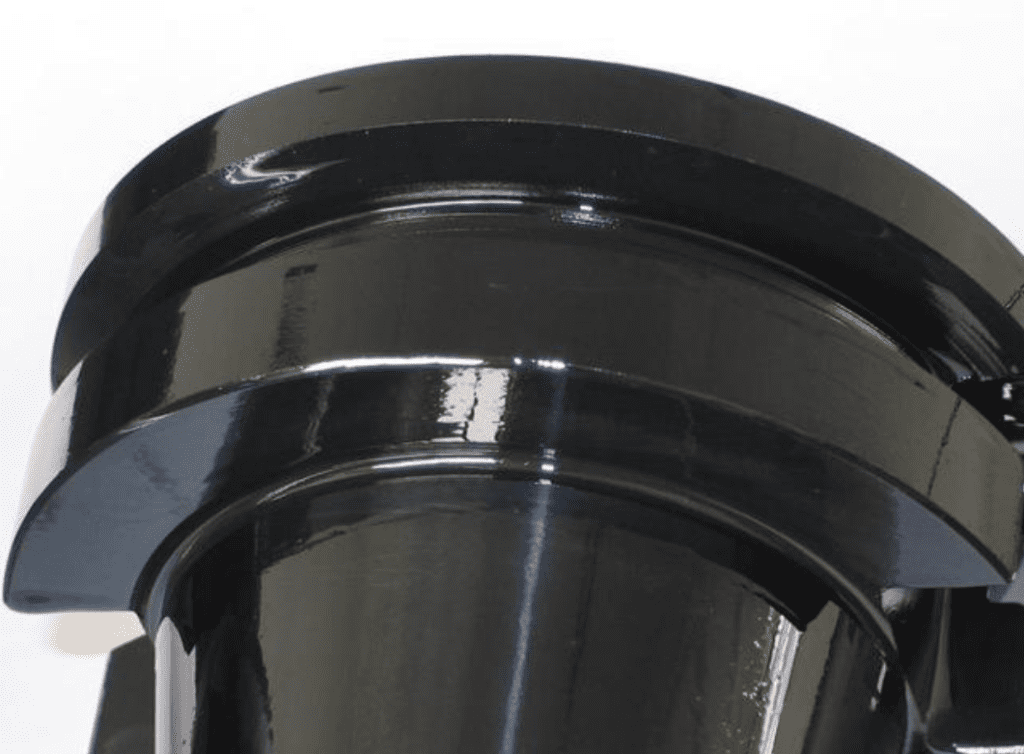
Axial flow impellers are pivotal components in various industrial machines, including pumps, compressors, and turbines. After precise machining, these parts often require surface treatment to enhance corrosion resistance and aesthetic quality, especially when no further cutting will be performed. Blackening, a popular chemical surface treatment, is widely used for rust prevention and improving metal appearance. Yet, the question remains: is blackening an ideal choice for axial flow impellers that no longer need machining? This article delves into the fundamentals of blackening, analyzes its application in shaft-type parts, and assesses its compatibility with the complex geometries and materials of axial flow impellers. Understanding these factors is crucial for manufacturers aiming to optimize durability without sacrificing precision.
What Is Blackening?
Blackening, also known as bluing, is a widely used chemical oxidation process designed to enhance the surface protection of ferrous metals. Through a controlled reaction, a thin and dense oxide layer forms on the metal surface, acting as a protective barrier against moisture and environmental exposure. This oxide film helps significantly reduce the risk of rust and corrosion, which can otherwise compromise the metal’s durability and performance. Because of its effectiveness and relatively simple application, blackening is commonly used in various industries to improve the longevity of steel components without altering their dimensions.
There are two primary types of blackening processes: alkaline (hot) blackening and cold (room temperature) blackening. Alkaline blackening involves immersing metal parts in a heated alkaline solution, typically between 135 and 155°C. This high-temperature treatment produces a robust, tightly bonded oxide layer that offers excellent corrosion resistance, making it suitable for demanding applications. In contrast, cold blackening occurs at or near room temperature, offering a faster and more energy-efficient method. However, the oxide layer formed is thinner and generally provides less durability compared to hot blackening. Both methods have their advantages and are selected based on the specific performance requirements and operational conditions of the metal parts.
Importance of Axial Flow Impeller Surface Quality
Axial flow impellers play a crucial role in efficiently directing fluid flow within pumps and turbines, making their performance vital to the overall system’s effectiveness. After machining, the exposed metal surfaces of these impellers are highly susceptible to oxidation, corrosion, and mechanical wear, especially when operating in harsh or chemically aggressive environments. Without proper surface protection, these vulnerabilities can quickly degrade the impeller’s structural integrity and hydraulic efficiency, leading to increased maintenance costs and reduced operational lifespan.
Ensuring high surface quality through appropriate treatments is therefore essential for preserving the impeller’s functionality and reliability. Protective coatings and surface finishing techniques not only prevent corrosion and wear but also contribute to smoother flow characteristics by minimizing surface roughness. This combination of durability and hydrodynamic optimization helps maintain consistent performance over time, reduces the risk of unexpected failures, and extends the intervals between maintenance cycles. Ultimately, investing in superior surface quality is a key factor in maximizing the efficiency and longevity of axial flow impellers in demanding applications.
Core Advantages of Blackening
Blackening is widely appreciated for its practical benefits in protecting and enhancing metal components. Its core advantages extend beyond mere surface treatment, offering both functional and economic value across numerous industrial applications.
Long-Lasting Corrosion Resistance
The primary advantage of blackening lies in the durable oxide layer it creates on ferrous metals. This layer acts as a protective shield that significantly slows the oxidation process, helping to prevent rust formation even in environments with moderate moisture or exposure to mild corrosive agents. For components regularly subjected to such conditions, blackening serves as an invaluable corrosion barrier, extending the lifespan and reliability of the metal parts.
Enhanced Surface Appearance
In addition to its protective role, blackening imparts a uniform, matte black finish that enhances the visual appeal of treated parts. This sleek surface not only improves aesthetics but also facilitates easy identification of blackened components during maintenance or quality inspections. The presence of a consistent black finish often conveys a perception of higher quality and better upkeep, which is important in both industrial and consumer-facing products.
Simplicity and Cost-Effectiveness
Another key advantage of blackening is the simplicity of the process compared to more complex coatings like plating or painting. Blackening requires relatively basic equipment and chemical baths, making it highly adaptable to batch processing environments. This straightforward approach translates to lower operational costs, supporting widespread adoption in various industries where budget efficiency and reliable corrosion protection are priorities.
Limitations and Considerations of Blackening
Blackening is a valuable surface treatment with notable benefits, but it is important to recognize its limitations and specific considerations to ensure its appropriate application. Understanding these factors helps avoid performance issues, especially in demanding operational contexts.
Limited Mechanical Wear Resistance
Although blackening forms a protective oxide layer, this coating provides only modest resistance to mechanical wear. In environments where components are subject to friction, abrasion, or impact, blackened surfaces may degrade faster than harder coatings such as chromium plating or nitriding. Therefore, blackening is not ideal for parts exposed to heavy mechanical stresses or continuous contact with abrasive materials.
Susceptibility in Aggressive Chemical Environments
Blackening’s corrosion resistance is effective mainly in moderate moisture and mild chemical conditions. When exposed to highly aggressive chemicals—strong acids, alkalis, or saline solutions—its protective oxide layer may deteriorate more quickly, compromising surface integrity. For such applications, more robust chemical-resistant coatings or materials are recommended to ensure long-term durability.
Dimensional Considerations for Precision Parts
Although blackening causes minimal dimensional changes, these slight thickness additions can still impact tight-tolerance components. Precision parts with strict geometric requirements must account for the coating thickness during manufacturing and assembly. Failure to consider these changes may result in improper fits or impaired functionality, necessitating careful process control and inspection.
Application Analysis of Blackening Process in Shaft-Type Components
Blackening has become a widely adopted surface treatment in shaft-type components due to its effective corrosion protection and minimal impact on mechanical properties. Its application is especially relevant in parts where moderate environmental resistance is needed without compromising the component’s structural integrity. Careful consideration of the component type, mechanical demands, and material compatibility ensures optimal results from the blackening process.
Common Use Cases in Shaft Components
Blackening is frequently applied to key shaft parts such as bearing rings, collars, and chamfers where exposure to moisture, oxidation, or mild mechanical wear is common. For bearing rings, blackening effectively reduces surface rust, which can otherwise impair rotational accuracy and cause premature failure. Similarly, chamfers and shoulders—areas prone to metal-to-metal contact and environmental exposure—benefit from blackening’s corrosion resistance, helping to extend the service life of shafts in various industrial settings.
These components often operate under conditions where heavy wear resistance is not the primary concern, making blackening an economical and practical choice. By forming a dense oxide layer, blackening slows oxidation processes while maintaining the dimensional and surface integrity necessary for reliable mechanical performance.
Effects on Mechanical Properties
Research and practical experience consistently show that blackening has negligible effects on the strength, hardness, and fatigue resistance of common shaft steels such as low-carbon and medium-carbon grades. This stability makes blackening a preferred surface treatment when the goal is corrosion resistance without altering core mechanical behavior. It does not substitute for surface hardening methods when enhanced wear resistance is required, as the thin oxide layer offers only limited protection against abrasion.
The minimal mechanical impact ensures that blackened shafts retain their original load-bearing capacity and fatigue life, making the process suitable for components where structural reliability is critical. However, designers and engineers should be aware that blackening should be complemented with other treatments if wear resistance becomes a priority.
Material Compatibility
Material choice significantly affects blackening outcomes. Low-carbon steels like A3 steel respond well to alkaline blackening, forming dense and uniform oxide layers. However, cold blackening performs poorly on these materials, resulting in less consistent films.
| Material Type | Suitable Blackening Method | Comments |
| A3 Steel | Alkaline (Hot) Blackening | Produces durable oxide layers |
| Low-Carbon Steel | Cold Blackening | Less uniform, less durable |
| High-Carbon Steel | Requires Pre-Treatment | Needs special cleaning steps |
Processing Characteristics of Axial Flow Impellers and Blackening Compatibility
Axial flow impellers differ significantly from simpler shaft components due to their complex geometry and precision requirements. This section evaluates whether blackening can meet these specialized demands.
Unique Machining and Surface Treatment Challenges
Axial flow impellers often undergo advanced manufacturing processes such as five-axis CNC machining, which produce intricate curved surfaces. Post-machining, these surfaces require protective treatments that do not impair dimensional accuracy or aerodynamic performance.
- Complex Curved Surfaces: Require uniform surface treatments that conform precisely without altering contours.
- No Further Machining: Any surface layer must be stable and durable since additional cutting is not possible.
Applicability of Blackening to Axial Flow Impellers
Blackening is attractive due to its corrosion resistance and aesthetic improvement. For axial flow impellers that will not undergo further machining, it can provide a protective layer that helps prevent oxidation during service.
- Corrosion Protection: The oxide film can effectively guard against rust in moderate environments.
- Surface Integrity: Properly controlled blackening does not significantly alter surface dimensions or roughness, preserving aerodynamic profiles.
Restrictions and Considerations
Despite its benefits, blackening suitability depends on:
- Material Compatibility: The impeller material must be compatible with the blackening method. For example, A3 steel requires alkaline blackening for optimal results.
- Pre-Treatment Rigorousness: Strict control of degreasing, descaling, and cleaning is essential to ensure uniform oxide formation.
- Process Control: Temperature and time parameters must be tightly regulated to avoid uneven coatings or surface defects.
Typical Process Flow
Achieving a high-quality blackened surface involves a carefully controlled sequence of preparation and treatment steps. Each stage plays a crucial role in ensuring the formation of a uniform, durable oxide layer that provides effective corrosion resistance. Understanding the typical process flow helps manufacturers maintain consistency and optimize surface performance.
Degreasing and Cleaning
The initial step focuses on thoroughly removing oils, grease, and other contaminants from the metal surface. These substances, if left untreated, can interfere with chemical reactions during blackening, leading to uneven coatings or poor adhesion. Effective degreasing typically involves alkaline detergents or solvents, combined with agitation or ultrasonic cleaning to reach complex geometries.
Proper cleaning is essential not only to enhance the blackening reaction but also to extend the service life of the treated parts. Any residue or film can result in defects or reduced corrosion resistance, so careful inspection after cleaning is recommended before proceeding to the next step.
Pickling (Acid Washing)
Following cleaning, pickling removes rust, mill scale, and other surface oxides by immersing the parts in an acid solution, often hydrochloric or sulfuric acid. This step exposes a fresh, clean metal surface that is highly receptive to the subsequent blackening treatment. Acid concentration, temperature, and immersion time must be tightly controlled to avoid excessive metal loss or surface damage.
Pickling not only prepares the surface chemically but also smooths minor irregularities, promoting a more uniform oxide film formation. Skipping or inadequately performing this step can result in patchy blackening and compromised corrosion protection.
Blackening Treatment
The core of the process involves immersing the components into either alkaline hot blackening baths (operating at elevated temperatures) or cold blackening baths at room temperature. Hot blackening produces a thicker, more durable oxide layer, favored for applications demanding enhanced corrosion resistance. Cold blackening offers faster processing and lower energy use but typically results in thinner films.
Control over immersion time, bath chemistry, and temperature ensures consistent coating thickness and quality. The chemical reaction converts the metal surface into magnetite (Fe3O4), which forms the characteristic black finish and corrosion barrier.
Passivation (Bluing)
After blackening, a passivation step is often applied to stabilize and seal the oxide layer. This involves treating the surface with a chromate conversion coating, commonly using potassium dichromate solutions. Passivation enhances corrosion resistance by protecting the oxide film from environmental degradation and adds a subtle blue tint that can improve visual inspection.
Passivation also improves adhesion for subsequent treatments such as oiling or painting and reduces the risk of surface oxidation during handling or storage. This step is particularly important in high-performance or aerospace applications where long-term reliability is critical.
Oiling
The final stage involves immersing the parts in heated rust-preventive oils that penetrate and fill microscopic pores in the oxide layer. This oil film acts as an additional barrier against moisture, further enhancing corrosion protection, especially during storage and transportation. The oil also improves surface appearance by imparting a subtle sheen and reducing glare.
Proper oil selection and application methods are vital to avoid excess buildup that might interfere with assembly or function. In many industrial contexts, oiling extends the service life of blackened components by providing a flexible, renewable protective layer adaptable to different environmental conditions.
Critical Control Points
Ensuring a high-quality blackening process requires strict control over several critical parameters. These key control points influence the formation, adhesion, and durability of the oxide layer, directly impacting the corrosion resistance and overall performance of the treated components. Careful monitoring and adjustment of these factors are essential to achieve consistent and reliable results.
Temperature and Time Control
The temperature and immersion duration during blackening are vital for producing a uniform and well-adhered oxide layer. For alkaline hot blackening, maintaining a bath temperature between 135°C and 155°C with an immersion time of 15 to 25 minutes allows the chemical reactions to form a dense, protective magnetite layer. Similarly, cold blackening operates at a slightly lower temperature range of 120°C to 135°C, with the same time frame, but typically results in a thinner oxide film.
Deviations from these specified parameters can cause uneven coatings, insufficient bonding, or incomplete oxide formation, all of which compromise the corrosion protection. Overheating or prolonged immersion might damage the base metal, while insufficient time or low temperature may lead to patchy coverage and reduced durability.
Passivation Treatment
Following blackening, the passivation step involves immersing parts in a potassium dichromate solution, typically at concentrations between 12% and 18%, for about 1 to 2 minutes. This chemical treatment stabilizes the oxide film by creating a chromate conversion layer, which enhances the layer’s resistance to environmental factors such as abrasion and weathering.
This protective layer acts as a sealant, preventing further oxidation of the blackened surface and extending the lifespan of the treatment. Proper control of solution concentration and immersion time is crucial; overexposure can lead to discoloration or weakening of the coating, while underexposure reduces its protective benefits.
Rust-Proof Oil Immersion
The final stage of the process is immersion in rust-preventive oil heated between 105°C and 120°C for 1 to 3 minutes. This step fills the microscopic pores within the oxide layer with oil molecules, creating an additional barrier against moisture and corrosive agents. The oil bath not only enhances corrosion resistance but also improves the surface finish by imparting a subtle sheen.
Complete elimination of bubbles during immersion is an important indicator of thorough oil penetration. Any trapped air pockets can leave the surface vulnerable to corrosion. Therefore, maintaining proper bath temperature, oil viscosity, and immersion time is essential to ensure the oil fully saturates the oxide film, maximizing protection and durability.
Conclusions
Achieving optimal surface protection for axial flow impellers is essential to ensure their durability and performance in various operating environments. Blackening stands out as an effective method that creates a dense, corrosion-resistant oxide layer, significantly enhancing the longevity of components exposed to moderate corrosive conditions. This surface treatment not only guards against rust and oxidation but also preserves the impeller’s precise geometry and aerodynamic profile, which are critical for maintaining efficiency. However, the success of blackening depends heavily on selecting the appropriate process for the material in question and maintaining strict control over process parameters such as cleaning, temperature, and immersion time.
For low-carbon steels like A3 steel, alkaline blackening proves highly effective, delivering robust and uniform oxide coatings. In contrast, cold blackening offers a more economical alternative suitable for less demanding environments, though it produces thinner and less durable layers. Regardless of the method chosen, the importance of thorough passivation and post-treatment oiling cannot be overstated, as these steps stabilize and protect the oxide film from environmental degradation. Looking ahead, advancements in blackening formulations and eco-friendly passivation techniques will be crucial to meet evolving industry requirements and environmental regulations. Overall, blackening provides a practical, cost-efficient solution for impeller surface protection, striking a balance between corrosion resistance, surface integrity, and operational demands in modern manufacturing.


