
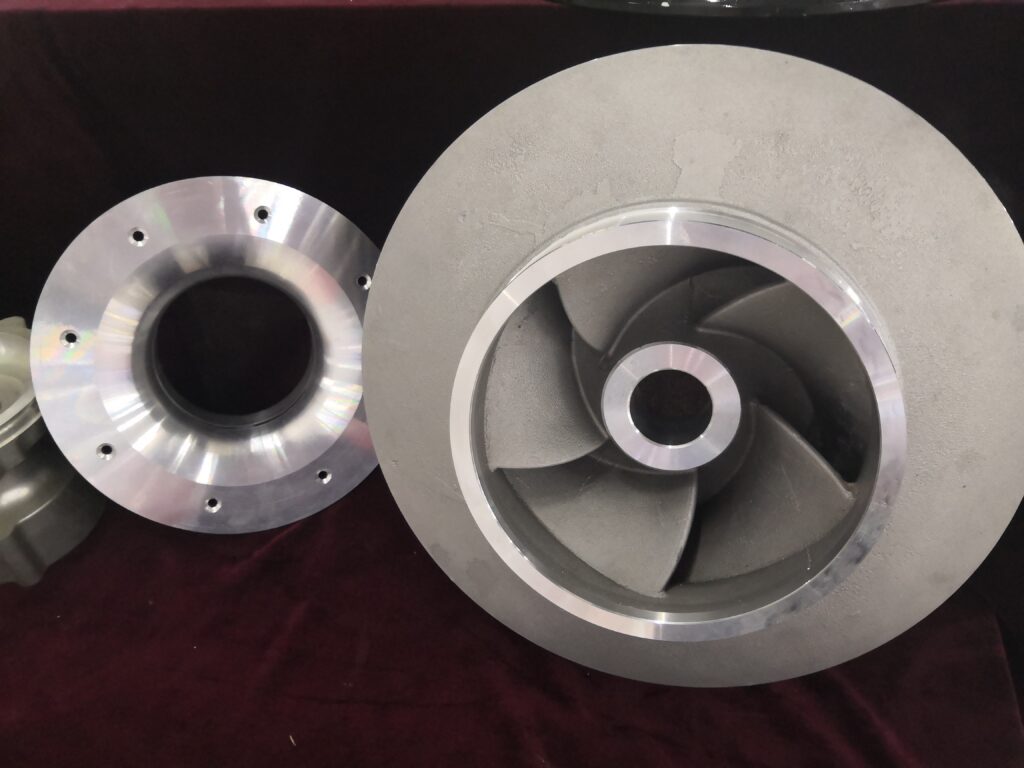
Cast aluminum impellers have become indispensable across modern industrial equipment—from pumps and compressors to blowers and turbines—thanks to their light weight and cost-effective manufacturability. But when these components spin at high speeds, they confront extreme demands: high centrifugal forces, vibration stress, fatigue loading, and potential corrosion. These challenges raise critical questions: can cast aluminum alloys reliably endure such strain over extended service lives? We explore the answer by examining their material properties, casting processes, performance under operational stress, environmental resilience, advantages and limitations, real-world use cases, and future improvement trends. With a foundation grounded in scientific studies and industrial experience, this analysis guides engineers toward confident decisions when considering cast aluminum impellers for intense, long-term, high-speed applications.
Material Characteristics of Cast Aluminum Impellers
Cast aluminum alloys are widely used in manufacturing impellers for various industrial applications due to their advantageous combination of light weight and mechanical performance. These materials help optimize the efficiency and durability of rotating machinery by offering an excellent balance between strength, corrosion resistance, and manufacturability. Understanding the key characteristics of cast aluminum impellers is essential for selecting the right alloy and processing methods to meet performance demands in moderate-speed and corrosive environments.
Low Density and High Strength
Aluminum’s low density, approximately 2.7 g/cm³, makes it significantly lighter than traditional metals such as steel or titanium. This low mass translates directly into reduced rotational inertia for impellers, which allows for quicker acceleration and deceleration, improving dynamic response and overall system efficiency. Moreover, high-strength aluminum alloys like A356 and 6061 provide excellent mechanical properties that maintain structural integrity even at thin wall sections, which are common in complex impeller geometries. This strength-to-weight ratio enables manufacturers to design lightweight yet durable components suitable for high rotational speeds without compromising safety.
Additionally, these alloys exhibit good toughness and resistance to fatigue, which is critical for impellers subjected to cyclic loading during operation. Their mechanical performance supports extended service life and reduces the risk of deformation or failure under centrifugal forces. This combination of low density and robust strength makes cast aluminum an attractive option where weight savings are prioritized alongside reliable mechanical performance.
Corrosion and Wear Resistance
Aluminum naturally forms a thin, adherent oxide layer on its surface that acts as a protective barrier against further oxidation and corrosion. This passive oxide film enhances the material’s resistance to atmospheric corrosion and exposure to many moderate corrosive environments, such as mildly acidic or marine atmospheres. Furthermore, post-casting surface treatments, including anodizing or painting, can significantly improve this corrosion resistance, extending the lifespan of impellers operating in harsher conditions.
In terms of wear resistance, cast aluminum alloys typically exhibit good stability under moderate abrasive conditions. While softer than steels or nickel alloys, aluminum’s lower density and surface hardness can be augmented through heat treatment and alloying elements, improving its resistance to erosion and friction wear. These factors contribute to sustained component performance, lower maintenance frequency, and reduced downtime for machinery using cast aluminum impellers.
Lightweight Advantages
The lightweight nature of aluminum impellers reduces the overall load on motors and bearings, leading to enhanced energy efficiency and lower operational costs. Reduced mass not only decreases the power required to achieve desired rotational speeds but also minimizes the mechanical stress imparted on the shaft and connected components. This benefit is especially valuable in applications where rapid speed changes and dynamic responses are frequent.
Moreover, lighter impellers generate less vibration during operation, which improves the stability of the entire system and reduces wear on supporting structures. This vibration reduction helps extend service intervals by lowering fatigue-related damage to both the impeller and surrounding components. Ultimately, these lightweight advantages translate into improved reliability, reduced energy consumption, and better lifecycle economics for equipment utilizing cast aluminum impellers.
Manufacturing Processes of Cast Aluminum Impellers
The manufacturing process of cast aluminum impellers is crucial to achieving high-quality components that meet performance and durability requirements. Proper control over casting parameters and defect prevention techniques ensures impellers withstand the demands of high-speed rotation and maintain aerodynamic efficiency.
Filling and Holding Pressure
Controlling the mold filling speed and holding pressure is essential to avoid defects such as porosity and shrinkage voids. A steady, optimal filling speed prevents turbulence and air entrapment, while adequate holding pressure during solidification feeds shrinking metal to critical areas, ensuring dense, accurate castings with minimal internal defects.
Advanced Casting Techniques
Low-pressure die casting is favored for its ability to produce dense and dimensionally precise impellers suitable for high-speed applications. Meanwhile, investment casting allows for intricate geometries and smooth surface finishes, which are vital for aerodynamic performance and maintaining balance at high RPMs, making both methods key to fabricating superior aluminum impellers.
Defect Control
Defects such as gas porosity and shrinkage are controlled through a combination of degassing, vacuum-assisted casting, and directional solidification techniques. Managing mold and metal temperatures along with proper riser placement helps prevent cracks and hot tears, ensuring the structural integrity and longevity of the cast aluminum impeller.
Performance of Cast Aluminum Impellers at High Speed
Cast aluminum impellers are widely used in various industrial applications due to their favorable strength-to-weight ratio and good corrosion resistance. Understanding their performance at high rotational speeds is essential for ensuring reliability, efficiency, and longevity in demanding operational environments.
Dynamic Balance & Vibration
Achieving precise casting combined with CNC finishing allows for tight dimensional tolerances, which is critical to minimizing vibration during high-speed rotation. Advanced simulation tools can predict the dynamic behavior of impellers, helping engineers design against resonance frequencies that could cause catastrophic failure. This balance control enhances stability and reduces wear on associated components.
Fatigue Life
Research indicates that well-manufactured cast aluminum impellers, particularly those made from alloy A357, can endure over 10 million stress cycles before fatigue failure occurs. The material’s fatigue limit, approximately 35 MPa under realistic operating stresses, is achievable through strict control of casting defects and proper alloy selection, ensuring the impeller’s durability under cyclic loading.
Real-World Performance
In practical applications such as HVAC systems, compressors, and pumps, aluminum impellers demonstrate reliable performance at moderate rotational speeds. Their lightweight nature reduces energy consumption and mechanical strain, contributing to longer service intervals and consistent operation under controlled environmental and loading conditions.
Environmental Adaptability of Cast Aluminum Impellers
Cast aluminum impellers are valued not only for their lightweight and strength but also for their adaptability to various environmental conditions. Understanding their limitations and enhancements through treatments is crucial for optimizing performance and extending service life in diverse operational settings.
High-Temperature Performance
Aluminum alloys typically experience a decline in mechanical strength when exposed to temperatures above approximately 150 to 200°C. This limitation restricts their use in high-temperature zones unless alloy modifications or specific design strategies, such as increased wall thickness or cooling, are implemented to maintain structural integrity during operation.
Corrosion & Surface Protection
Although aluminum naturally forms a protective oxide layer, additional surface treatments like anodizing or thermal spray coatings are often necessary to bolster corrosion resistance. These enhancements are especially important for impellers operating in moist environments or exposed to mild chemical agents, as they help prevent degradation and maintain performance over time.
Application Across Conditions
With proper post-treatment, cast aluminum impellers are well suited for applications involving water handling, light chemical exposure, and typical industrial temperature ranges. Their corrosion resistance and mechanical properties under these conditions make them a cost-effective and reliable choice for many moderate-demand environments.
Advantages and Limitations of Cast Aluminum Impellers
Cast aluminum impellers are widely used in various industries due to their favorable balance of performance, cost, and manufacturability. However, like any material choice, they come with specific advantages and inherent limitations that must be considered to ensure optimal application and longevity.
Benefits
One of the primary benefits of cast aluminum impellers is their lightweight nature, which results in reduced operational loads and makes handling and installation easier. This can lead to improved energy efficiency and less wear on associated machinery. Additionally, the casting and machining processes for aluminum are well-established and cost-effective, benefiting from mature tooling and widespread industry familiarity. Aluminum’s good machinability further supports the production of complex geometries and precise finishing, allowing for aerodynamic designs that enhance impeller performance while controlling manufacturing costs.
Drawbacks
Despite these advantages, cast aluminum impellers do have limitations. Their susceptibility to fatigue is a concern, as defects like shrinkage or porosity inherent in casting can act as initiation points for cracks, especially under high rotational speeds. Therefore, achieving tight control over casting parameters is essential, requiring precise process engineering and quality assurance to minimize defects. Moreover, aluminum’s mechanical properties degrade at elevated temperatures, limiting its use in high-temperature environments. This temperature sensitivity restricts their application to moderate heat conditions unless special alloys or protective measures are employed.
Case Studies
Cast aluminum impellers are widely used in various industries due to their lightweight, good machinability, and cost-effectiveness. Below are several case studies illustrating their practical performance in different applications, highlighting how design and material choices meet specific operational requirements.
Compressors & Blowers
Cast aluminum impellers made from alloys such as AlSi12 and A356 are commonly used in compressors and blowers operating at speeds up to 12,000–15,000 RPM. Their low density reduces centrifugal loads, while precise casting and CNC finishing ensure aerodynamic efficiency and dynamic balance. Surface treatments like anodizing further enhance corrosion resistance, allowing reliable operation in demanding industrial environments.
These impellers provide consistent airflow and pressure generation with minimal vibration, contributing to improved equipment lifespan and energy efficiency. The combination of material properties and manufacturing precision makes them a preferred choice in HVAC systems and industrial blowers.
Pumps
In pump applications, particularly for wastewater and mild chemical services, cast aluminum impellers offer excellent performance due to their corrosion resistance and durability. The use of anodizing or Teflon coatings protects the impeller surface from degradation caused by moisture and mildly aggressive fluids, reducing maintenance needs and extending service life.
Their lightweight nature lowers motor load and energy consumption, while good machinability supports complex geometries for optimized fluid flow. These characteristics make aluminum impellers well suited for a variety of industrial pump designs where cost-effectiveness and reliability are critical.
Vacuum Pumps
Vacuum pumps require impellers capable of high rotational speeds with minimal vibration to maintain stable vacuum levels. Lightweight aluminum impellers, when accurately CNC-machined and balanced, meet these demands by reducing inertia and improving dynamic response.
Such impellers maintain precise tolerances and smooth surface finishes that minimize aerodynamic losses and wear. Their long-term reliability has been proven in continuous operation scenarios, making them suitable for high-speed vacuum pump applications in laboratories and manufacturing processes.
Conclusion
Cast aluminum impellers offer excellent suitability for long-term high-speed use in moderate environments—light, durable, cost-effective, and readily machinable. However, their success largely depends on precise casting, defect control, and environmental considerations, especially temperature limits. With proper processing and holistic design, they remain a competitive option in industrial machinery. Continuous material and process innovations, such as advanced alloys, CAE-backed casting, hybrid manufacturing, and smart coatings, promise to expand their viability into more demanding applications.


