

In the rapidly evolving world of manufacturing, choosing the right production method can define a project’s success, balancing quality, cost, and efficiency. Injection molding and 3D printing stand as two leading technologies, each offering unique strengths for creating parts across industries like automotive, medical, and consumer goods. This comprehensive guide compares injection molding and 3D printing, delving into their processes, advantages, disadvantages, and cost structures to help you make informed decisions. Whether you’re prototyping a new design, scaling production, or seeking cost-effective solutions, understanding these methods is crucial. From the precision of injection molding’s high-volume output to the flexibility of 3D printing’s rapid prototyping, this article explores their applications and limitations. Discover key factors to consider when choosing between them, ensuring your project aligns with performance, budget, and timeline goals. Dive into this detailed analysis to unlock the potential of these transformative manufacturing technologies.
What Is 3D Printing?
3D printing, or additive manufacturing, builds objects layer by layer from digital models, offering unparalleled flexibility for prototyping and low-volume production across diverse industries.
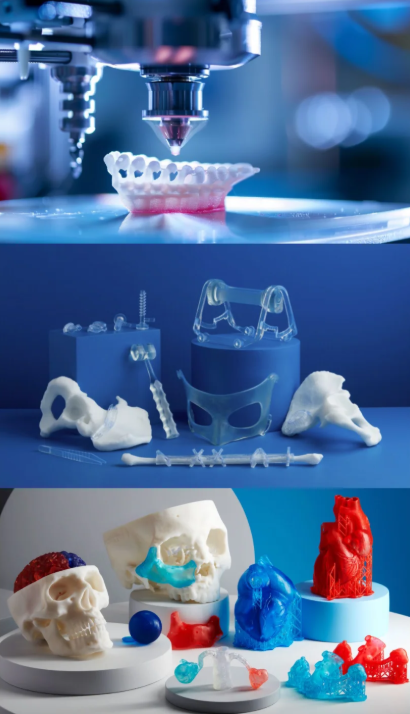
3D printing is a manufacturing process that creates three-dimensional objects by depositing material layer by layer based on a digital 3D model. Unlike traditional subtractive methods, it adds material only where needed, minimizing waste. Common 3D printing technologies include Fused Deposition Modeling (FDM), Stereolithography (SLA), Selective Laser Sintering (SLS), and Metal Laser Sintering, each using materials like thermoplastics (e.g., PLA, ABS), resins, or metals.
The process begins with a 3D model created using CAD software, which is sliced into thin layers by slicing software. The printer then deposits material—filament, resin, or powder—following the model’s specifications. FDM, for example, extrudes molten plastic through a nozzle, while SLA cures liquid resin with a laser. Printing times range from hours to days, depending on size, complexity, and technology.
3D printing excels in prototyping, enabling rapid iteration of designs for products like medical devices or consumer electronics. It’s also used for custom parts (e.g., dental implants) and low-volume production in aerospace. Its ability to create complex geometries without tooling makes it ideal for innovation, though it’s less suited for high-volume manufacturing due to slower speeds and higher per-part costs.
What Is Injection Molding?
Injection molding is a high-precision manufacturing process that produces identical parts by injecting molten material into a mold, ideal for high-volume production.
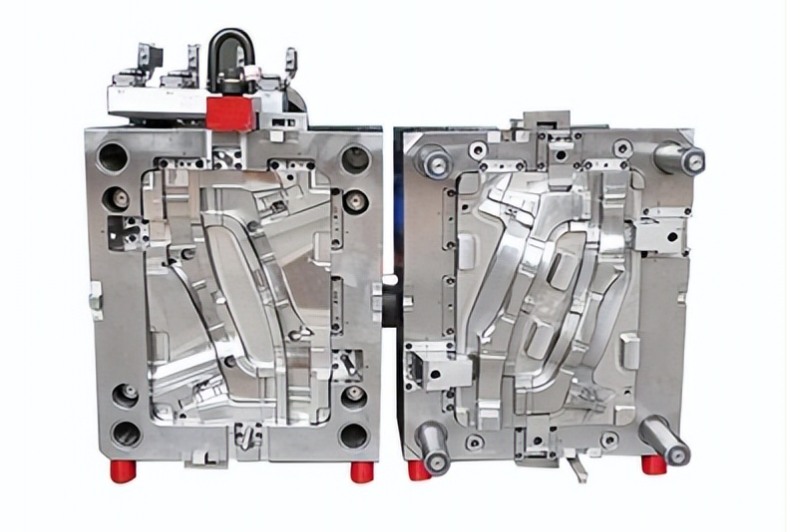
Injection molding involves injecting molten material—typically thermoplastics like ABS, polypropylene, or polycarbonate—into a precisely designed mold under high pressure. The process is widely used for mass-producing consistent, high-quality parts with tight tolerances (as low as ±0.01 mm).
The process starts with designing a metal mold, usually made of steel or aluminum, tailored to the part’s geometry. Pellets of raw material are heated in a barrel (200–300°C) until molten, then injected into the mold cavity (10,000–20,000 psi). The mold, cooled by water or oil channels, solidifies the material in seconds to minutes. The mold opens, ejecting the part, and the cycle repeats, often in 10–60 seconds.
Injection molding is prevalent in automotive (e.g., dashboards, bumpers), medical (e.g., syringes, device housings), and consumer goods (e.g., bottle caps, toys). Its strength lies in scalability, producing thousands to millions of parts with minimal variation. However, high upfront mold costs ($1,000–$100,000) make it less viable for low volumes or frequent design changes.
Advantages And Disadvantages Of 3D Printing
3D printing offers unique advantages like design flexibility and rapid prototyping, but its limitations in speed and cost impact its suitability for large-scale production.
Advantages Of 3D Printing
- Design Flexibility: Creates complex geometries (e.g., lattice structures) impossible with traditional methods, ideal for aerospace or medical implants.
- Rapid Prototyping: Enables quick design iterations, producing prototypes in hours, accelerating product development.
- No Tooling Costs: Eliminates the need for expensive molds, reducing upfront investment for low-volume or custom parts.
- Material Efficiency: Additive process minimizes waste, using only the material required for the part.
- Customization: Easily produces bespoke parts, such as tailored prosthetics or one-off consumer products.
Disadvantages Of 3D Printing
- Slow Production: Layer-by-layer building is time-intensive, unsuitable for high-volume manufacturing (hours per part vs. seconds in injection molding).
- Higher Per-Part Costs: Material and machine costs make 3D printing expensive for large runs compared to injection molding.
- Limited Material Range: Fewer material options (mostly plastics, some metals) compared to injection molding’s extensive range.
- Surface Finish: Parts often require post-processing (e.g., sanding, polishing) to achieve smooth finishes, increasing labor.
- Mechanical Properties: Printed parts may have anisotropic strength (weaker along layer lines), less robust than molded parts.
3D printing’s strengths make it ideal for prototyping and niche applications, but its limitations restrict its use in mass production.
Advantages And Disadvantages Of Injection Molding
Injection molding excels in high-volume production with precision and cost-efficiency, but its high initial costs and design constraints pose challenges for small-scale projects.
Advantages Of Injection Molding
- High-Volume Efficiency: Produces thousands to millions of identical parts with low per-unit costs, ideal for mass production.
- Precision and Consistency: Achieves tight tolerances (±0.01 mm) and uniform parts, critical for industries like medical and automotive.
- Material Versatility: Supports a wide range of thermoplastics, thermosets, and elastomers, enabling tailored properties (e.g., heat resistance, flexibility).
- Smooth Finishes: Parts often require minimal post-processing, with molds providing polished or textured surfaces.
- Scalability: Once molds are made, production scales rapidly, supporting large orders with short cycle times (10–60 seconds).
Disadvantages Of Injection Molding
- High Upfront Costs: Mold design and fabrication cost $1,000–$100,000, prohibitive for low-volume or prototype runs.
- Long Lead Times: Mold creation takes weeks to months, delaying initial production compared to 3D printing’s immediacy.
- Design Constraints: Complex geometries may require multi-part molds or secondary operations, increasing costs and complexity.
- Inflexibility: Design changes require new or modified molds, incurring additional expenses and delays.
- Material Waste: Sprues, runners, and defective parts generate waste, less efficient than 3D printing for small runs.
Injection molding’s efficiency and precision make it the go-to for high-volume production, but its costs and rigidity limit its use for prototyping or small batches.
A Direct Comparison Between 3D Printing And Injection Molding
Comparing 3D printing and injection molding reveals stark differences in process, cost, speed, and application, guiding manufacturers toward the best method for their needs.
Process
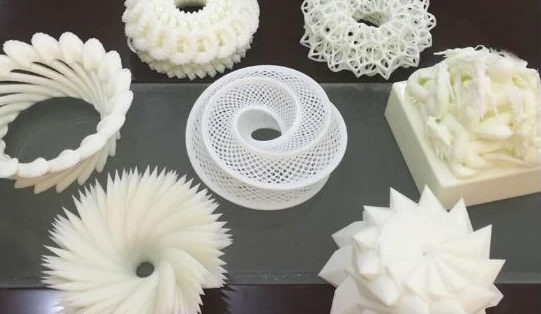
- 3D Printing: Additive process builds parts layer by layer from digital models, requiring no tooling. It’s ideal for complex designs but slow (hours to days per part).
- Injection Molding: Subtractive process injects molten material into a mold, producing parts in seconds. It requires expensive molds but excels in high-volume output.
Cost
- 3D Printing: Low upfront costs (no tooling, printers from $200–$100,000+). Per-part costs are high ($1–$100) due to material and time, best for low volumes (<100 parts).
- Injection Molding: High initial costs ($1,000–$100,000 for molds). Per-part costs are low ($0.01–$1) for large runs, economical for 1,000+ parts.
Speed
- 3D Printing: Slow production (hours per part), suitable for prototypes or small batches. Setup is quick, with no tooling delays.
- Injection Molding: Fast cycle times (10–60 seconds per part), ideal for high volumes. Long lead times (weeks for mold creation) delay initial production.
Material Options
- 3D Printing: Limited to specific plastics (e.g., PLA, ABS), resins, and some metals. Material properties may vary by technology.
- Injection Molding: Extensive range, including thermoplastics (e.g., PP, PC), thermosets, and elastomers, offering tailored mechanical properties.
Design Flexibility
- 3D Printing: High flexibility for complex, organic shapes without tooling constraints, ideal for prototypes or custom parts.
- Injection Molding: Limited by mold design; complex parts may require multi-part molds or secondary operations, increasing costs.
Applications
- 3D Printing: Prototyping, custom parts (e.g., medical implants), and low-volume production (e.g., aerospace components).
- Injection Molding: High-volume production of consistent parts (e.g., automotive components, consumer goods, medical devices).
Scalability
- 3D Printing: Poor scalability due to slow speeds and high per-part costs, best for small runs or one-offs.
- Injection Molding: Highly scalable, with costs decreasing as volume increases, ideal for mass production.
3D printing suits rapid prototyping, custom parts, and low volumes with complex designs, offering flexibility and low initial costs. Injection molding dominates high-volume production with precision, consistency, and low per-unit costs, despite high upfront expenses and longer lead times. The choice depends on production volume, budget, and design complexity.
How to Decide If Injection Molding Or 3D Printing Is Right For You?
Choosing between injection molding and 3D printing requires evaluating production volume, budget, design needs, and timelines to align with your project’s specific goals.Selecting the appropriate manufacturing method involves assessing several factors to ensure quality, cost-efficiency, and timely delivery.
Production Volume
When deciding between 3D printing and injection molding, production volume is a critical factor. For low-volume production, typically fewer than 100 parts, 3D printing is the ideal choice. Its additive manufacturing process eliminates the need for expensive molds, making it cost-effective for prototypes, custom parts, or small batches. This flexibility suits applications like one-off designs or experimental components. Conversely, injection molding shines in high-volume production, particularly for 1,000 parts or more. The high initial cost of mold creation is offset by low per-unit costs, making it economical for large-scale manufacturing where consistent output is required.
Budget
Budget constraints significantly influence the choice between 3D printing and injection molding. For projects with limited budgets, 3D printing is advantageous due to its minimal upfront investment. With printers ranging from $200 to over $100,000, it’s accessible for startups or one-off projects without the need for costly tooling. On the other hand, injection molding requires substantial initial investment, with mold costs ranging from $1,000 to $100,000. However, for organizations with larger budgets and long-term production goals, injection molding’s high initial costs are justified by significant per-part cost savings in large-scale production runs, offering long-term financial benefits.
Design Complexity
Design complexity plays a pivotal role in selecting the appropriate manufacturing method. 3D printing excels in producing intricate, organic shapes and complex geometries that would be challenging or impossible with traditional tooling. Its layer-by-layer approach allows for unparalleled design freedom, making it ideal for prototypes or custom components with unique structures. In contrast, injection molding is better suited for simple or standardized designs, where uniform parts can be efficiently produced. While complex designs are possible with injection molding, they often require multi-part molds or secondary operations, which can significantly increase costs and complexity.
Material Requirements
Material requirements are a key consideration when choosing between 3D printing and injection molding. Injection molding offers a broad range of materials, including high-strength thermoplastics like polypropylene and polycarbonate, thermosets, and elastomers, allowing for tailored mechanical properties to meet specific performance needs. This makes it ideal for applications requiring durability or specialized characteristics. Conversely, 3D printing is limited to materials like PLA, ABS, resins, and some metals, which are sufficient for prototypes or less demanding applications but may not meet the stringent requirements of functional parts in high-performance environments.
Lead Time
Lead time is a crucial factor depending on project urgency. 3D printing offers rapid turnaround, often completing parts in hours to days, making it ideal for time-sensitive projects or quick prototyping. Its lack of tooling requirements enables fast setup and production, perfect for urgent needs or iterative design processes. Injection molding, however, involves longer lead times, typically weeks, due to the time required for mold design and fabrication. This makes it more suitable for projects with flexible timelines where production schedules are planned in advance, allowing for high-volume output once molds are ready.
Part Performance
The performance requirements of the final part heavily influence the manufacturing choice. Injection molding produces robust, isotropic parts with superior mechanical properties, making it the preferred method for functional components in demanding applications like automotive or medical devices. Its ability to create consistent, high-strength parts ensures reliability under stress. In contrast, 3D printing often produces anisotropic parts with varying strength depending on layer orientation, making it more suitable for prototypes, aesthetic components, or non-functional parts where mechanical performance is less critical.
Scalability
Scalability is a defining factor when comparing these methods. 3D printing is highly agile for one-off or small-run production, supporting frequent design changes without additional costs. Its flexibility makes it ideal for custom or low-volume applications where adaptability is key. Injection molding, however, is designed for mass production, offering unmatched efficiency as production scales. The high initial mold cost becomes negligible over large orders, with per-part costs dropping significantly, making it the go-to choice for manufacturers needing thousands or millions of consistent parts.
Sustainability
Sustainability considerations are increasingly important in manufacturing decisions. 3D printing aligns with eco-friendly goals by reducing material waste through its additive process, which only uses the material needed for the part. This makes it appealing for sustainable prototyping or small-scale production. Injection molding, while initially resource-intensive due to mold creation, supports sustainability in high-volume production through the use of recyclable thermoplastics and efficient large-scale processes. For long-term use, injection molding’s material efficiency and recyclability can contribute to environmentally conscious manufacturing strategies.
Conclusion
Injection molding and 3D printing offer distinct advantages, with their suitability depending on production volume, design complexity, and project goals, guiding manufacturers toward optimal outcomes.
Injection molding and 3D printing are transformative manufacturing technologies, each excelling in specific contexts. 3D printing’s flexibility, low upfront costs, and rapid prototyping capabilities make it ideal for low-volume, complex, or custom parts, such as prototypes or bespoke medical implants. Injection molding’s precision, scalability, and cost-efficiency dominate high-volume production, delivering consistent parts for automotive, medical, and consumer goods with low per-unit costs. Their differences in process, cost, material options, and design flexibility require careful consideration to align with project needs. By evaluating factors like production volume, budget, lead time, and part performance, manufacturers can choose the right method—or combine both—for optimal results. Whether iterating designs with 3D printing or scaling production with injection molding, understanding these technologies ensures quality, efficiency, and innovation. This guide empowers decision-makers to leverage injection molding and 3D printing effectively, driving success in modern manufacturing.


